



First, What Is This 'MDR' Everyone Is Talking About?
MDR stands for Merchant Discount Rate. It's a fee that merchants pay to their bank or payment service provider for processing digital transactions. Think of it like the fee a shop pays when you use a credit or debit card. For years, UPI transactions have
been free for everyone, a key reason for their explosive growth. The government's new framework introduces an MDR on certain UPI payments to help create a sustainable revenue model for the payment ecosystem, which includes banks and payment apps that need funds to maintain and upgrade their technology.
The New Framework: What Is Actually Changing?
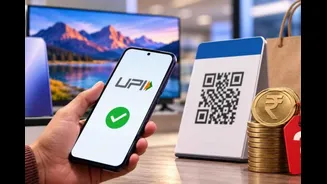
The change, effective October 15, 2026, introduces a 0.4% MDR on person-to-merchant (P2M) UPI transactions above ₹2,000. It's crucial to understand what this does and doesn't cover. Person-to-person (P2P) payments—like sending money to a friend or family member—remain completely free, regardless of the amount. The new charge only applies when a customer pays a merchant, and only for transactions that exceed the ₹2,000 threshold. For example, a UPI payment of ₹3,000 to a merchant would incur a ₹12 fee, which is paid by the merchant. For very large transactions of ₹75,000 or more, the MDR is capped at a maximum of ₹300.
A Big Relief for Small Shops
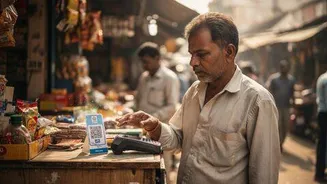
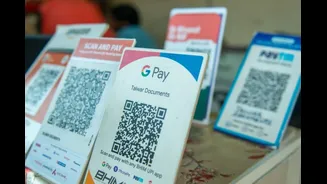
The government has built in specific protections for the smallest businesses. Small merchants who receive up to ₹1 lakh per month via UPI QR codes are exempt from this new MDR. This special category, known as Person-to-Person-Merchant (P2PM), is designed to shield street vendors, local kirana stores, and other micro-businesses from any new costs. This means that for a majority of small local shops, nothing changes; they can continue to accept UPI payments without worrying about fees, even on transactions over ₹2,000, as long as their monthly collections stay within the ₹1 lakh limit. The government estimates that around 96% of all merchant transactions will remain free from any charges under this new framework.
What About Mid-Sized and Larger Businesses?
For merchants who don't fall under the small merchant exemption, the 0.4% MDR on payments over ₹2,000 will apply. This could affect mid-sized grocery stores, restaurants, electronics retailers, and other businesses with higher transaction volumes and values. While the government has advised banks to ensure merchants do not pass this cost on to customers, some business owners may feel the pinch on their profit margins. The Retailers Association of India (RAI) has expressed concern that this could disincentivize digital payments for some merchants operating on thin margins, potentially pushing them back towards cash transactions. However, the 0.4% MDR for UPI is still significantly lower than the typical 1.5% to 2.5% MDR charged for credit card payments.
Special Rates for Essential Services
The framework also includes special, lower rates for certain essential sectors to ensure cost stability. For merchant payments above ₹2,000 in sectors like railways, telecom, fuel, insurance, and utilities, a flat fee of ₹5 will be applied instead of the 0.4% rate. Furthermore, payments related to capital markets, such as for mutual funds or to stockbrokers, will attract a much lower MDR of 0.02%, with the same ₹300 cap. This tiered approach aims to balance the sustainability of the UPI ecosystem with the need to keep costs low in critical industries.