

A Thermometer for the Moon
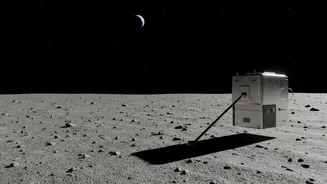
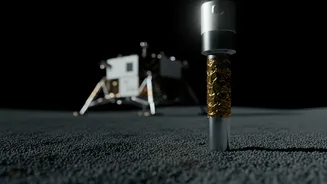
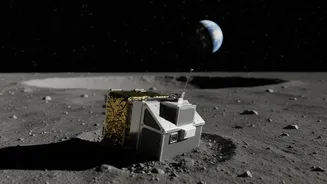
At the heart of this research is an ingenious instrument called Chandra’s Surface Thermophysical Experiment, or ChaSTE. Developed by teams at ISRO's Physical Research Laboratory and Space Physics Laboratory, ChaSTE is essentially a high-tech thermal probe.
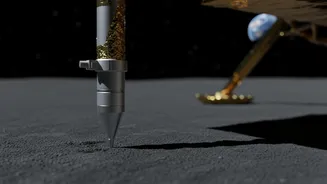
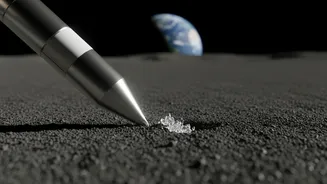
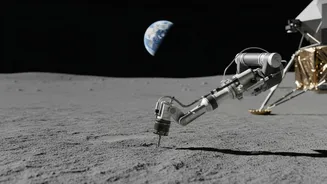
It consists of a slender rod equipped with ten highly sensitive temperature sensors, spaced about one centimetre apart. Unlike previous failed attempts by other missions that used a hammering mechanism, ChaSTE employed a unique rotary device that gently and successfully pushed the probe ten centimetres into the Moon's loose, dusty soil, known as regolith. This allowed it to take the first-ever in-situ temperature profile of the lunar topsoil in the polar region, providing a layer-by-layer reading of the heat distribution just below the surface.
Uncovering a Thermal Surprise
The data sent back by ChaSTE was startling. Scientists had expected surface temperatures around 20-30 degrees Celsius, but the probe recorded a sun-baked surface at nearly 70 degrees Celsius. Even more surprising was the dramatic temperature drop just beneath this top layer. At a depth of only about eight to ten centimetres, the temperature plummeted to a frigid minus 10 degrees Celsius. This massive gradient of around 80 degrees over just a few centimetres was a revelation. It demonstrated that the topmost layer of the lunar regolith is an incredibly effective thermal insulator, almost like a blanket of fine dust that prevents the Sun's intense heat from penetrating deeper into the ground. This poor heat conduction is a critical piece of the lunar puzzle.
Why This Temperature Map Matters
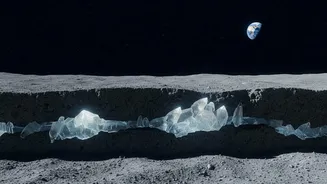
Understanding this thermal behaviour is crucial for several reasons. Firstly, it has profound implications for the search for water ice. For water ice to remain stable, it needs to be in a permanently cold environment. The insulating properties of the topsoil mean that just a few centimetres below the surface, temperatures can remain low enough to potentially harbour water ice deposits, even in areas that receive some sunlight. The ChaSTE data helps scientists refine their models, suggesting that poleward-facing slopes, even those a bit further from the poles, could be cold enough to trap ice. This significantly broadens the potential search area for this vital resource. Secondly, this data is invaluable for engineering future lunar missions. Knowing that the regolith is a powerful insulator affects the design of habitats, rovers, and drilling equipment. It tells engineers how to protect equipment from extreme temperature swings and how deep they need to go for stable foundations or to extract resources.
Beyond the First Look
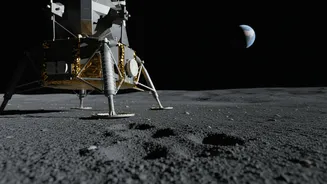
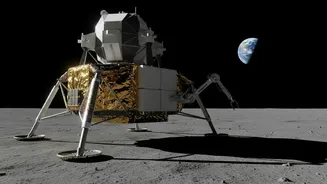
The ChaSTE experiment also took advantage of a unique opportunity: the Vikram lander performed a short "hop," firing its engines to lift off and land again a short distance away. This allowed the probe to take a second set of measurements in a slightly different spot. The data revealed that the lander's engine blast had blown away the top few centimetres of loose, fluffy dust, exposing a denser, more compact layer underneath. This confirmed that the lunar surface isn't uniform but has a layered, cake-like structure even in its upper few inches. Analysis showed the soil becomes significantly denser and more cohesive just below the surface, information that is critical for any future missions planning to dig or build on the Moon.