





The Core Cardio Question
When we talk about 'cardio', we're referring to any aerobic exercise that raises your heart rate and makes you breathe harder. This type of activity strengthens your heart and lungs, improves blood flow, and helps lower the risk of heart disease. Both
traditional aerobics and trampolining, also known as rebounding, effectively elevate your heart rate to provide these cardiovascular benefits. The key differences lie not in if they work, but how they work your body, the impact they have on your joints, and the other fitness benefits they bring to the table.
Aerobics: The Tried-and-True Classic
Aerobics, especially popular forms like step aerobics, has been a fitness staple for decades for good reason. It involves rhythmic, continuous movement of the body's large muscle groups. Research shows that regular aerobics can significantly improve aerobic capacity, lower blood pressure, and improve cholesterol levels. A typical class provides a structured workout that burns a substantial number of calories, often more than moderate trampolining in the same time frame due to the sustained movement. However, the downside for some can be the high-impact nature of certain routines, which puts stress on the ankles, knees, and hips.
Trampolining: The Low-Impact Powerhouse
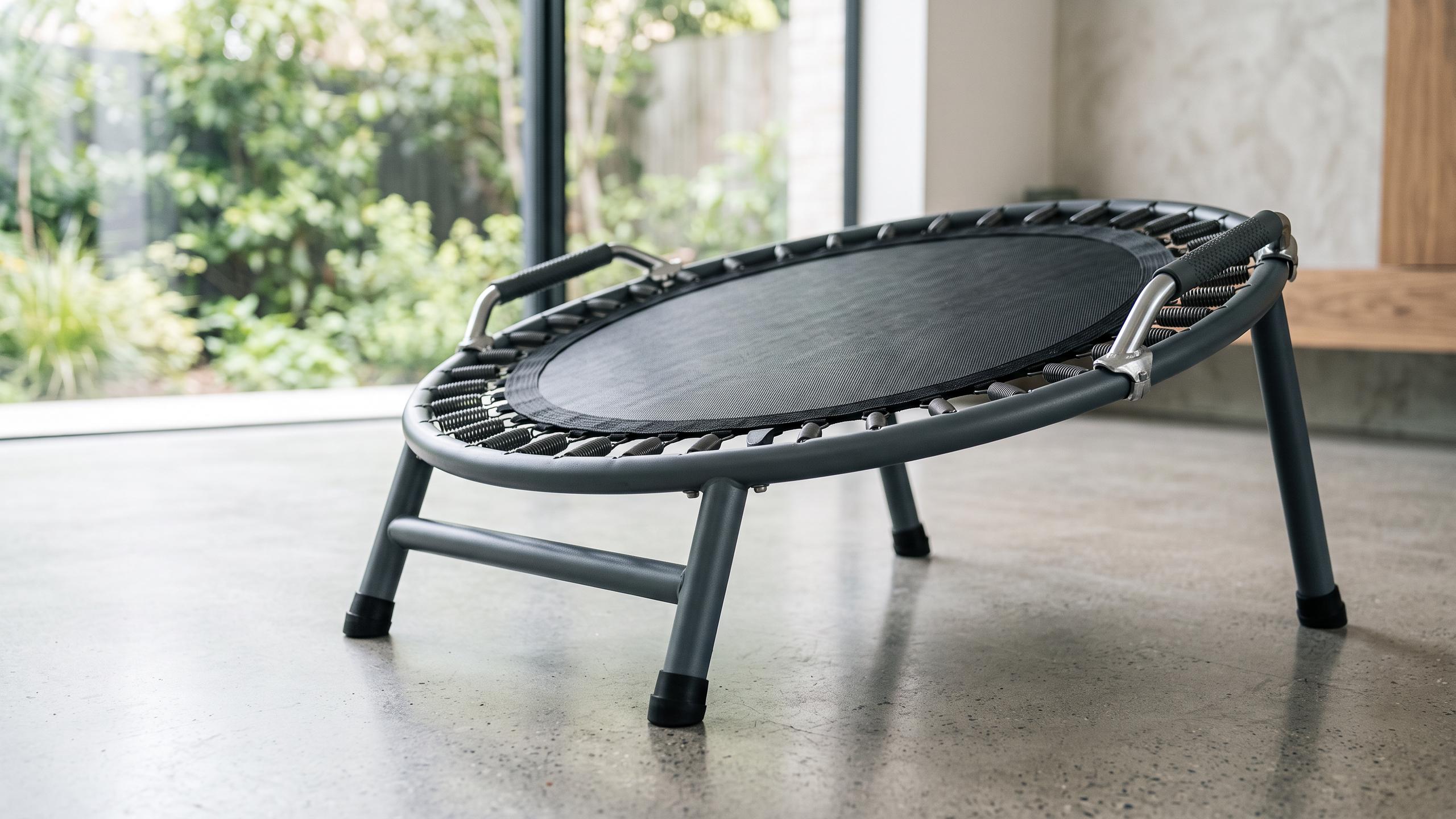
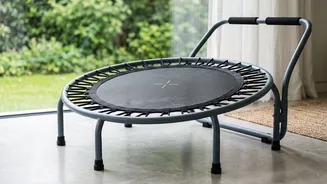
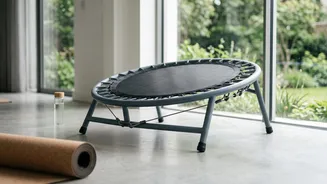
Rebounding on a mini-trampoline might look like child's play, but it's a surprisingly effective form of exercise. The trampoline mat absorbs a significant amount of the landing force, making it a low-impact workout that's much gentler on the joints than running or high-impact aerobics. This makes it an excellent choice for individuals with joint sensitivities or those recovering from injuries. A famous 1980 NASA study found that rebounding was more efficient at improving oxygen uptake than running. While calorie-burning depends on intensity, rebounding can be comparable to brisk walking or moderate cycling, and high-intensity sessions can rival more strenuous workouts.
The Balance and Stability Demand
This is where trampolining truly sets itself apart. The unstable surface of the rebounder forces your body to make constant, tiny adjustments to stay upright. This process significantly challenges and improves your balance, coordination, and overall motor skills. To maintain stability, you have to constantly engage your core muscles, including deep abdominal and back stabilisers. This provides a comprehensive core workout that improves posture and can help reduce back pain. While some choreographed aerobic routines do involve balance, the inherent instability of the trampoline makes core and stabiliser muscle engagement a constant throughout the entire workout.
Muscles, Bones, and Accessibility
Both exercises work the large muscles of the legs, but rebounding engages more of the small stabiliser muscles around the joints and in the core. The G-force created during the bounce-and-land cycle on a trampoline also helps improve bone density, which is why it's been studied by NASA to help astronauts prevent bone loss in space. In terms of accessibility, aerobics has an edge. You can join a class at nearly any gym or even follow videos at home with minimal space. Trampolining requires purchasing a mini-trampoline or finding a specialised studio, though the convenience of having one at home is a major plus for many users.
Which Workout Wins for You?
There is no single 'better' option; the right choice depends entirely on your personal fitness goals and needs. If you're looking for a structured, high-energy class that delivers a proven, powerful cardio burn and you don't have joint issues, aerobics is a fantastic choice. However, if you want a cardio workout that is gentler on your joints, offers the significant added benefits of improved balance and core stability, and has a high 'fun factor' that keeps you motivated, trampolining is an outstanding alternative. For many, the joy of bouncing makes exercise feel less like a chore and more like play, which is often the most important factor for long-term consistency.