


There's no better way to feel a city’s pulse than by walking its streets. Some are more than just routes; they are destinations in themselves, alive with history, culture, and energy. Here are ten famous streets perfect for urban explorers.
1. La Rambla, Barcelona, Spain
Stretching
from Plaça de Catalunya down to the Columbus Monument at the old port, La Rambla is Barcelona’s social artery. This wide, tree-lined boulevard is a constant performance of human activity. It’s not just one street but a series of shorter ones, each with a different character. As you walk, you'll pass living statues, street performers, flower stalls, and bird sellers. The famous Boqueria Market, a feast for the senses with its vibrant produce and tapas bars, is a mandatory detour. Though crowded, the energy is infectious, making it an essential first walk for any visitor to the Catalan capital.
2. The Royal Mile, Edinburgh, Scotland
Connecting Edinburgh Castle at its peak with the Palace of Holyroodhouse at its base, the Royal Mile is the historic spine of Scotland's capital. This isn't just one street but a succession of them—Castlehill, Lawnmarket, High Street, and Canongate—forming a route steeped in centuries of history. A walk here takes you past towering tenement buildings, hidden 'closes' (narrow alleyways), and landmarks like St. Giles' Cathedral. The street is a hub of museums, traditional pubs, and shops selling tartan and whisky, offering a journey through the city's dramatic past.
3. Champs-Élysées, Paris, France
Often called 'the world's most beautiful avenue', the Champs-Élysées is a 1.9-kilometre promenade of Parisian grandeur. It runs from the magnificent Place de la Concorde to the iconic Arc de Triomphe. A walk here is a tale of two halves: the lower part is a park-like expanse with gardens and grand buildings like the Grand Palais, while the upper section is a bustling hub of flagship stores, cinemas, and cafés. It serves as the ceremonial heart of Paris, hosting the Bastille Day parade and the finale of the Tour de France.
4. Via Appia Antica, Rome, Italy
Known as the Appian Way, this is ancient Rome's first superhighway. Construction began in 312 BC to connect Rome with southern Italy for military purposes. Today, walking on its original basalt paving stones is like stepping back in time. The road is flanked by the ruins of ancient tombs, monuments, and catacombs, as wealthy Romans built grand memorials outside the city walls. The first 10 miles are preserved as a regional park, and on Sundays it becomes a large pedestrian zone, offering a peaceful, historical escape from the city's buzz.
5. Shibuya Crossing, Tokyo, Japan
While not a street in the traditional sense, Shibuya Crossing is arguably the world's most famous and busiest pedestrian intersection. When the traffic lights turn red, a wave of humanity surges across the intersection from all directions at once in what is known as a 'scramble'. With up to 2,500 people crossing at a time, it is an electrifying spectacle of organised chaos, surrounded by giant video screens and neon lights. It's a pure, concentrated dose of modern Tokyo's energy and a must-experience phenomenon for any visitor.
6. Bourbon Street, New Orleans, USA
Located in the heart of the French Quarter, Bourbon Street is the epicentre of New Orleans' nightlife and famous for its party atmosphere. The street comes alive after dark, with neon signs lighting up the historic buildings, jazz music pouring out of clubs, and crowds spilling onto the pedestrian-only thoroughfare. It is a sensory overload of sights and sounds, where revellers collect colourful beads and sip on cocktails. While it can be wild, a walk down Bourbon Street is an essential part of the New Orleans experience.
7. Chandni Chowk, Delhi, India
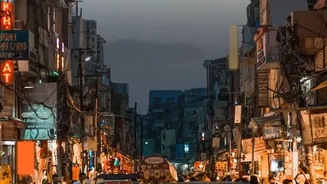
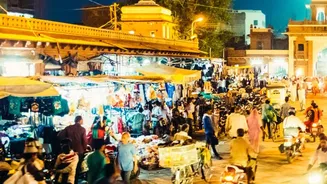
Built in the 17th century by the Mughal Emperor Shah Jahan, Chandni Chowk is one of the oldest and busiest markets in Old Delhi. A walk here is an immersion into a chaotic, vibrant world of commerce and culture. Its narrow lanes are organised by specialty, with different sections dedicated to spices, fabrics, silver, and electronics. The street is also a legendary food destination, famous for its street food stalls and historic eateries like Paranthe Wali Gali, offering an authentic taste of Old Delhi.
8. Lombard Street, San Francisco, USA
Famous for being 'the crookedest street in the world', the most iconic section of Lombard Street is a one-block stretch in the Russian Hill neighbourhood. It features eight tight hairpin turns designed in 1922 to make the hill's steep 27-percent grade navigable for cars. While you can drive down it, walking is the best way to appreciate its unique design. Pedestrian staircases line both sides, offering fantastic photo opportunities of the red-brick road, manicured flowerbeds, and beautiful Victorian mansions.
9. Strøget, Copenhagen, Denmark
One of Europe's longest pedestrian shopping streets, Strøget runs for 1.1 kilometres through the heart of Copenhagen. Established as a car-free zone in 1962, it was a pioneering move in urban planning. The street is not a single entity but a series of interconnected avenues linking City Hall Square to Kongens Nytorv. It offers a gradient of shopping experiences, from budget-friendly international brands at one end to high-end luxury boutiques at the other, all interspersed with charming squares and street performers.
10. Abbey Road, London, England
This otherwise quiet street in St John's Wood became a global landmark thanks to The Beatles. The zebra crossing located just outside Abbey Road Studios was immortalised on the cover of their 1969 album 'Abbey Road'. Today, it's a pilgrimage site for music fans who flock here to recreate the iconic photo. While it's a live road with traffic, drivers are usually patient with the endless stream of visitors striking a pose. The studio's outer wall is covered in graffiti from fans, adding to the location's cultural significance.