


A Sweet Discovery in a Cosmic Cauldron
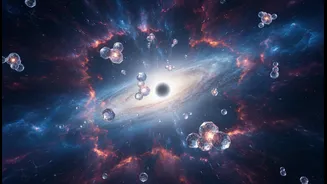
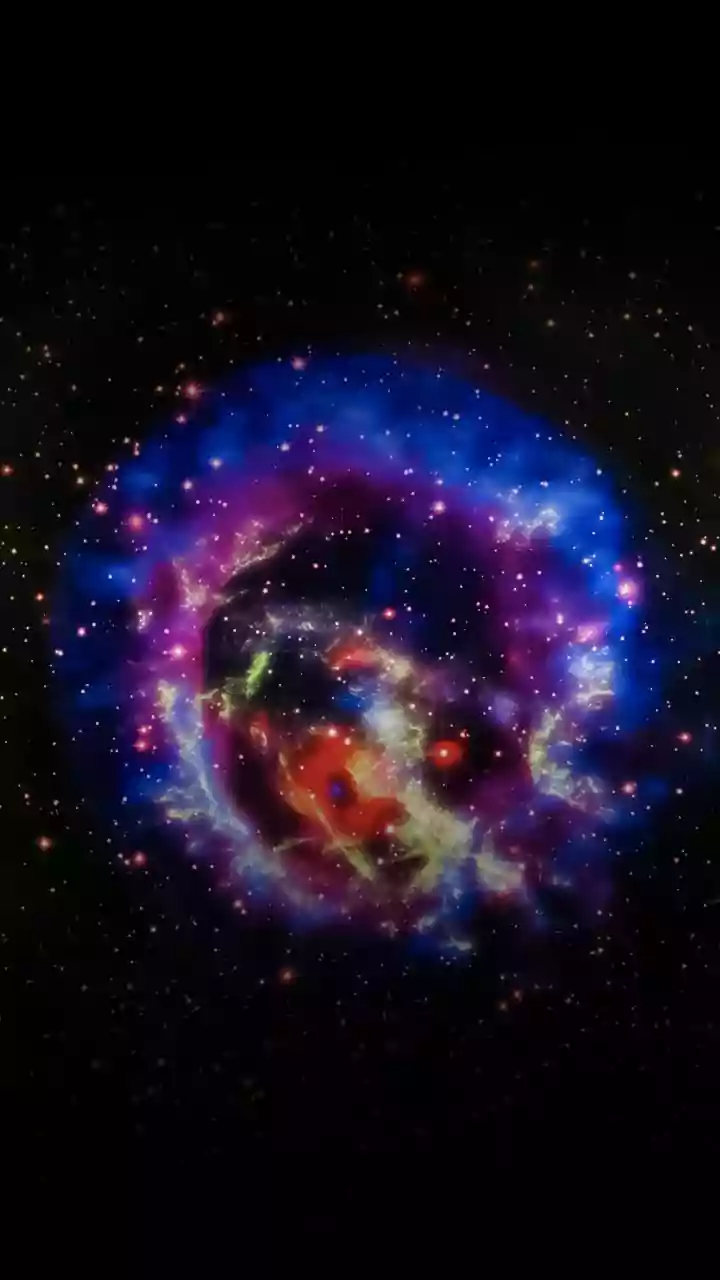
An international team of scientists has detected the first true sugar molecule in interstellar space. Using a pair of highly sensitive radio telescopes in Spain, researchers peered into a massive cloud of gas and dust known as G+0.693-0.027, located roughly
27,000 light-years away near the galactic centre. This region is a known cosmic factory, a place where stars are born and a rich inventory of complex molecules has been found. After searching unsuccessfully for simpler three-carbon sugars, the team was surprised to find the distinct spectral signature of erythrulose, a more complex four-carbon sugar. They confirmed its presence by matching the radio signals from the cloud with the unique pattern of erythrulose measured in a laboratory.
What Is Erythrulose and Why Is It Important?
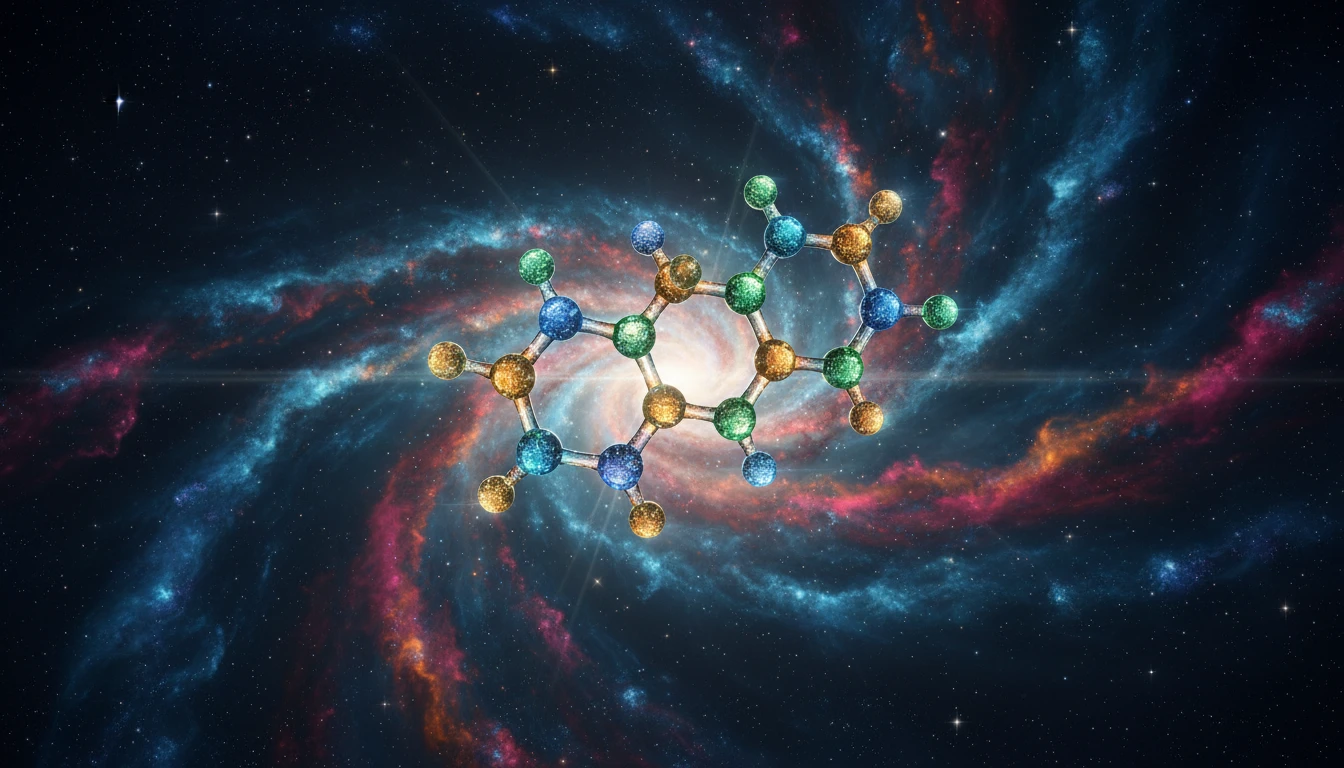
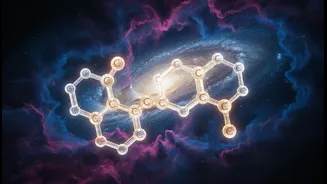
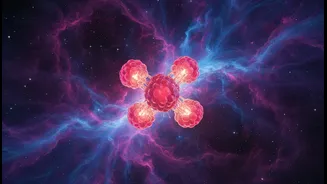
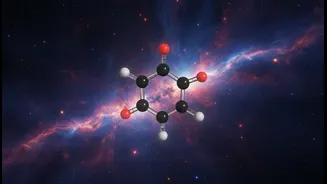
Erythrulose is a simple sugar, a monosaccharide with four carbon atoms. On Earth, it’s found in small amounts in raspberries and is also used in sunless tanning products. But its significance in space is far greater. Sugars are fundamental to life as we know it. They are a source of energy and, crucially, form the structural backbone of RNA and DNA, the molecules that carry genetic information. The discovery of erythrulose is a major step up in complexity from previously detected prebiotic molecules like alcohols and simpler organic compounds. Scientists are excited because its presence opens the door to potentially finding even more complex sugars like ribose, a key component of RNA, in space.
The Recipe for a New Planet
This discovery profoundly impacts theories of how life's ingredients become available to new planets. For years, scientists have debated how the first sugars formed on early Earth, as laboratory experiments suggest they wouldn't have formed easily under the planet's initial conditions. The detection of sugars in meteorites and asteroid samples hinted that they might come from space. The confirmation of erythrulose in the interstellar medium—the raw material from which stars and planets are made—provides a powerful answer. It suggests that these vital organic compounds are formed in space long before planets even exist. They are likely created on the surfaces of frigid dust grains, which then get incorporated into the asteroids, comets, and planetary systems that form from these giant clouds.
Fuelling Prebiotic Chemistry from Afar
The existence of erythrulose in a star-forming region means that the chemical inventory inherited by a young planet could be far richer than once thought. This process is known as prebiotic chemistry—the chemical steps that occurred before life emerged. Finding a four-carbon sugar suggests that the universe is capable of producing relatively complex molecules even in the harsh, cold environment of deep space, at temperatures around -250°C. This interstellar sugar could have been delivered to a young Earth by comets and asteroids during a period of intense bombardment billions of years ago. Having a ready supply of sugars would have provided a crucial head start for the complex chemical reactions needed to eventually produce the first living organisms.
What This Means for the Search for Life
Ultimately, finding erythrulose strengthens the idea that the ingredients for life are not a rare fluke unique to our solar system. Instead, they appear to be common throughout the galaxy. According to lead researcher Izaskun Jiménez-Serra, the discovery shows that sugars can form naturally in space, opening up the possibility for life to develop on other worlds in a similar way to how it did on Earth. Future research will now focus on using these advanced techniques to search for even larger sugars and other direct precursors to biologically essential molecules. This finding doesn't just change our understanding of our own origins; it provides a roadmap for where and how to look for the potential for life elsewhere in the cosmos.