




A Change of Plans for a Safer Mission
Originally, Artemis III was the mission that would have marked humanity's return to the lunar surface. However, in early 2026, NASA announced a significant change. The mission, now scheduled for 2027, will instead be a crewed flight in low-Earth orbit
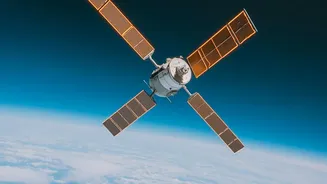
designed to test the rendezvous and docking capabilities of the Orion spacecraft with the commercial human landing systems (HLS) being developed by SpaceX and Blue Origin. This pivot is a risk-reduction strategy, ensuring that the complex hardware and procedures for linking up spacecraft are thoroughly vetted in a safer environment before attempting them in lunar orbit, hundreds of thousands of kilometers from home. The historic lunar landing is now slated for the Artemis IV mission in 2028.
The Most Complex Space 'Meet-Up' Ever
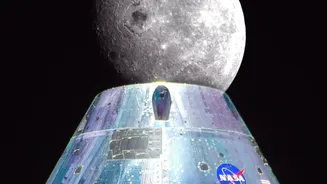
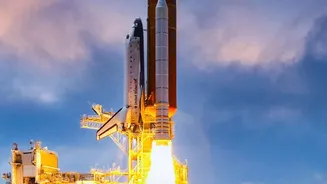
The Artemis III mission profile is one of the most intricate human spaceflight operations ever attempted, involving a carefully choreographed sequence of three separate launches. First, Blue Origin will launch a test version of its Blue Moon lander into orbit. Then, the Artemis III crew of four astronauts will launch aboard the Orion spacecraft atop the massive Space Launch System (SLS) rocket. The Orion crew will then perform a series of manoeuvres to meet and dock with the Blue Moon lander, spending up to two days testing its systems, including potentially entering the vehicle. After that, SpaceX will launch its Starship HLS test vehicle. Orion will undock from Blue Moon and perform another rendezvous to dock with the Starship for a shorter period of checks before returning to Earth. The entire mission is expected to last about two weeks.
Learning from Apollo's Playbook
This approach of testing critical hardware in Earth orbit is not new; it echoes the strategy of the Apollo program. In 1969, the Apollo 9 mission famously flew the Lunar Module in Earth orbit to prove it could separate, manoeuvre, and dock with the Command Module before it was trusted to fly to the Moon on Apollo 10 and land on Apollo 11. By having Artemis III serve a similar purpose, NASA is ensuring that the connection between Orion and the commercial landers—a procedure that has never been done before—is flawless. Any issues with docking mechanisms, life support, or software can be managed much more easily when a safe return to Earth is just hours away, rather than days.
Why This Test Is So Crucial
The human landing systems from SpaceX and Blue Origin are essential to the entire Artemis architecture. Unlike Apollo, where NASA built everything, the modern approach relies on commercial partners to build the vehicles that will ferry astronauts from lunar orbit down to the surface. The Artemis III docking tests will provide invaluable real-world data on how the Orion spacecraft and these new landers interact. Astronauts will evaluate everything from spacecraft controllability and communications to the physical dynamics of docking. For the Blue Origin lander, the crew is expected to enter the vehicle to check out its life support and other internal systems. This hands-on experience is something that cannot be fully replicated in simulators, and its success is a prerequisite for certifying these vehicles for the actual Moon landing on Artemis IV.