




What is Stratospheric Water Vapour?
The stratosphere is the atmospheric layer that sits roughly 10 to 50 kilometres above Earth's surface. It's incredibly dry compared to the air we breathe, but it does contain trace amounts of water vapour. This moisture plays an outsized role in the planet's
energy balance. While water vapour in the lower atmosphere gives us clouds and rain, in the stratosphere it acts primarily as a potent greenhouse gas. It traps heat radiating from the Earth, contributing to the planet's overall temperature. For decades, scientists believed its levels were mainly controlled by the temperature at the boundary between the lower atmosphere (troposphere) and the stratosphere.
An Unsettling Rise Since 2005
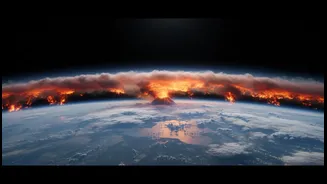
Observations since the early 2000s show that stratospheric water vapour concentrations are increasing. While this trend has been a puzzle, recent research provides a clearer picture. A July 2026 study highlighted that moderate volcanic eruptions and extreme wildfire events since 2005 are responsible for a significant portion of this increase. These events have added vast quantities of moisture to this sensitive region of the atmosphere, accounting for roughly a third of the observed increase between 2005 and 2021. This is a new and crucial piece of the climate puzzle, suggesting that these dramatic natural events have a more complex and lasting impact than previously understood.
The Fiery Pathway of Wildfires
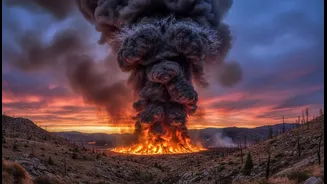
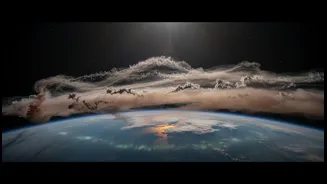
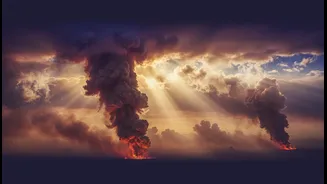
One of the major sources is the increasing intensity and frequency of wildfires. The most extreme fires can generate their own weather systems, creating colossal smoke-infused thunderstorms known as pyrocumulonimbus (pyroCb) clouds. These powerful storms act like atmospheric elevators, punching through the tropopause and injecting smoke, ash, and a large amount of water vapour directly into the pristine stratosphere. This 'self-lofting' mechanism is a direct pathway for moisture from the surface to reach high altitudes. The devastating Australian wildfires of 2019-2020 were a prime example, sending a huge plume of smoke and water high into the atmosphere, with effects that were tracked for months.
Volcanoes: Not Just Ash and Gas
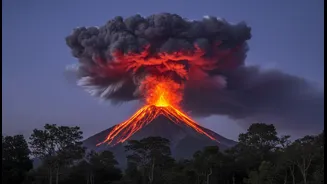
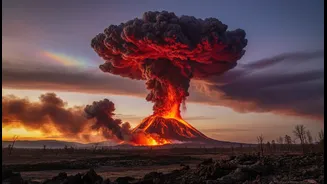
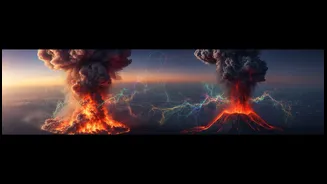
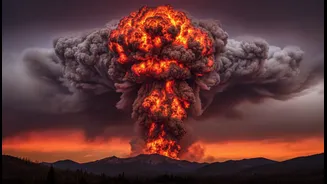
For a long time, the main climate story around volcanoes was about cooling. Eruptions blast sulfur dioxide into the stratosphere, which forms aerosols that reflect sunlight and temporarily cool the planet. But this is only part of the story. The colossal eruption of the underwater Hunga Tonga-Hunga Ha'apai volcano in January 2022 was a game-changer. It injected an unprecedented amount of water vapour—estimated to be around 150 million tons—directly into the stratosphere, increasing the total global amount by about 10% in a single event. Even smaller, more common eruptions contribute by warming the tropopause layer, weakening the natural barrier that usually keeps lower-atmosphere moisture out of the stratosphere.
Why a Wetter Stratosphere Matters
This additional moisture has two primary consequences. First, it amplifies global warming. As a greenhouse gas, the extra water vapour traps more heat, creating what scientists call a positive feedback loop. A warmer Earth can lead to conditions that produce more intense wildfires, which in turn pump more water vapour into the stratosphere, leading to more warming. Second, it can harm the ozone layer. Higher concentrations of water vapour in the stratosphere can enhance the chemical reactions that destroy ozone molecules, which are vital for protecting life on Earth from harmful ultraviolet radiation. The Hunga Tonga eruption, for example, was followed by a rapid and significant loss of ozone in the affected region.