






The Taste That Defines a Region
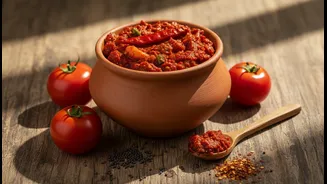
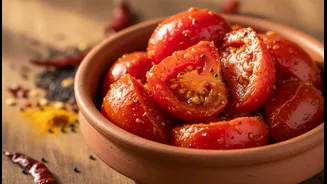
The arrival of Guntur Tomato Pickle marks a shift in the culinary calendar. This isn't just any pickle; it's a vibrant, robust condiment that captures the essence of Andhra Pradesh. Known for its perfect balance of spicy, tangy, and savoury notes, it has
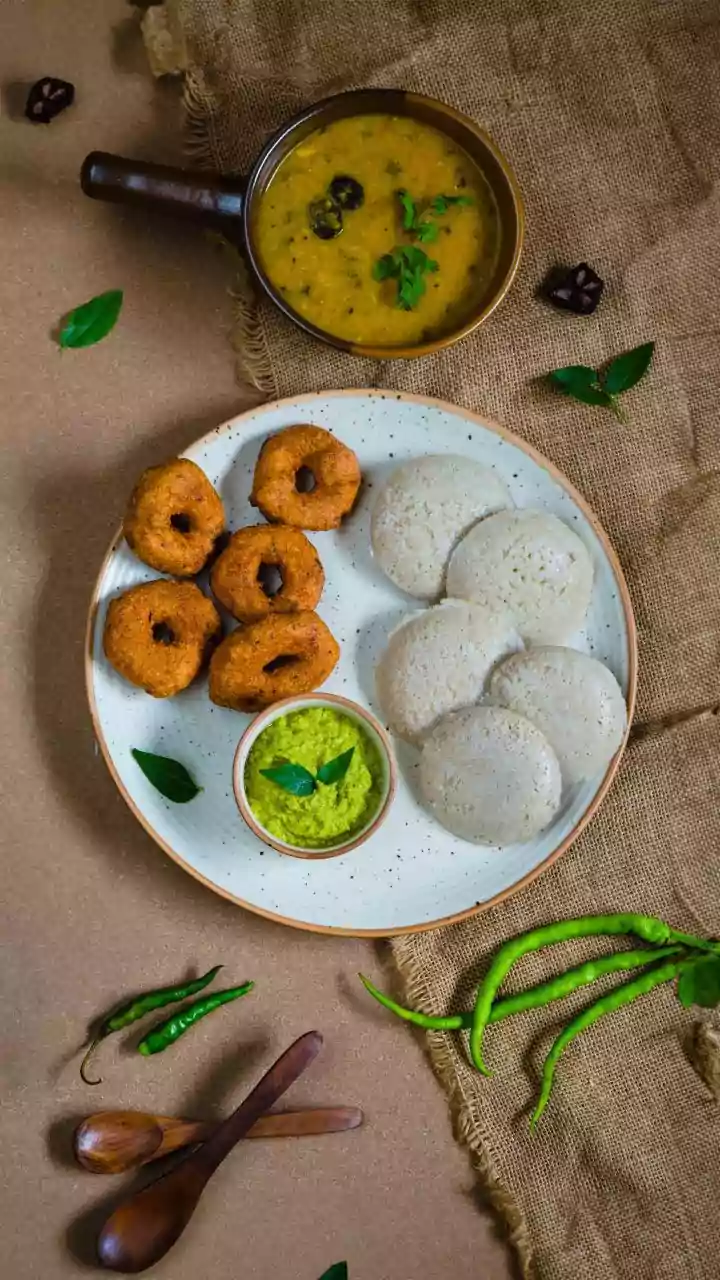
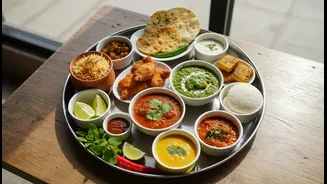
the power to elevate the simplest of meals. A spoonful mixed with hot steamed rice and a dollop of ghee is a comfort meal in itself, but it pairs wonderfully with everything from dosas and idlis to parathas and curd rice. The flavour is a complex dance between the sweetness of ripe tomatoes, the sharp heat of Guntur chillies, the pungency of garlic, and a foundational aroma from roasted fenmgreek and mustard seeds.
What Makes Guntur So Special?
The city of Guntur in Andhra Pradesh is synonymous with spice, and for good reason. It is the heartland of India's chilli production, and the Guntur Sannam chilli, which received a Geographical Indication (GI) tag, is famous for its sharp heat and bright red colour. This chilli is the backbone of the pickle, providing a signature fieriness that is potent but not overwhelming. But the region's culinary prowess isn't limited to chillies. The combination of locally grown, ripe tomatoes and the legendary chillies creates a product that is deeply tied to its place of origin. Generations of pickle makers in Guntur have perfected the art, turning a seasonal bounty into a jar of flavour that lasts for months.
The Art and Science of Pickling
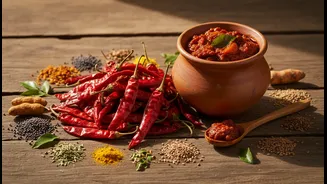
Making traditional Guntur tomato pickle is a labour of love, a process refined over generations. It begins with selecting the right tomatoes—firm, ripe, and full of pulp. These are cooked down slowly, often with tamarind, to reduce their high water content and concentrate their flavour. This step is crucial for the pickle's shelf life. Separately, a spice mix is prepared. Mustard and fenugreek seeds are dry-roasted until fragrant and then ground into a fine powder. This powder, along with generous amounts of Guntur chilli powder and salt, is mixed into the cooked tomato paste. The final step is the tempering, or 'tadka', where hot sesame oil is infused with mustard seeds, dried red chillies, garlic, and sometimes asafoetida, before being poured over the pickle. This not only adds another layer of flavour but the oil acts as a natural preservative.
A Seasonal Delicacy
While tomatoes are available year-round, the traditional pickle-making season is often tied to the availability of the best produce. The period following the main harvest, typically in the cooler, drier months, provides the ideal conditions for sun-drying and preserving. Many traditional recipes, in fact, call for sun-drying the tomatoes to remove moisture before cooking, a time-consuming process that results in an intensely flavoured pickle with a much longer shelf life. While quicker, cooked versions are now common, the 'nilava pachadi' (storable pickle) is made with specific seasonal tomatoes that are less watery and more fleshy, making them perfect for preserving. This seasonality ensures that each new batch is a fresh and eagerly awaited event.
How to Enjoy Guntur Tomato Pickle
For the uninitiated, the intensity of an authentic Andhra pickle can be surprising. The key is to use it as a powerful flavouring agent rather than a simple side. A small amount goes a long way. It is traditionally mixed into a mound of plain rice, creating a flavour-packed base for a meal. It serves as the perfect, fiery counterpoint to cooling curd rice. For breakfast, it can be spread sparingly on a dosa or served alongside a fluffy idli. The spicy, tangy profile cuts through richness and adds a vibrant kick, embodying the bold and unapologetic flavours of true Andhra cuisine.