




The Soul of Coastal Cooking
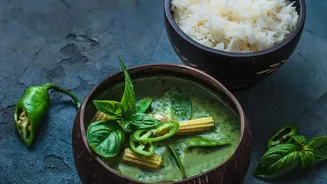
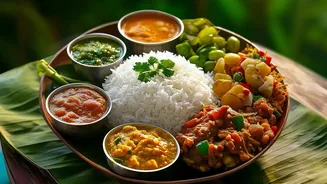
Stretching along India's western shoreline through Maharashtra, Goa, and Karnataka, the Konkan region boasts a cuisine shaped by its tropical landscape. Unlike the heavy, spice-laden gravies from other parts of the country, Konkani vegetarian cooking
is defined by its elegant simplicity and reliance on fresh, local ingredients. The philosophy is straightforward: use what grows in abundance. This means a daily celebration of coconut, rice, local vegetables, and unique souring agents that together create a perfectly harmonious meal. The goal is not to overwhelm the palate with heat but to build layers of complementary tastes that are both satisfying and easy to digest.
The Holy Trinity of Flavour
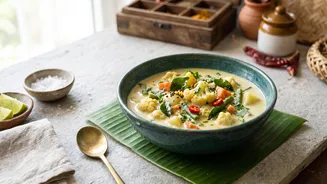
At the heart of almost every Konkani curry is a trio of core components. First is coconut, the undisputed soul of the cuisine. It's used in every form imaginable: freshly grated to add body, ground into a smooth paste ('vatan') to form the gravy's base, and squeezed for its rich milk to lend a creamy, cooling finish. The second crucial element is a souring agent, most notably kokum. These dried, deep purple rinds impart a unique tangy flavour that is less sharp than tamarind, along with a beautiful pinkish hue to dishes like Sol Kadhi. Finally, a touch of jaggery is often added, not to make the curry sweet, but to round out the sharpness of the kokum and the spice from chillies, achieving a sophisticated balance.
Spices That Sing, Not Shout
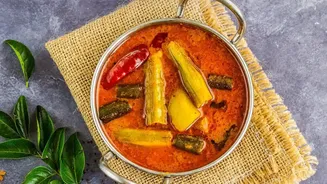
While Konkani food is flavourful, it isn’t always intensely spicy. The magic often lies in a few select spices that are used with precision. Many gravies, like the classic 'ghashi', are based on a simple paste of coconut, roasted red chillies, and tamarind or kokum. Roasting the spices before grinding them is a key step that enhances their aroma and eliminates any raw taste. In some dishes, a unique local spice called 'tirphal' or 'teppal' makes an appearance. A relative of the Sichuan peppercorn, it is used sparingly to add a distinct woody, citrusy aroma and a mild tingling sensation, rather than heat. This subtle complexity is what sets these curries apart.
Technique Makes Perfect
The deep flavours of Konkani curries are also a result of time-honoured cooking techniques. The process often begins with creating a 'vatan', a foundational paste of browned onions and coconut that adds immense depth. Many dishes, particularly those with legumes or root vegetables like yam and chickpeas, benefit from a slow simmer. This patient approach allows the spices to release their essential oils and for all the different flavours to meld together into a cohesive, rich gravy. The final 'tadka' or tempering of mustard seeds, curry leaves, and sometimes asafoetida in coconut oil is another layer of flavour added right at the end, providing a final aromatic flourish.
Bringing Konkan Flavours Home
For the home cook, embracing Konkani flavours is about mastering the art of balance. Start by sourcing good quality kokum, which is readily available in most Indian grocery stores. When making a curry, think in layers. Begin by sautéing your aromatics like onion and garlic, then 'bhoonify' or roast your ground spices in oil to unlock their flavour before adding vegetables and coconut milk. Don't be afraid to adjust as you go. If your curry tastes too sour, a small pinch of jaggery can fix it. If it feels flat, a squeeze of lime or a little more salt can brighten all the other notes. The iconic Sol Kadhi, a digestive drink made from kokum and coconut milk, is a perfect, no-cook recipe to start with, embodying the cuisine's core principles in a single glass.