






The Drying Pipeline
The discovery of penicillin nearly a century ago kicked off a golden age of medicine, saving millions of lives. But that era is under threat. Antimicrobial resistance (AMR) is a growing global crisis, with drug-resistant infections associated with nearly five
million deaths in a single recent year. The problem is twofold: bacteria are evolving to resist our current drugs, and the pipeline for new antibiotics has slowed to a trickle. Traditional methods of drug discovery are notoriously slow, expensive, and prone to failure, often taking over a decade and billions of dollars to bring a single new molecule to market. This has led to a situation where pharmaceutical innovation can't keep pace with bacterial evolution, leaving doctors with fewer options to treat once-manageable infections.
How AI Changes the Search
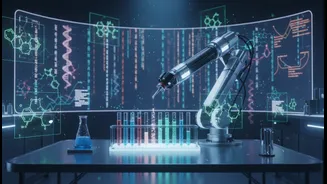
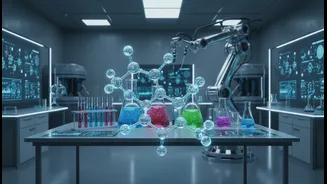
Artificial intelligence, particularly machine learning and deep learning, is completely changing the search for new antibiotics. Think of it like this: traditionally, scientists had to manually search a massive library for a book containing a specific secret code. It was a painstaking process of trial and error. AI acts like a super-powered search engine that can scan the entire library in moments. It learns the structural features of molecules that are effective against bacteria and then sifts through billions of potential compounds—many of which have never even been synthesized—to find promising candidates. These AI models can analyze vast datasets of chemical structures and biological activity, identifying patterns that would be impossible for a human researcher to spot. This accelerates the discovery phase from years to a matter of hours or days.
Breakthroughs from the Algorithm
This isn't just theory; AI is already delivering tangible results. Researchers at institutions like MIT have used deep learning models to discover entirely new classes of antibiotics. One of the most notable is a compound named Abaucin, which was identified by an AI model trained to find chemicals that could kill the superbug Acinetobacter baumannii, a major cause of hospital-acquired infections. The model screened thousands of compounds and pinpointed Abaucin, a molecule previously explored for diabetes, as a potent and specific weapon against this dangerous pathogen. It works by disrupting a key process in the bacteria, and its narrow-spectrum activity means it kills the target bug without harming beneficial bacteria in the gut. Other generative AI models are even designing entirely new molecules from scratch, creating potential drugs that have never existed before.
The Road Ahead Is Still Long
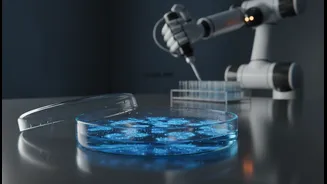
While AI can dramatically speed up the initial discovery, it is not a magic bullet. Identifying a promising compound is only the first step. These AI-discovered candidates, like Abaucin, are still in the preclinical stage and must go through the same rigorous and expensive process of laboratory testing, human clinical trials, and regulatory approval as any other drug. Furthermore, the effectiveness of any AI model is dependent on the quality and quantity of the data it's trained on. Issues like data bias, lack of standardization across experiments, and the sheer complexity of biological systems remain significant hurdles. Many AI models also act as "black boxes," making it difficult for scientists to understand exactly how they arrived at a prediction, a challenge for validation and regulatory trust.