




Why the Sudden Urgency?
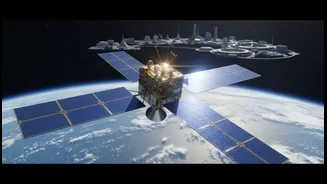
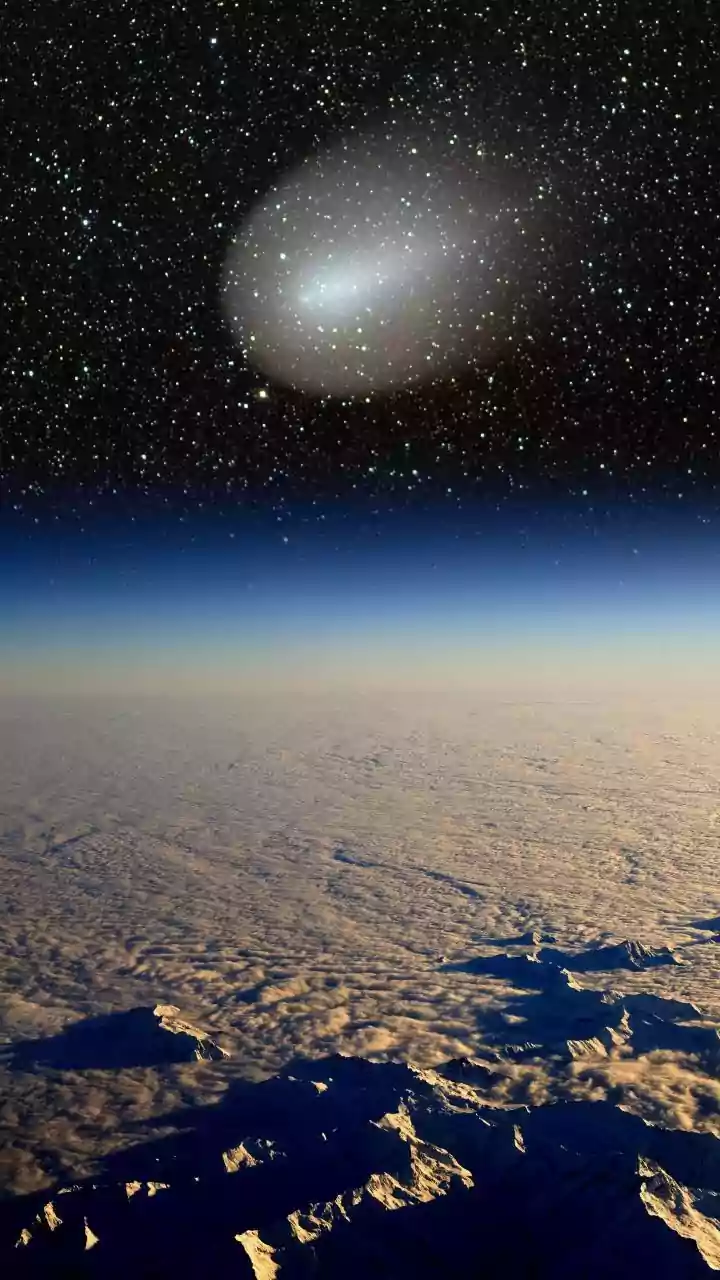
The conversation has shifted because the threats feel more immediate than ever. Climate change is no longer a distant forecast; its effects are visible globally. Satellites are now one of our primary tools for monitoring everything from greenhouse gas
concentrations and deforestation to melting ice caps, providing essential data to model and hopefully mitigate the crisis. Beyond climate, there's the persistent, if low-probability, risk of a major asteroid impact. While once the domain of disaster movies, the idea of planetary defense is now a practical field of study. These existential risks, combined with concerns about resource scarcity on Earth, have pushed the conversation from theoretical to operational. It's less about 'if' we need a backup plan and more about 'what' that plan should be.
A New Cast of Characters
For most of the 20th century, space was the exclusive domain of superpowers like the USA and the Soviet Union. Today, the "chat" includes a much wider, and wealthier, group of participants. Tech billionaires like Elon Musk of SpaceX and Jeff Bezos of Blue Origin are major players, driven by visions of multi-planetary humanity. Musk's goal to colonize Mars is explicitly framed as a way to "safeguard the existence of humanity." Bezos speaks of moving heavy industry into space to preserve Earth. They are joined by a host of private companies and a growing number of countries, including India with its increasingly ambitious ISRO, creating a dynamic and competitive environment. This new space race isn't just for national prestige; it's a commercial and philosophical push to define humanity's future.
Our Planetary Defense System
The most direct way space tech is being used for survival is in planetary defense. The prime example is NASA's DART (Double Asteroid Redirection Test) mission. In 2022, the DART spacecraft successfully slammed into an asteroid moonlet named Dimorphos, altering its orbit. This wasn't to stop a real threat, but to prove that the 'kinetic impactor' method works. It was the world's first successful test of a technique that could one day be used to deflect a hazardous asteroid heading for Earth. Follow-up missions are planned to study the impact's effects, refining our ability to give a cosmic threat a decisive nudge. This test moved asteroid defense from a theoretical concept into a proven capability, a crucial first step in building a viable shield for our home world.
The Lifeboat Strategy
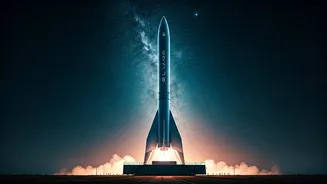
Beyond defending Earth, a more radical idea is gaining traction: establishing off-world outposts as a 'lifeboat' for humanity. This is the core of SpaceX's mission to establish a self-sustaining city on Mars. The logic, as argued by proponents, is that having humanity on more than one planet is the ultimate insurance policy against any single catastrophe, be it a pandemic, nuclear war, or natural disaster. While a permanent Mars colony is still decades away at best, the development of reusable rockets has dramatically lowered the cost of accessing space, making such ambitious long-term goals seem more achievable. It's a grand, and controversial, vision that sees humanity's survival intrinsically linked to its expansion into the solar system.
A Necessary Distraction?
Not everyone is convinced. Critics argue that the immense resources poured into space ventures could be better used to solve Earth's pressing problems, like climate change and inequality. They see the focus on colonizing Mars as a form of escapism, a distraction from our responsibility to care for our home planet. There's a valid debate to be had: should we focus all our energy on fixing Earth, or is it prudent to hedge our bets? Proponents argue it's not an either-or choice. The technology developed for space—from solar panels to water recycling—often has direct benefits on Earth. Furthermore, the perspective gained from space, the famous 'overview effect,' often reinforces the preciousness and fragility of our planet.