






The Basic Push and Pull
At its core, the value of the Indian rupee, like any currency, is determined by supply and demand. If demand for the rupee is high, its value increases (appreciates). If demand is low and there's a large supply in the market, its value decreases (depreciates).
Foreign investment is a major driver of this dynamic. When foreign investors want to put money into Indian markets—be it stocks, bonds, or new factories—they need rupees to do it. They sell foreign currency, typically US dollars, and buy rupees. This influx of foreign currency increases the demand for the rupee, pushing its value up. Conversely, when those investors decide to pull their money out, they sell their rupee-denominated assets, convert the rupees back into dollars, and take the money home. This action floods the market with rupees, increasing its supply and causing its value to fall.
Not All Foreign Money Is the Same
It's crucial to distinguish between two main types of foreign investment: Foreign Direct Investment (FDI) and Foreign Portfolio Investment (FPI). FDI refers to long-term, substantial investments where a foreign entity establishes a lasting interest, like building a manufacturing plant or acquiring a significant stake in an Indian company. This type of capital is often called 'sticky money' because it's a long-term commitment and not easily withdrawn. On the other hand, FPI involves more liquid, short-term investments in financial assets like stocks and bonds. FPI is often referred to as 'hot money' because it can enter and exit the country very quickly based on market sentiment, interest rate changes, or global economic shifts. Because FPI is so mobile, large outflows can cause sudden and sharp depreciation of the rupee, leading to market volatility.
The Rupee Inflow Effect: A Stronger Economy?
When large amounts of foreign investment flow into India, the resulting rupee appreciation can be a double-edged sword. A stronger rupee makes imports cheaper. This is good news for Indian companies that rely on imported raw materials and for consumers buying foreign goods. It also helps keep inflation in check by lowering the cost of imported items like crude oil, which is a major factor for the Indian economy. However, a very strong rupee can hurt exporters. Indian goods and services become more expensive for foreign buyers, which can make exports less competitive on the global stage. For investors, a stable or appreciating rupee signals a healthy economy and can attract even more capital.
The Rupee Outflow Effect: Economic Pressure
When foreign investors, particularly FPIs, pull their money out of India, the rupee weakens. This might happen due to higher interest rates in other countries (like the U.S.), concerns about India's economic growth, or general global uncertainty. A weaker rupee makes Indian exports cheaper and more attractive, which can benefit export-oriented sectors. However, it makes imports more expensive, which can fuel inflation as the cost of everything from fuel to electronics rises. It also increases the cost for Indian companies to repay foreign currency loans. For individuals, a weaker rupee means that foreign travel and education become more expensive.
The RBI’s Role as a Stabiliser
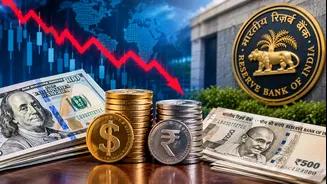
The Reserve Bank of India (RBI) doesn't let the rupee's value float entirely freely. It often intervenes in the foreign exchange market to manage extreme volatility. If the rupee is depreciating too quickly due to large capital outflows, the RBI may sell US dollars from its foreign exchange reserves to buy rupees. This increases demand for the rupee and helps cushion its fall. Conversely, if a flood of inflows is making the rupee too strong and hurting exporters, the RBI might buy dollars and sell rupees to prevent excessive appreciation. The central bank's goal is not to fix the exchange rate at a specific level, but to maintain orderly conditions and prevent sharp, destabilising movements that could harm the economy.