




The Coldest Spot in the Known Universe
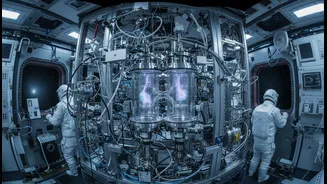
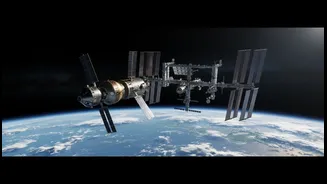
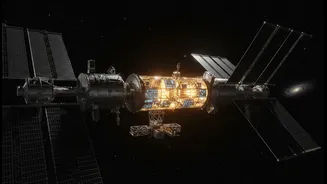
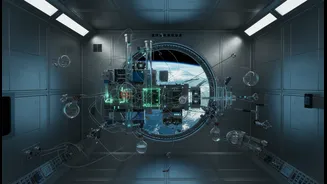
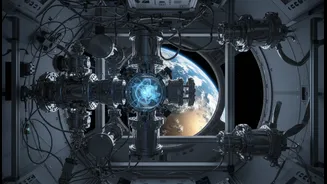
Aboard the ISS is a facility about the size of a mini-fridge called the Cold Atom Laboratory (CAL). Its job is to create the coldest known temperatures in the universe, chilling atoms to just a fraction of a degree above absolute zero, or about minus
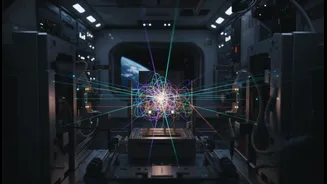
273 degrees Celsius. At these extreme temperatures, atoms behave in truly bizarre ways. Instead of acting like individual particles, they can merge into a single quantum object known as a Bose-Einstein Condensate (BEC), often called the fifth state of matter. In this state, the strange rules of quantum mechanics become visible on a macroscopic scale, allowing scientists to observe phenomena that are otherwise impossible to see. Conducting these experiments in space is crucial because gravity's pull on Earth interferes with these delicate states, causing them to collapse too quickly. In microgravity, these quantum waves can be observed for much longer, giving researchers an unprecedented window into their behaviour.
A Major Quantum Leap in Technology
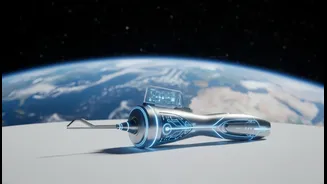
In a significant step forward, the Cold Atom Lab has recently undergone its fourth major upgrade since its installation in 2018. New hardware, launched to the station in April 2026 and installed by astronauts, has significantly expanded the lab's capabilities. One of the key improvements is a newly designed magnetic trap. This tool gives scientists the power to alter the shape of the quantum gas clouds, allowing them to probe the properties of ultracold atoms in new ways. Engineers also installed redesigned metal atom sources, which are more effective at generating the clouds of rubidium and potassium gas used in the experiments. Together, these upgrades allow for the creation of larger condensates and provide greater flexibility for a wide range of quantum experiments.
Probing the Fundamental Nature of Reality
With these enhanced tools, scientists aim to explore some of the deepest questions in physics. The primary goal of the Cold Atom Lab is fundamental research into the nature of matter and the universe. Atoms at these temperatures can behave like waves, appear in multiple places at once, and even pass through one another. By studying these effects in a controlled environment, researchers can test foundational theories of quantum mechanics with incredible precision. The upgraded lab supports five international teams of scientists investigating everything from the behaviour of quantum gases to the mysterious nature of dark matter. It’s a platform for exploring the boundary between the quantum world of the very small and the classical world we experience every day.
From Space Research to Earthly Technology
While the research sounds esoteric, its potential applications are very real. This work is part of what some call "Quantum 2.0," a new revolution in technology building on the first quantum revolution that gave us lasers, microchips, and MRI machines. The experiments being conducted on the ISS are crucial for developing future quantum technologies. These could include ultra-precise sensors capable of monitoring Earth’s water reserves or discovering the composition of distant moons by measuring tiny gravitational shifts. They could also lead to advanced navigation systems that allow astronauts to navigate on the Moon or Mars without relying on GPS. By proving that complex quantum instruments can operate reliably in space, the Cold Atom Lab is paving the way for a new generation of tools for both space exploration and improving life on Earth.