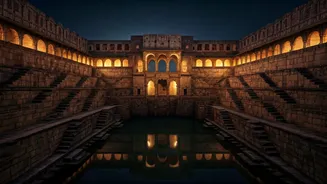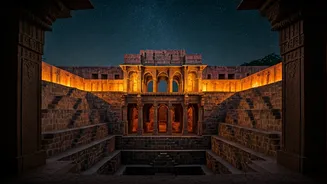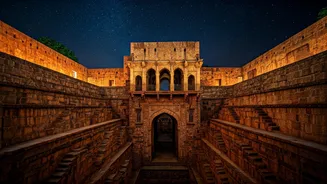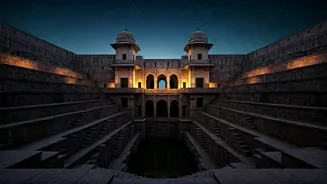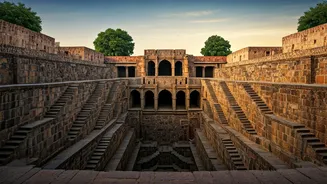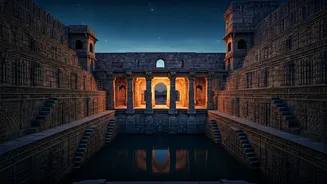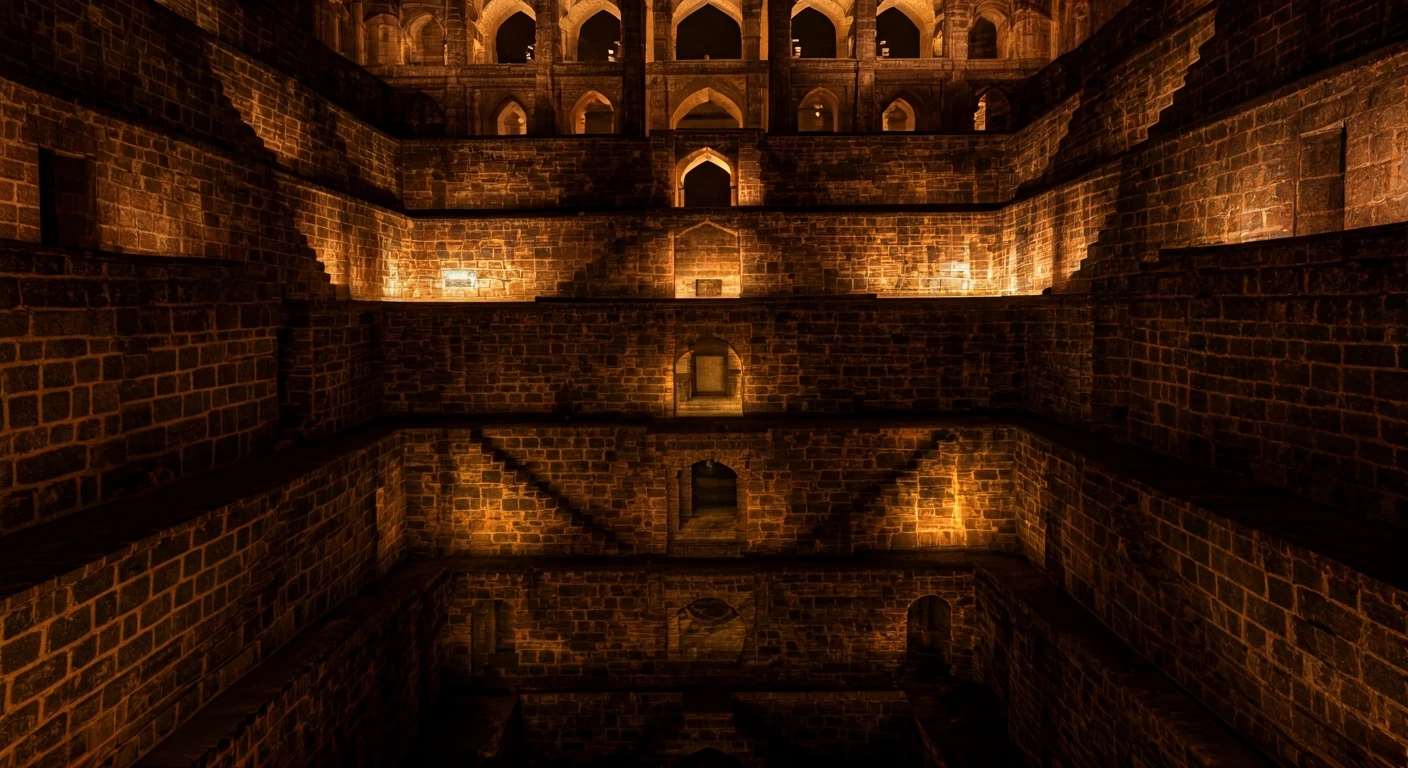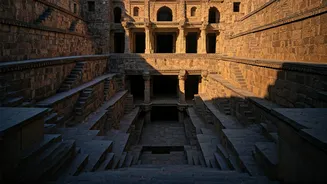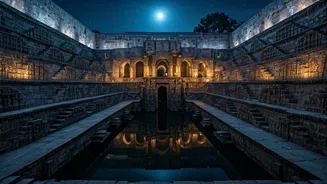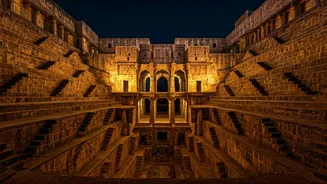



Why Stepwells After Dark?
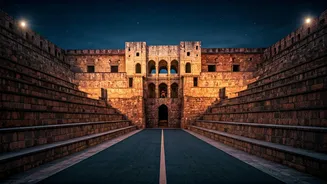
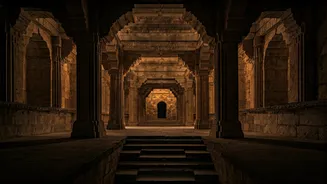
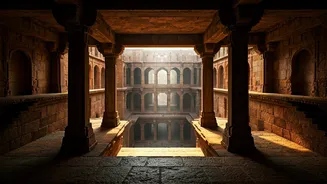
During the day, stepwells are marvels of geometric precision and engineering. At night, they become entirely different beasts. The absence of direct sunlight allows their intricate textures, carvings, and sheer scale to be sculpted by darkness and selective
light. Night photography emphasizes the dramatic interplay between light and shadow, highlighting the repetitive patterns of the steps as they descend into blackness. It’s an opportunity to create images that are less documentary and more atmospheric, evoking a sense of timelessness and mystery. A long-exposure shot can smooth out textures and create an ethereal glow, turning a familiar monument into a piece of abstract art.
Prime Locations for Your Night Shoot
While India has thousands of stepwells, only a few are prime candidates for night photography due to accessibility and architectural grandeur. **Chand Baori, Abhaneri, Rajasthan:** Perhaps the most famous and visually striking stepwell, its 3,500 narrow steps create an unforgettable geometric pattern. While nighttime access is restricted, it is occasionally illuminated for special events, and permissions for professional shoots can sometimes be sought in advance. **Adalaj ni Vav, Gujarat:** This five-story deep stepwell near Ahmedabad is renowned for its intricate Indo-Islamic architecture. The pillars and platforms are covered in carvings. Its location near a major city makes logistics slightly easier, and its structure offers countless angles for creative composition. **Rani ki Vav, Patan, Gujarat:** A UNESCO World Heritage Site, this stepwell is more like a subterranean temple, adorned with over 500 major sculptures. Capturing these details at night, if permission is granted, would be the project of a lifetime. The sheer artistic density here makes it a top-tier objective for serious photographers.
The Crucial Step: Permissions and Tours
You cannot simply walk into these protected monuments after closing time. Most stepwells are managed by the Archaeological Survey of India (ASI) and are gated after sunset. Gaining access requires planning. **Specialized Photo Tours:** The easiest route is to join a tour led by a company that specializes in photography workshops. These operators often have pre-existing arrangements and permissions, taking the bureaucratic load off your shoulders. They also provide expert guidance on-site. **The DIY Approach:** If you want to organize your own trip, start by contacting the local ASI office well in advance. You will need to submit a formal request explaining the purpose of your shoot (non-commercial vs. commercial), the equipment you'll use, and the number of people involved. Alternatively, hiring a well-connected local guide or fixer can be invaluable, as they can help navigate the process. Be prepared for paperwork and potential fees.
Essential Gear for the Descent
Night architectural photography demands specific equipment. Packing light is wise, but these items are non-negotiable. * **A Sturdy Tripod:** This is your most important tool. Long exposures are impossible without it. * **A Wide-Angle Lens:** To capture the immense scale of the stepwells (a 16-35mm or 24-70mm lens is ideal). * **A Camera with Manual Mode:** You need full control over aperture, shutter speed, and ISO. * **A Remote Shutter Release or Timer:** To avoid camera shake when you press the shutter button. * **Extra Batteries and Memory Cards:** Long exposures drain batteries quickly, and you don’t want to run out of power or space at the crucial moment. * **A Headlamp or Torch:** Essential for navigating the steps safely in the dark and for adjusting your camera settings. A red-light mode is useful for preserving your night vision.
Techniques to Master the Darkness
Once you're on-site, the creative work begins. Start with a high ISO (e.g., 1600) to take a quick test shot and check your composition. Once you're happy, lower the ISO to its base level (e.g., 100 or 200) for the best quality. Use a mid-range aperture (f/8 to f/11) to ensure sharpness throughout the structure. Your shutter speed will be your main variable, likely ranging from 10 to 30 seconds or more, depending on the ambient light. Use your camera’s live view to zoom in and manually focus on a point of light or a well-defined edge. For more advanced results, consider 'light painting'—using a torch to selectively illuminate parts of the stepwell during a long exposure.