




The Batter Consistency is Off
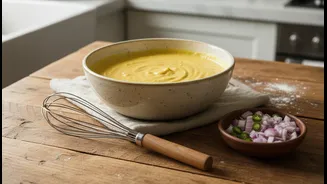
The most common reason for a chilla disaster is the batter itself. If it’s too thin and watery, it won't have the structure to hold together and will spread too much. If it's too thick, it won't spread evenly and can cook improperly, causing it to tear
when you try to flip it. The ideal besan chilla batter should be smooth, free of lumps, and have a pouring consistency—not too thick, not too runny. When you lift the whisk, it should flow freely but still coat the utensil. To achieve this, add water gradually while whisking continuously. This prevents lumps from forming and gives you full control over the final thickness.
Your Pan Isn't at the Right Temperature
Temperature control is crucial. If you pour the batter onto a pan that's not hot enough, the chilla will stick like glue. On the other hand, if the pan is scorching hot, the batter will set instantly before you can spread it, resulting in a thick, uneven pancake that's raw in the middle and prone to breaking. The sweet spot is a medium-hot pan. A good way to test this is to sprinkle a few drops of water on the surface. If they sizzle and evaporate quickly, your pan is ready. For the first chilla, it's a good idea to lightly grease the pan and then wipe it, which helps create a non-stick surface. Always cook on a medium to low-medium flame for even cooking.
You're Being Impatient with the Flip
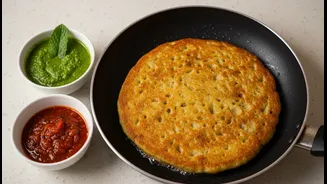
Flipping too early is a guaranteed way to break your chilla. The batter needs time to cook through and form a solid structure. If you try to lift it before it's ready, it will tear apart. A key sign that a chilla is ready to be flipped is when the edges start to lift away from the pan and the top surface looks set and dry, not wet or glossy. You should be able to slide a spatula underneath it with minimal resistance. Cook the first side for about two to three minutes on medium heat before attempting to flip. Once flipped, the second side will cook much faster, usually in about a minute or two.
The Vegetable-to-Batter Ratio is Wrong
Adding vegetables like onions, tomatoes, and capsicum makes chillas delicious and nutritious, but it's a balancing act. Too many vegetables, or veggies that are chopped too coarsely, can disrupt the integrity of the batter. The large chunks prevent the batter from forming a cohesive pancake, creating weak spots that lead to breakage. To avoid this, always chop your vegetables as finely as possible. This helps them integrate smoothly into the batter. Also, be mindful of the quantity; the vegetables should be a component of the batter, not the main ingredient. This ensures the besan has enough surface area to bind everything together.
A Little Extra Help is Needed
If you've tried everything and your chillas are still fragile, the besan itself might need a little help. Sometimes, the quality or grind of the gram flour can affect the final result. Using a coarse variety of besan, for instance, can lead to breakage. To improve binding and add a bit of crispness, consider adding a tablespoon of sooji (semolina) or rice flour to your batter for every cup of besan. These ingredients help absorb excess moisture and provide additional structure, making the chilla sturdier and less likely to fall apart when you flip it. Some recipes also suggest letting the batter rest for 10-15 minutes, which allows the flours to hydrate properly and can result in a softer, more pliable chilla.