







A Land of Ecological Contrasts
Situated just 15 km from the coastal city of Porbandar, the Barda Wildlife Sanctuary covers over 192 square kilometres of undulating terrain across the Porbandar and Devbhumi Dwarka districts. Declared a sanctuary in 1979, it was once the private hunting
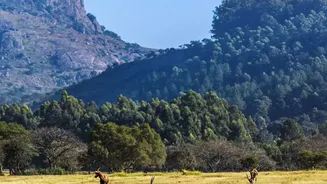
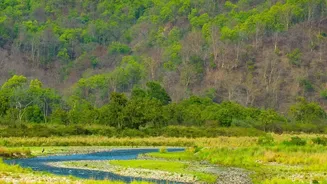
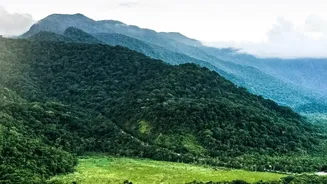
reserve of the princely states of Porbandar and Jamnagar. Unlike the surrounding coastal plains, Barda is defined by its hills, which act as a natural barrier against salinity ingress. Its ecosystem is a rich tapestry, weaving together dry deciduous forests, thorny scrublands, and vast grasslands, creating diverse niches for a wide array of life. This mix of habitats is precisely what makes Barda so resilient and ecologically significant.
The Lion's New Kingdom
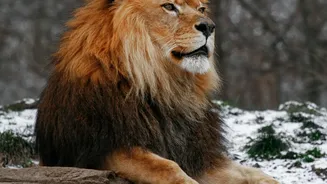
For decades, the entire wild population of Asiatic lions was confined to Gir National Park. This placed the species at high risk from disease outbreaks or natural disasters. Experts long advocated for a second, separate home to ensure their long-term survival. Barda has now officially become that second home. The journey began in January 2023, when a lone male lion naturally migrated from the Gir landscape to Barda after an absence of nearly 144 years. Following this natural recolonisation, the Gujarat Forest Department introduced five females to establish a breeding population. As of August 2025, the sanctuary was home to a growing pride of 17 lions, including several cubs.
The Untamed Grasslands and Scrub
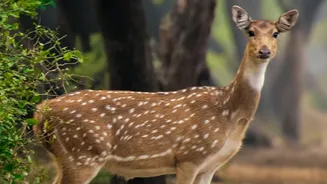
A significant portion of Barda is composed of grasslands and scrublands, which are vital for its herbivores. These open areas provide grazing grounds for animals like nilgai (blue bull) and wild boar. Recent studies of the new lion population show a heavy reliance on this prey base, with wild pigs making up a large part of their diet. To support the growing predator population, authorities have been actively managing these habitats, clearing invasive species and augmenting the prey base by reintroducing species like chital (spotted deer) and sambar, which were historically present. These efforts are crucial to building a self-sustaining ecosystem capable of supporting its apex predators.
A Thriving Forest Ecosystem
The sanctuary's hills are draped in various forest types, including southern dry mixed deciduous and northern tropical thorn forests. It boasts an impressive floral diversity, with around 650 plant species recorded. Key tree species include Gorad, Babul, Dhav, Jamun, and bamboo, many of which have medicinal properties. These forests provide cover and sustenance for a different set of animals. Leopards, striped hyenas, and jungle cats find refuge in the denser wooded patches. The sanctuary is also a haven for birdwatchers, with species like the crested hawk-eagle and spotted eagle soaring above the canopy. The health of these forests is intrinsically linked to the region's water security, as they help in groundwater restoration.
People and Conservation in Harmony
Barda is not just a wilderness; it is also a living landscape. Several ethnic communities, including the Maldharis, Rabaris, and Gadhvis, live within and around the sanctuary, their pastoral lifestyles intertwined with the local environment for generations. Recognizing the importance of community partnership, conservation efforts have increasingly focused on mitigating human-wildlife conflict and integrating local populations. Ecotourism initiatives launched in 2024 aim to provide livelihoods for residents as nature guides and safari operators, giving the community a direct stake in the sanctuary's protection and success. This inclusive approach is fundamental to the long-term vision for Barda.