





The Ultimate Safety Net
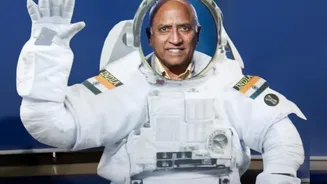
Before Indian astronauts, or 'Vyomanauts', make their journey to low-Earth orbit, the Indian Space Research Organisation (ISRO) is leaving no stone unturned to ensure their safe return. This involves a rigorous sequence of tests designed to prepare for every
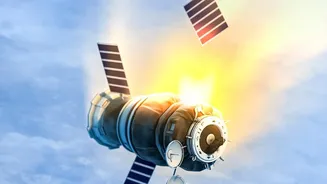
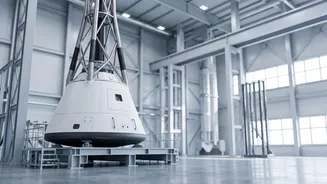
conceivable emergency. The primary focus is on two key systems: the Crew Escape System (CES) and the parachute-based deceleration system. The CES is designed to jettison the crew module away from the launch vehicle in case of a malfunction on the launchpad or during ascent. The parachute system is equally vital, responsible for slowing the crew module from high velocity to a gentle splashdown in the ocean upon its return to Earth. These tests aren't just technical checks; they are the bedrock upon which the entire safety architecture of India's human spaceflight program is built.
Simulating Worst-Case Scenarios
ISRO is systematically simulating worst-case scenarios to validate these life-saving technologies. A series of 'abort tests' are planned to demonstrate the Crew Escape System's reliability under different flight conditions. One such test, the Pad Abort Test, was successfully conducted in 2018, proving the system can safely pull the crew away from a launchpad emergency. More recent tests have focused on the complex parachute system. ISRO has conducted a series of Integrated Air Drop Tests (IADT), where a full-weight simulated crew module is dropped from a high-flying helicopter to test the deployment sequence of the ten parachutes. Recent successful tests in July and August 2026 have qualified the main parachutes under maximum load conditions, providing huge confidence for the first uncrewed mission. Other ground-based trials have validated the systems that blow off the parachute cover and ensure the capsule floats upright after splashing down in the sea.
The Road to a Crewed Launch
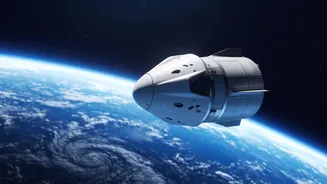
These safety tests are critical milestones on the path to the first crewed Gaganyaan flight, currently targeted for 2027. Before astronauts take their seats, ISRO plans to conduct a series of uncrewed test flights. The first of these, the G1 mission, is slated for late 2026. This mission will see the humanoid robot 'Vyommitra' fly aboard the Gaganyaan capsule, testing the performance of the life-support systems, re-entry dynamics, and recovery operations in a real-world space environment. The data gathered from Vyommitra's flight and the successful validation of the escape and recovery systems will provide the final green light for India to launch its own astronauts into orbit. The meticulous, step-by-step approach underscores that for ISRO, astronaut safety is the absolute highest priority, taking precedence over timelines.
A Nation's Ambition Takes Flight
The Gaganyaan mission is more than a scientific endeavour; it is a powerful statement of India's technological prowess and national ambition. Upon successful completion, India will join an elite club of nations—currently comprising only Russia, the United States, and China—with the independent capability to send humans to space. The human-rated LVM3 rocket, a more reliable and redundant version of ISRO's workhorse launcher, has been specifically developed for this mission. The success of these final safety tests is the key that unlocks this historic achievement. It demonstrates a maturity in engineering and systems integration that has far-reaching implications, bolstering India's position as a major player in the global space industry and inspiring a new generation of scientists and engineers across the country.