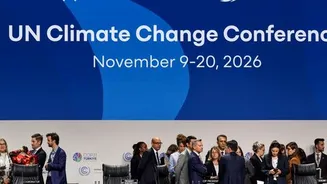



The crucial COP31 climate summit in Antalya, Turkey, has concluded without a central agreement, leaving the world's climate goals in a precarious position. Here’s a breakdown of what went wrong, and why it matters for everyone.
What Was at Stake?
The annual Conference of
the Parties (COP) is the main forum where nearly 200 countries negotiate how to collectively tackle climate change. This year’s summit, COP31, was seen as a critical test of global resolve. With scientists warning that the world will likely overshoot the Paris Agreement's goal of limiting warming to 1.5 degrees Celsius, the pressure was immense. The primary goal was to create a strong 'cover decision'—a final political pact that would accelerate action. On the table were crucial discussions about the future of fossil fuels, financial aid for developing nations, and support for adapting to unavoidable climate impacts. However, after running for longer than any previous climate summit, the talks collapsed, marking the first such failure since 2009.
The Great Divide: Finance and Fossil Fuels
The negotiations fell apart over two interconnected and deeply divisive issues: fossil fuels and money. A major coalition of around 130 countries, including the EU, UK, and many climate-vulnerable nations, insisted that the final agreement include a clear commitment to 'transition away from fossil fuels'. This language, however, faced fierce resistance from a group of oil and gas-producing nations, including Saudi Arabia and Russia, who successfully had any mention of fossil fuels removed from the draft text. This move was deemed a 'red line' by many, who argued that a climate deal that doesn't mention the primary cause of climate change is absurd. The second major sticking point was climate finance. Developing nations demanded that wealthy countries, who are historically responsible for the majority of emissions, provide more financial support to help them shift to clean energy and cope with climate disasters. They sought clear targets, including a tripling of adaptation finance to $120 billion by 2035, but developed nations, citing their own economic pressures, were unwilling to commit to new funding.
India's Stand: Equity and Support
Throughout the negotiations, India positioned itself as a key voice for the Global South, advocating for a path that balances decarbonisation with development. The Indian delegation consistently stressed the principle of 'Common but Differentiated Responsibilities', arguing that developed nations must fulfill their historical obligations to provide finance and technology. India's opening statement called on wealthy countries to meet their commitments under the Paris Agreement, emphasising that predictable public finance is essential for developing nations to pursue climate action without compromising their fight against poverty. India also championed a 'country-driven' Just Transition Mechanism, arguing that any shift away from polluting industries must include robust support for workers and communities, covering employment, social protection, and energy access.
Not a Total Loss, But a Major Setback
While the failure to secure a headline agreement—the 'Antalya Pact'—is a significant blow, the summit was not a complete wash. Progress was made on several technical and procedural fronts. Negotiators managed to adopt decisions on a framework for the 'just transition', climate finance work programmes, and adaptation. Furthermore, outside the main negotiations, voluntary coalitions made some headway. Dozens of countries, for instance, signed on to a global goal to boost electrification. However, these smaller wins are overshadowed by the central failure. As UN Secretary-General António Guterres stated, the breakdown was 'deeply disappointing' and a result of powerful fossil fuel interests undermining progress. Many observers agreed that no deal was better than a bad deal that would have weakened previous commitments.