



The Evening Star's Dazzling Display
Throughout August 2026, Venus has been a commanding presence in the evening sky. Often called the "Evening Star," it's not a star at all, but Earth's closest planetary neighbour. This month, it has been particularly brilliant, shining at a magnitude that
makes it impossible to ignore. Its prominence is due to its position in its orbit relative to Earth and the Sun. Mid-August marked its 'greatest elongation', the point where it appeared farthest from the Sun in our sky, making it visible for longer after sunset. As the month closes, it remains exceptionally bright, a beacon in the twilight.
When and Where to Look From India
The good news for stargazers across India is that Venus is easily visible nationwide. The key is to look towards the west-southwest horizon. The best viewing window is in the period just after the sun has set. Start looking about 30 to 45 minutes after sundown, and you will find it shining brightly in the deepening twilight. It will be visible for about 90 minutes or more after sunset before it too dips below the horizon. As we head into the final days of August and into early September, you'll notice Venus getting closer to the bright star Spica, in the constellation of Virgo, with their closest approach happening in early September.
Tips for City Dwellers and Monsoon Skies
Stargazing in India during August can be challenging due to two main factors: monsoon clouds and city light pollution. Don't be discouraged. The monsoon often provides brief windows of clear sky, especially right after a spell of rain, when the atmosphere has been washed clean of dust and haze. The key is to be patient and check your local weather forecast for breaks in the clouds. If you live in a big city, try to find a spot with a relatively unobstructed western view, like a park, a rooftop, or the upper floor of a tall building. The good news is that Venus is so bright it can often punch through moderate light pollution, making it one of the few celestial objects easily visible from urban centres.
Do You Need a Telescope?
Absolutely not. One of the best things about observing Venus this month is that it's a fantastic naked-eye object. Its sheer brightness makes it a rewarding sight without any special equipment. However, if you have a pair of binoculars, you will be in for a treat. Binoculars will stabilize the view and make its brilliance even more apparent. A small telescope will reveal even more detail: Venus goes through phases, just like our Moon. During this period in its orbit, it appears as a small, half-lit disk, and will transition into a larger, thinner crescent in the coming weeks.
What You Are Actually Looking At
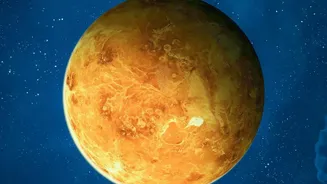
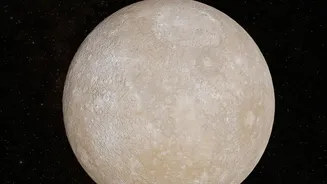
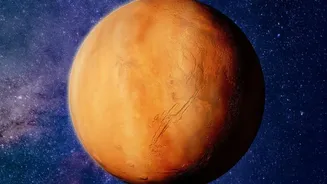
When you gaze at that beautiful point of light, you are looking at a world of extreme contrasts. While it is named for the Roman goddess of love and beauty, Venus is an incredibly hostile environment. Its surface is hotter than Mercury's, despite being farther from the Sun, due to a runaway greenhouse effect from its thick, toxic atmosphere. This dense cloud cover is also what makes Venus so reflective and bright in our sky. So, as you admire its serene glow from millions of kilometres away, you can appreciate the fascinating and formidable nature of our planetary neighbour.