
Our Sister Planet, A Hothouse World
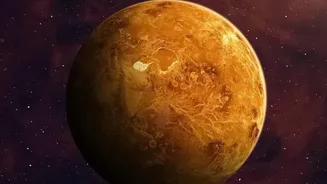
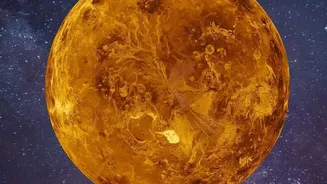
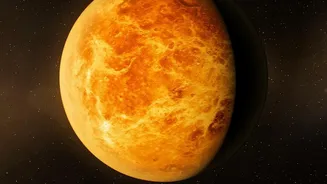
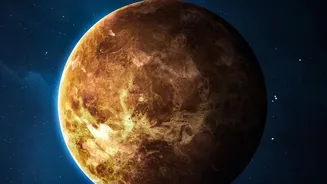
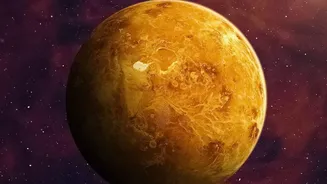
Imagine a planet roughly the same size and mass as Earth, but with surface temperatures hot enough to melt lead and a crushing atmospheric pressure 90 times greater than ours. That is Venus. Its skies are filled with clouds of sulfuric acid, and its surface is a volcanic
landscape that has largely remained a mystery, hidden from direct sight. For decades, scientists have debated whether the planet's more than 80,000 volcanoes are ancient relics or if some are still active today. While radar mapping from past missions like NASA's Magellan revealed a surface shaped by volcanism, proving current activity has been a monumental challenge. The extreme conditions make sending long-lasting landers incredibly difficult, forcing scientists to find creative ways to study the planet from afar.
Enter Shukrayaan-1: India's Next Interplanetary Leap
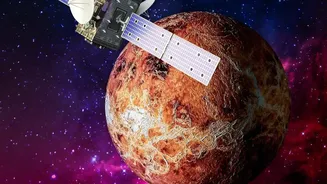
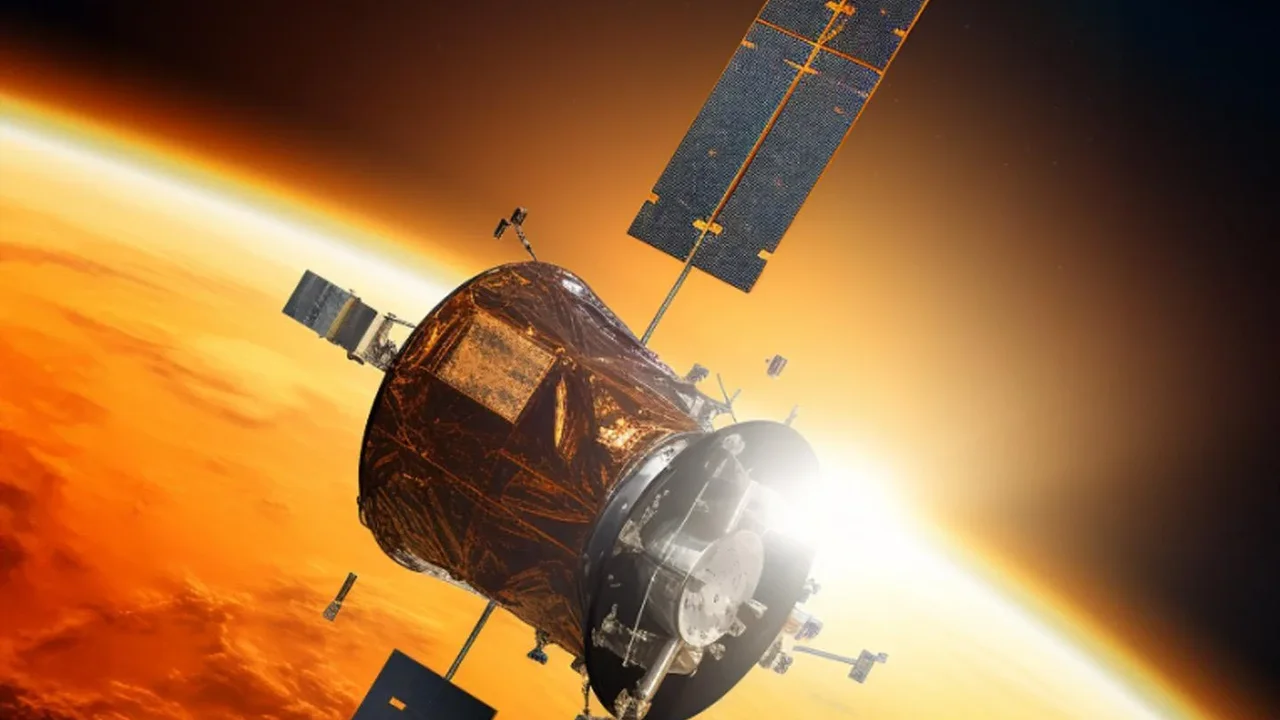
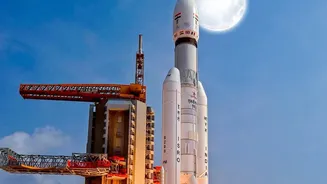
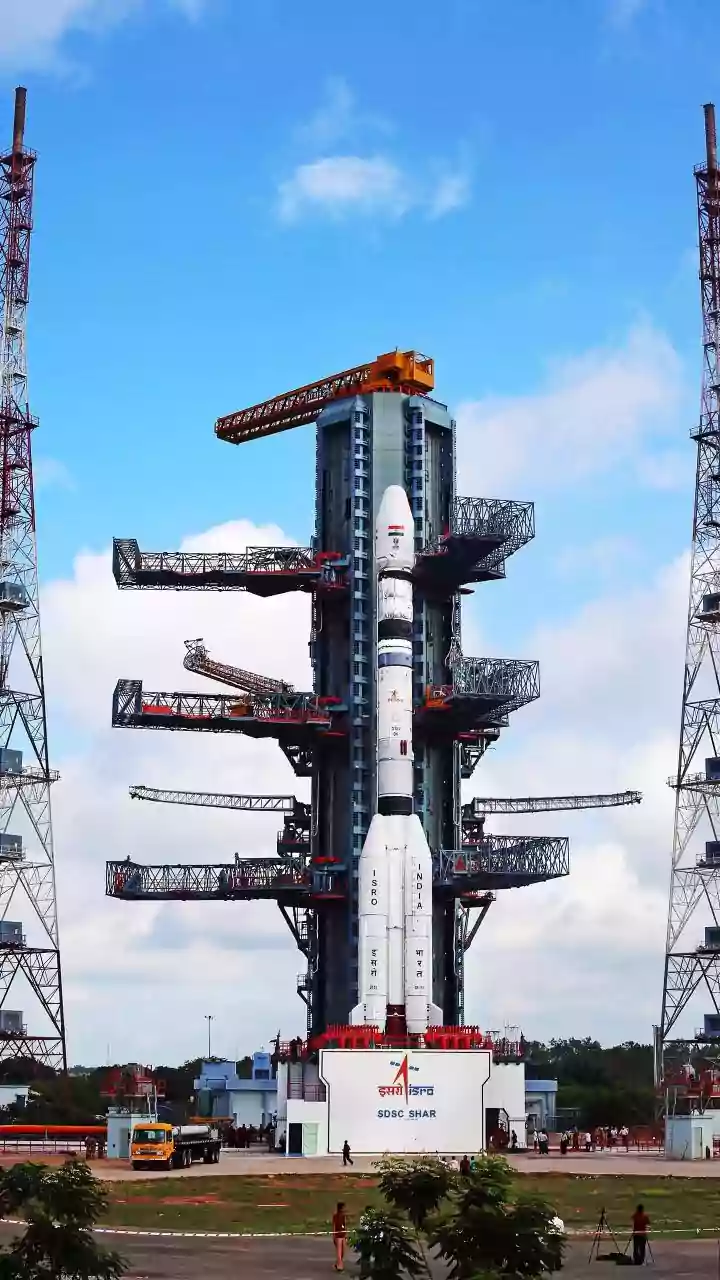
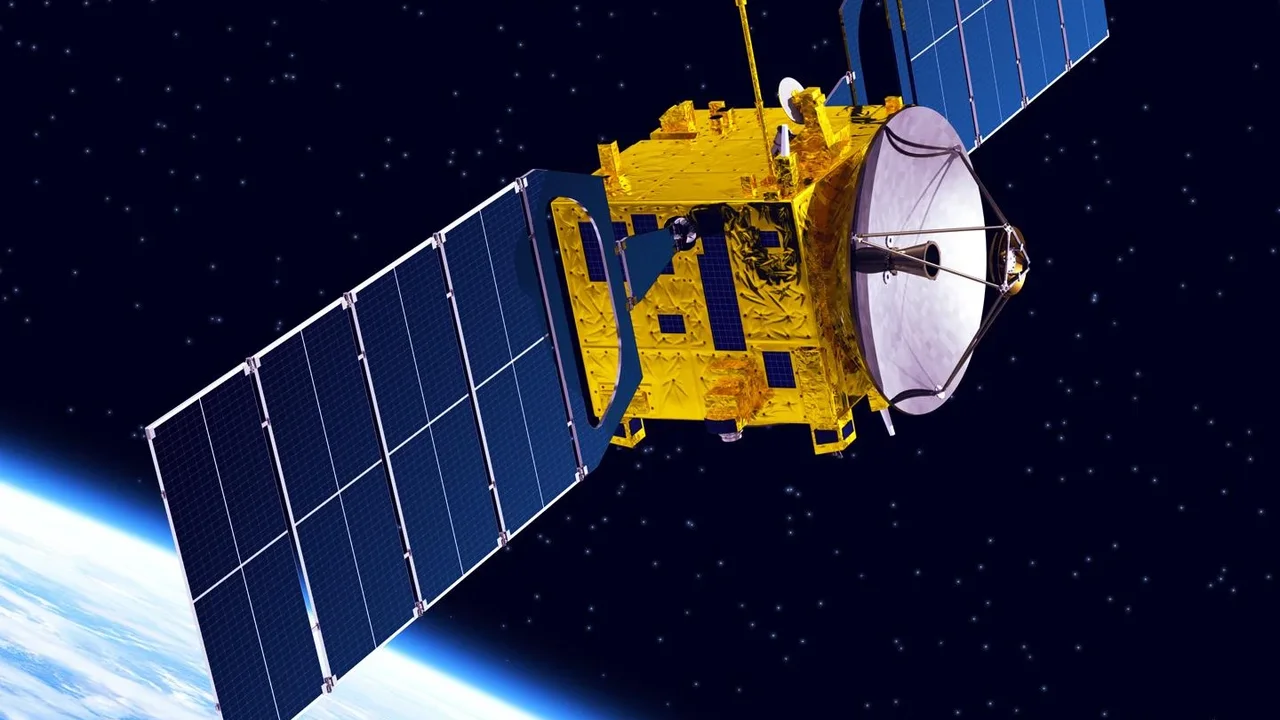
Following the historic success of the Mangalyaan Mars mission, the Indian Space Research Organisation (ISRO) is turning its attention to our other planetary neighbour. The Venus Orbiter Mission, unofficially known as Shukrayaan-1, is India's first dedicated mission to the planet. Formally approved in September 2024 with a launch scheduled for March 29, 2028, this ambitious project will place a sophisticated orbiter around Venus. The spacecraft, weighing around 2,500 kg and carrying a 100 kg suite of scientific instruments, will spend over four years studying the planet from a carefully managed orbit. The mission aims to map the surface and, crucially, analyze the dense atmosphere in unprecedented detail.
Reading the Atmosphere to See the Ground
The key to uncovering Venus's geological secrets lies in its thick atmosphere. Scientists believe the atmosphere and the surface are strongly linked. When a volcano erupts, it spews gases like sulphur dioxide into the air. Detecting sudden spikes or localized clouds of these specific chemicals can serve as a smoking gun for an active eruption on the surface below. This is the core principle behind one of Shukrayaan-1's primary objectives. The mission won't need to see the lava flows directly; instead, its sensitive instruments will 'sniff' the air for the tell-tale chemical fingerprints of volcanic activity. This clever atmospheric investigation provides a window to the geological processes happening miles below the cloud tops.
The High-Tech Tools for the Job
To achieve its goals, Shukrayaan-1 will carry a host of advanced payloads. While the headline refers to atmospheric instruments, the mission has a multi-pronged approach. Payloads like the Venus Thermal Camera will map heat emissions, which could reveal hotspots from recent lava flows. Another key instrument, the Venus S-Band SAR, will provide high-resolution radar imaging to map surface features, looking for changes since the Magellan mission. Crucially, atmospheric sensors like the VIRAL instrument, a collaboration with Russia and France, will analyze the chemical composition of the air, hunting for those volcanic gases. Together, these tools will provide a comprehensive picture, combining atmospheric chemistry with surface imaging to build a strong case for active volcanism.
Why Finding Active Volcanoes Matters
Confirming active volcanoes on Venus would be a game-changing discovery. Recent re-analysis of old Magellan data has already provided strong evidence of eruptions that occurred in the 1990s, shifting the scientific consensus. Shukrayaan-1's continuous monitoring could provide definitive, real-time proof. Finding ongoing activity would confirm that Venus is a geologically 'living' planet, not a dormant one. This has huge implications for understanding how terrestrial planets evolve. It could help answer why Venus, once possibly more like Earth, turned into a runaway greenhouse inferno. By studying the dynamic processes on our sister world, we can gain invaluable insights into the long-term future of our own planet's climate and geology.