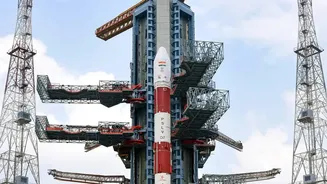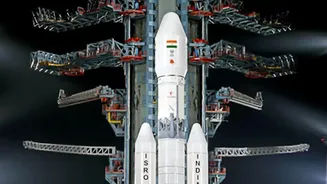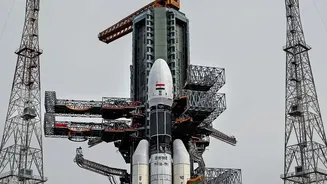



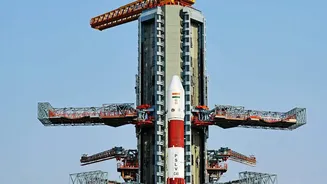
A Policy Shift Opens the Floodgates
For decades, a career in space meant a coveted job at the Indian Space Research Organisation (ISRO). That era is over. The Indian Space Policy of 2023, along with the creation of the regulatory body IN-SPACe, has opened the sector to private companies.
This has transformed a government-led monopoly into a dynamic public-private ecosystem. The results are staggering: India's space economy, valued around $9 billion, is projected to surge to over $40 billion within a decade. The number of space startups has grown from a handful to over 400, attracting significant investment and creating a parallel universe of opportunity. This policy shift unburdens ISRO to focus on deep-space exploration, while private players build the commercial infrastructure, creating a fertile ground for new jobs.
The Downstream Data Goldmine
Perhaps the biggest and most accessible job market is not in building hardware, but in using the data it collects. This is the “downstream” sector, and it's a goldmine. Every day, satellites orbiting Earth capture immense volumes of imagery and signals. The real value lies in analysing this data to provide actionable insights. Companies are now hiring data scientists, AI specialists, and geospatial analysts to revolutionise a host of industries. These professionals help farmers with precision agriculture, insurers to assess risk after natural disasters, urban planners to design smarter cities, and climate scientists to monitor environmental changes. Startups like SatSure are focused entirely on this space, hiring remote sensing engineers and machine learning experts to turn satellite data into decision-making tools. You no longer need to be a rocket scientist; skills in Python, GIS tools, and data analytics are your ticket in.
Upstream Manufacturing and Innovation
While the downstream sector is exploding, the “upstream” sector—which involves building space hardware—is also evolving rapidly. Private companies are not just supplying components to ISRO anymore; they are designing and building their own rockets and satellite constellations. Companies like Skyroot Aerospace and AgniKul Cosmos are hiring for core engineering roles in propulsion, avionics, and structural design. Others, like Dhruva Space, build standardised satellite platforms, creating demand for aerospace, mechanical, and electrical engineers. This creates a need for skilled technicians in assembly, integration, and testing (AIT), as well as material scientists and electronics specialists. The shift means engineers can now work in fast-paced startup environments, contributing to an entire vehicle's lifecycle from design to launch.
The Hidden Support Ecosystem
A thriving space industry needs more than just engineers and data scientists. As the sector commercializes, a vast support ecosystem is emerging, creating jobs for professionals from completely different backgrounds. The new private space race requires space lawyers to navigate complex international treaties and domestic regulations. It needs finance professionals to manage investment and venture capital, which is pouring into the sector. It demands marketing and business development experts to sell satellite services and launch contracts. Even creative roles are appearing as space-tech companies need to build their brand. This ancillary economy demonstrates the true breadth of the space sector's impact; it is becoming a mainstream industry that requires a full spectrum of professional talent to function and grow.