






The Allure of the Apothecary Bottle
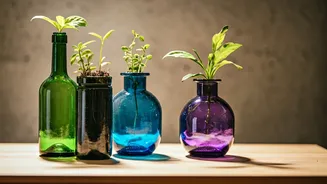
There’s an undeniable charm to old-school apothecary bottles. Their tinted glass—often in shades of amber, cobalt blue, or forest green—harkens back to a time of handcrafted remedies. This vintage aesthetic makes them an instant decor upgrade for any
desk or shelf. But their beauty is more than skin-deep. The tinted glass serves a practical purpose for your plant cuttings: it helps to block direct sunlight from reaching the water, which significantly slows the growth of algae. This means your display stays cleaner for longer, and the focus remains on the delicate roots and vibrant leaves of your plants. You can find these bottles at flea markets, antique shops, or by simply saving and cleaning coloured glass bottles from syrups, oils, or vitamins.
Choose the Right Plants
Not all plants are suited for living in water, but many popular houseplants thrive in it, a process called hydroponic propagation. The key is to choose plants that root easily from cuttings. Some of the most reliable and beautiful options include:
- **Pothos (Epipremnum aureum):** Often called the 'cubicle plant', it's famously resilient and its trailing vines look stunning cascading from a bottle.
- **Philodendron:** Varieties like the Heartleaf Philodendron are incredibly easy to propagate and have lush, elegant leaves.
- **Spider Plant (Chlorophytum comosum):** The small 'spiderettes' that hang from the mother plant are baby plants just waiting to be placed in water.
- **Wandering Dude (Tradescantia zebrina):** Known for its striking purple-and-silver striped leaves, it roots quickly and adds a pop of colour.
- **Syngonium (Arrowhead Plant):** These grow vigorously in water and come in a range of colours from green to pink.
How to Take a Proper Cutting
Getting a healthy cutting is the most crucial step. Don’t just snip off a leaf; you need a piece of the stem that contains a 'node'. A node is a small bump on the stem where leaves, aerial roots, or other stems grow. This is where the new water roots will emerge. Using clean, sharp scissors or pruning shears, cut a piece of stem that is about 4-6 inches long and has at least two or three leaves and one or two nodes. Make your cut just below a node. Once you have your cutting, gently remove any leaves on the lower part of the stem that would otherwise be submerged in water. This prevents them from rotting and fouling the water.
Water, Light, and Basic Care
Caring for your botanical display is wonderfully simple. Fill your clean apothecary bottle with room-temperature water; filtered or distilled water is ideal as it's free of chlorine that can sometimes inhibit root growth, but tap water left out for 24 hours will also work fine. Place your cutting inside, ensuring the nodes are submerged but the leaves are not. Then, find a spot that receives bright, indirect sunlight. A desk a few feet from a window is perfect. Direct sun can scorch the leaves and encourage algae. To keep your plant healthy, change the water every one to two weeks, or whenever it starts to look cloudy. This replenishes oxygen and removes any waste.
Style Your Desktop Display
The final step is the most creative. A single bottle with a trailing vine can be a minimalist statement, but grouping several bottles together creates a more impactful 'botanical scape'. Play with variety. Combine bottles of different sizes, shapes, and colours—a trio of amber, green, and clear bottles can look particularly striking. Vary the heights of the cuttings as well to create visual interest. Arrange them in a small tray or cluster them near a lamp or stack of books. The beauty of this project is its flexibility. You can easily move them, rearrange them, and watch as the delicate white roots slowly fill the coloured glass, adding another layer of visual appeal to your gorgeous, living art.