
What is the Crew Escape System?
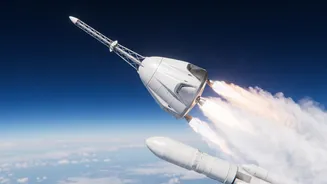
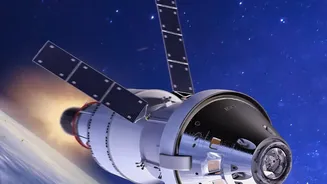
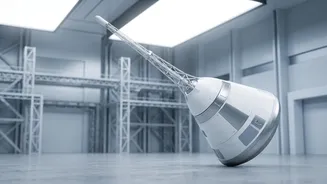
Think of the Crew Escape System as the ultimate ejection seat, but for an entire space capsule. It's a dedicated safety mechanism designed to do one thing: pull the crew module, with the astronauts inside, away from a malfunctioning rocket in seconds.
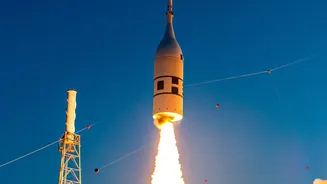
Human safety is the highest priority in the Gaganyaan mission, and the CES is the crucial lifeboat during the most dangerous phases of a launch—right on the launchpad or during the intense ascent through the atmosphere. The system is a collection of powerful, quick-acting solid-fuel motors positioned at the very top of the rocket. If a catastrophic failure is detected, these motors fire with immense force, literally yanking the capsule clear of the failing launch vehicle.
Scenario One: The Pad Abort Test
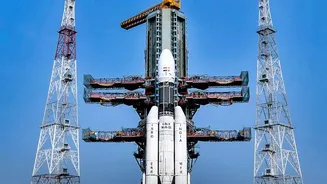
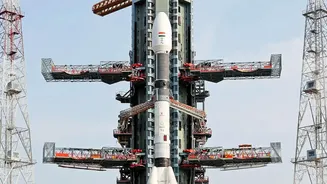
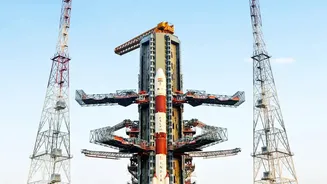
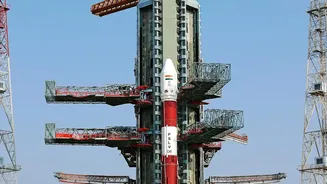
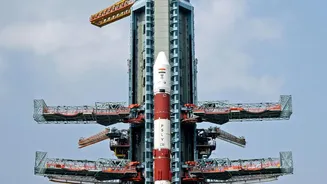
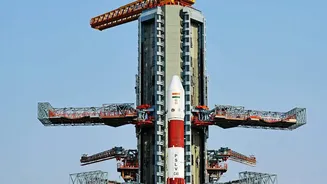
What happens if the emergency occurs before the rocket even leaves the ground? For this, ISRO conducts a Pad Abort Test (PAT). This test simulates a worst-case scenario where a launch needs to be aborted while the rocket is still on the launchpad. ISRO successfully performed its first PAT in July 2018. In this test, a simulated crew module was lifted off the pad using only the Crew Escape System's own motors. The system propelled the 12.6-tonne module to an altitude of nearly 2.7 kilometres before it arced over the Bay of Bengal. After reaching the peak of its trajectory, the module descended under parachutes for a safe splashdown, proving the system could effectively save the crew even from a ground-level disaster. The entire operation lasted just over four minutes.
Scenario Two: The In-Flight Abort Test
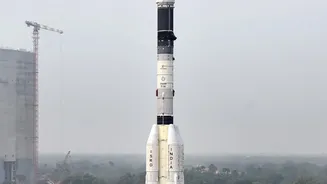
An emergency during ascent, when the rocket is travelling at immense speeds and under massive aerodynamic stress, presents a different challenge. To validate safety in this phase, ISRO performs a series of Test Vehicle (TV) flights, like the successful TV-D1 mission in October 2023. The goal of this test was to demonstrate an in-flight abort when the vehicle is travelling at Mach 1.2—slightly above the speed of sound—a point of maximum aerodynamic pressure. A specially designed test vehicle carried the uncrewed crew module to an altitude of about 17 km. At a pre-determined point, an abort was triggered. The escape motors fired, pulling the crew module away from the rocket. The module then separated from the escape system, deployed its parachutes, and executed a controlled splashdown in the sea, where it was recovered by the Indian Navy. This successfully demonstrated the end-to-end sequence of an in-flight rescue.
The Anatomy of a Successful Escape
The Crew Escape System isn't just one motor; it's a symphony of components working in perfect harmony. It primarily uses a 'puller' type design, where motors at the top pull the capsule away. This includes several sets of solid motors, each with a specific job, like the High and Low Altitude Escape Motors. A crucial part of the process is the Integrated Vehicle Health Management system, a complex network of sensors and software that monitors the rocket's vital signs in real-time. This system must detect an anomaly, confirm it isn't a false alarm, and activate the CES within milliseconds to ensure the crew is pulled to safety. Following the rapid escape burn, a sequence of drogue and main parachutes deploy to slow the crew module's descent, ensuring a gentle splashdown.