


The Moment of Maximum Danger
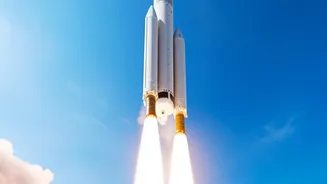
Imagine pushing your hand out of a speeding car window; you feel the force of the air pushing back. Now, multiply that by the power of a rocket accelerating to supersonic speeds. In every launch, there's a critical moment known as 'Max Q', which stands
for maximum dynamic pressure. This is the point where the combination of the rocket's immense speed and the thick lower atmosphere creates the greatest physical stress on the entire vehicle. Typically occurring about a minute after liftoff at an altitude between 11 and 17 kilometres, this is when the rocket's structure is under the most strain. If a catastrophic failure were to happen at this exact moment, the escape system would have to function under the most punishing aerodynamic conditions imaginable.
The Lifesaving Solution: A Crew Escape System
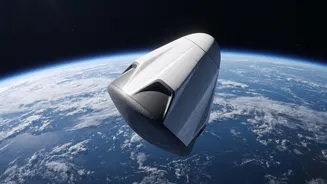
To protect its astronauts, or vyomanauts, ISRO has developed a Crew Escape System (CES). This is not just a simple parachute, but a powerful, self-contained rocket system mounted on top of the Crew Module. It's armed with a set of quick-acting, high-burn-rate solid motors designed for one purpose: to fire with immense force and pull the Crew Module—with the astronauts inside—clear of a failing launch vehicle. An Integrated Vehicle Health Management system, a complex network of sensors, monitors the rocket's parameters in real-time. If it detects a critical anomaly, it automatically triggers the CES, which must accelerate faster than the main rocket to create a safe separation distance.
Simulating the Unthinkable: The TV-D1 Test
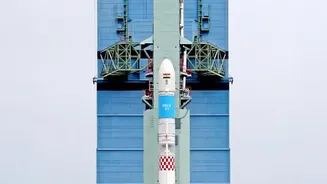
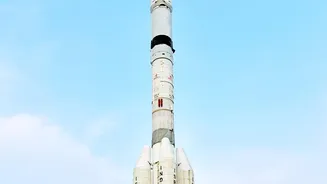
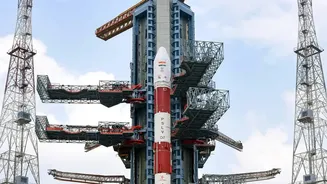
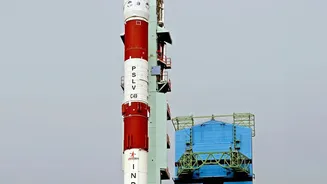
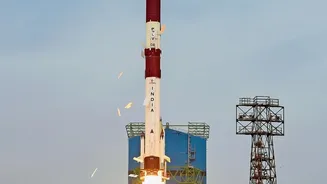
To prove the Crew Escape System works, you have to test it. But using the full-fledged, human-rated LVM3 rocket for such a test would be incredibly expensive. Instead, ISRO engineered a cost-effective, single-stage liquid-fuelled rocket called the Test Vehicle (TV). In October 2023, the Test Vehicle Abort Mission-1 (TV-D1) was launched with the specific goal of simulating an abort at Max Q. The rocket flew to an altitude of about 17 km, reaching a speed of Mach 1.2—the precise conditions of maximum aerodynamic stress. At that moment, the abort was deliberately triggered. The escape motors fired, violently pulling the Crew Module away from the test rocket. The entire sequence, from separation to parachute deployment and a safe splashdown in the Bay of Bengal, worked flawlessly, proving the system could function as designed in the most challenging phase of ascent.
Built to Withstand the Force
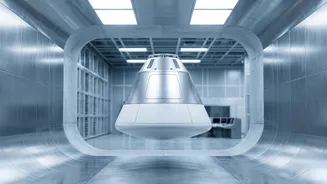
Surviving the initial escape is only half the battle; the Crew Module itself must be strong enough to endure these forces without breaking apart. Its structural integrity is the bedrock of crew safety. The TV-D1 flight was a crucial real-world validation, as the unpressurised test module was heavily instrumented to measure the stresses it underwent during the abort sequence. Beyond flight tests, ISRO conducts rigorous ground-based qualification tests. In one such test, engineers validated the module's strength during the pyrotechnic separation of the apex cover, which protects the parachutes. They subjected a simulated Crew Module to loads 1.75 times greater than those expected during an actual flight. The fact that the structure's strain and deformation remained well within design limits confirmed it had the necessary strength and safety margins to protect the crew.
From Separation to Splashdown
Validating structural integrity covers the entire escape sequence. After the CES pulls the module clear, it separates, and the Crew Module must autonomously execute the rest of the mission. This involves deploying a series of parachutes—first smaller drogue chutes to stabilize and slow it from high speed, followed by the large main parachutes to ensure a gentle splashdown. The successful recovery of the TV-D1 module by the Indian Navy demonstrated the success of this entire chain of events. Additional ground tests, such as those validating the clean separation of the umbilicals that connect the Crew Module to the Service Module, further ensure that every step that involves a structural event is certified to be safe and reliable.