



Rethink Your Rain Jacket
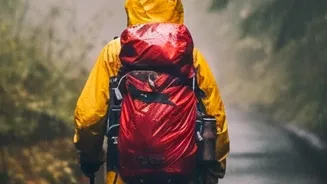
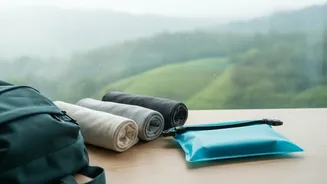
The single biggest space and weight offender is often the raincoat. Leave the heavy, bulky jacket at home. Your new best friend is an ultra-lightweight, packable rain shell. These jackets are engineered from technical fabrics that are fully waterproof
and windproof but can be compressed down to the size of a small pouch, often saving over a kilogram of weight. Look for a 3-layer (3L) jacket, which offers the best combination of durability, breathability, and weather protection without the bulk. A good quality packable shell is an investment that will revolutionize how you pack for any trip with unpredictable weather. It provides the protection you need without consuming your precious weight allowance.
Wear Your Heaviest Items
This is the oldest trick in the book for a reason: it works. Your travel-day outfit is a strategic part of your luggage allowance. Wear your heaviest and bulkiest items on the plane, train, or bus. This typically includes your sturdiest pair of shoes (like hiking boots or sneakers), any jeans or thick trousers, and your rain jacket. You can always take the jacket off once you're seated. By wearing these items, you can free up one to two kilograms of space and weight in your bag, which is a massive saving under a 7kg limit. Layering a couple of shirts or a thin fleece can also help.
Choose Quick-Dry and Multi-Purpose Fabrics
In a damp, humid monsoon climate, heavy fabrics like traditional denim and thick cotton are your enemies. They absorb moisture, become heavy, and take forever to dry. Instead, build your wardrobe around lightweight, synthetic, and quick-drying fabrics. Think fabrics used in athletic wear, or natural fibres like merino wool, which is breathable, moisture-wicking, and odour-resistant, meaning you can wear it more than once before washing. A couple of quick-dry t-shirts and one pair of versatile travel trousers can serve you for multiple days. The goal is to pack pieces that are both functional and can be quickly air-dried in your hotel room overnight.
Master the Art of Compression
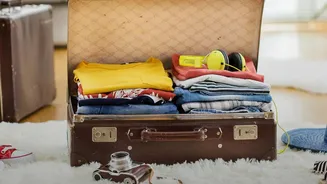
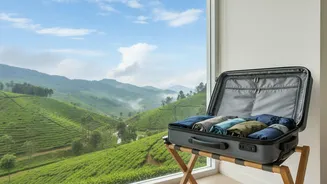
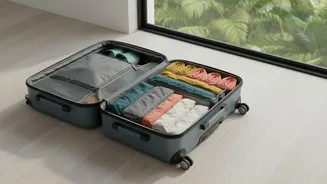
How you pack is just as important as what you pack. Invest in a set of compression packing cubes. These are different from standard packing cubes; they feature an extra zipper that squeezes the air out, significantly reducing the volume of your clothes. This allows you to fit more into your small carry-on. The best method is often to roll your clothes tightly before placing them in the cubes. This minimizes wrinkles and maximizes space. For your bulkiest items that must be packed, like a fleece or extra trousers, a compression cube is non-negotiable.
Select One Versatile Pair of Shoes
Shoes are notoriously heavy and bulky. For a seven-day trip, you do not need more than two pairs, one of which you will be wearing. For your packed pair, choose wisely. Avoid packing dedicated rain boots. Instead, opt for a pair of waterproof trail runners or walking shoes. These are designed to handle wet conditions, offer good grip on slippery surfaces, and are comfortable enough for a full day of sightseeing. Alternatively, a good pair of sturdy, quick-drying sandals can work for many destinations. The key is choosing footwear that can handle both rain and shine, eliminating the need for multiple options.
Go Solid and Small with Toiletries
Liquids are heavy and restricted in carry-on luggage. The solution is to switch to solid toiletries. Solid shampoo bars, conditioner bars, solid perfume, and toothpaste tablets can save a surprising amount of weight and free you from the 100ml liquid limit. For anything you must bring in liquid form, decant it into the smallest possible travel-sized bottles. Don't bring the whole tube of face cream; take just enough for the week. Many essential items can also be purchased at your destination, often for a low cost, which is a better option than carrying them from home.