


Why Flexibility Matters
Improving your flexibility is about much more than just being able to touch your toes. Greater flexibility leads to a better range of motion in your joints, less muscle tension, and improved posture. This can reduce aches and pains, especially in the
back, neck, and shoulders. A consistent stretching routine also lowers your risk of injury by making your muscles more resilient. While 'fast' results depend on your body and consistency, many people notice a real difference in how they feel within a few weeks of regular practice. The key is not to force anything but to listen to your body and work on gentle, steady improvement.
Cat-Cow Stretch (Marjaryasana-Bitilasana)
This gentle, flowing movement is one of the best ways to warm up your spine and is perfect for beginners. It helps increase the flexibility of your neck, shoulders, and entire spinal column. How to do it: Start on your hands and knees with your wrists directly under your shoulders and knees under your hips. Inhale as you drop your belly towards the mat, lifting your chin and chest to look up (Cow Pose). Exhale as you round your spine toward the ceiling, tucking your chin to your chest and pressing into your hands (Cat Pose). Continue flowing between these two poses for 5-10 breaths, moving with your own breathing rhythm.
Downward-Facing Dog (Adho Mukha Svanasana)
A foundational pose in yoga, Downward-Facing Dog is a full-body stretch that energises you while lengthening your hamstrings, calves, and spine. It also helps build strength in your arms and shoulders. How to do it: From your hands and knees, tuck your toes and lift your hips up and back, forming an inverted 'V' shape with your body. Spread your fingers wide and press firmly into your hands. Keep your head between your upper arms, and don't worry if your heels don't touch the ground. Gently 'pedal' your feet by bending one knee and then the other to deepen the stretch in your hamstrings. Hold for 30 seconds to a minute.
Low Lunge (Anjaneyasana)
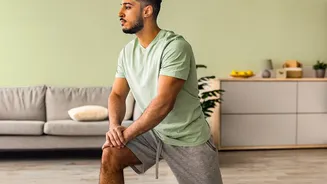
If you spend a lot of time sitting, your hip flexors are likely tight. The Low Lunge is a fantastic pose for releasing this tension and improving flexibility in your hips, thighs, and groin. How to do it: From Downward-Facing Dog, step your right foot forward between your hands. Lower your left knee to the floor, making sure your right knee is directly above your right ankle. You can keep your hands on the floor on either side of your foot or, for a deeper stretch, lift your torso and place your hands on your right thigh or raise them overhead. Breathe into the stretch for 30 seconds before switching sides.
Seated Forward Bend (Paschimottanasana)
This pose provides a deep stretch for the entire back of your body, from your heels to your neck. It's especially effective for loosening tight hamstrings and releasing the lower back. How to do it: Sit on the floor with your legs extended straight out in front of you. You can sit on a folded blanket to help tilt your pelvis forward. Inhale and lengthen your spine. As you exhale, begin to hinge forward from your hips, not your waist. Walk your hands forward along your legs. Stop when you feel a good stretch. Don't force yourself to touch your toes; just let your head hang heavy. Hold for 30 seconds to a minute.
Child's Pose (Balasana)
Child's Pose is a resting posture that offers a gentle stretch for your lower back, hips, and thighs. It's a great way to take a breather between more challenging poses and to calm the mind and body. How to do it: Kneel on the floor, touch your big toes together, and sit back on your heels. Separate your knees about as wide as your hips. Exhale and lay your torso down between your thighs. Let your forehead rest on the floor. You can either stretch your arms out in front of you or rest them alongside your body with palms facing up. Stay here for as long as feels comfortable.