


A New Speed Record From The Void
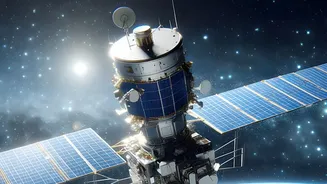
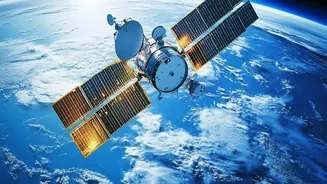
NASA's Deep Space Optical Communications (DSOC) experiment has successfully streamed ultra-high-definition video from deep space, achieving data rates comparable to broadband internet. In a key test, the system beamed a 15-second video from the Psyche
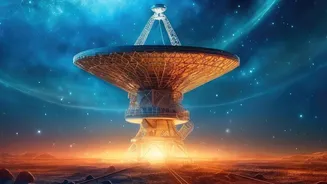
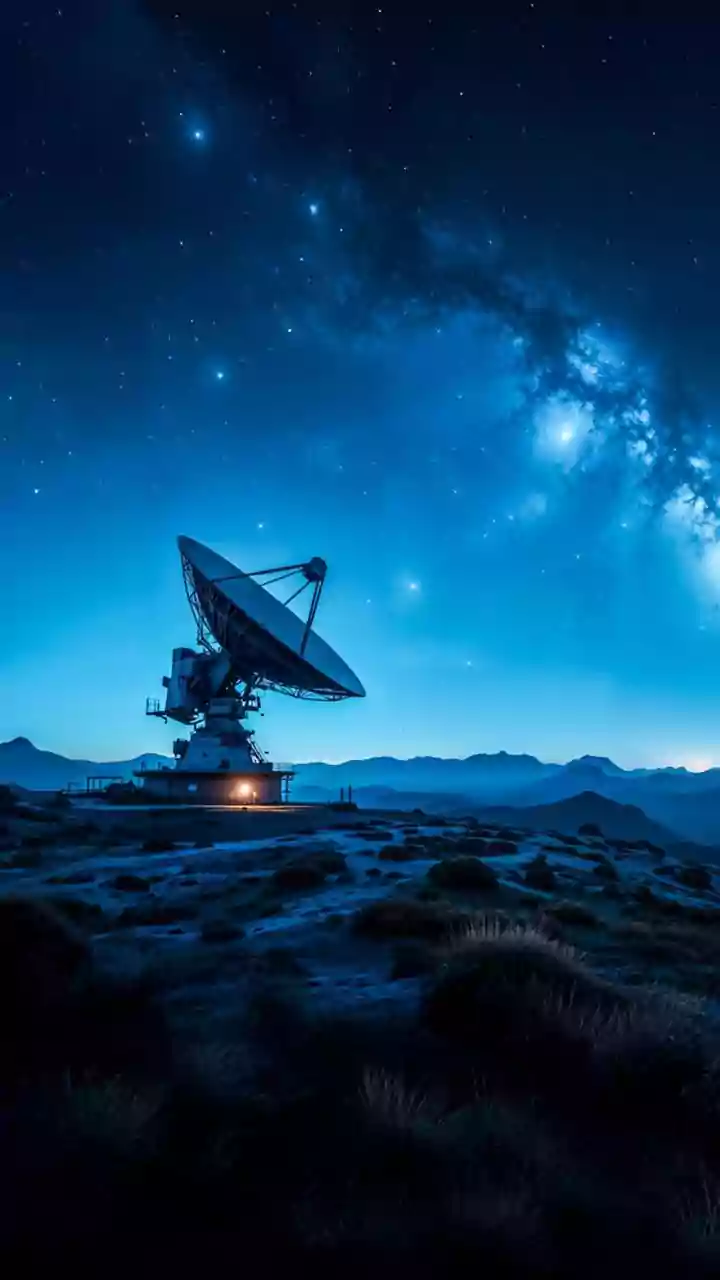
spacecraft when it was nearly 31 million kilometres away—about 80 times the distance between the Earth and the Moon. The system hit a maximum downlink rate of 267 megabits per second (Mbps), a stunning achievement that took just 101 seconds to deliver the video to the Hale Telescope at Caltech’s Palomar Observatory in California. The video, appropriately, featured a cat named Taters chasing a laser pointer, a whimsical nod to the technology being tested. This demonstration, which is part of Psyche's journey to a metal-rich asteroid, has proven that laser communications can perform reliably over vast interplanetary distances.
How Laser Communication Works
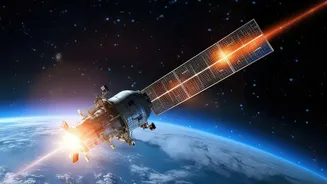
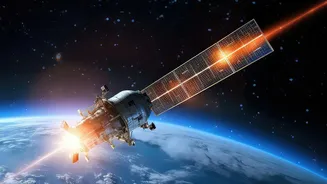
Instead of using traditional radio waves, which have been the standard for space missions for decades, DSOC uses near-infrared lasers to encode and transmit data. Think of it as upgrading from old copper-wire internet to modern fibre optics. The flight laser transceiver aboard the Psyche spacecraft fires a beam of encoded photons toward Earth. A key challenge is the immense precision required. Over millions of kilometres, the laser beam spreads out, and pointing it accurately is like trying to hit a moving coin from a kilometre away. To help, a powerful uplink laser beacon is sent from Earth, which the spacecraft's transceiver locks onto for stability. On the receiving end, highly sensitive detectors, known as superconducting nanowire single-photon detectors, are needed to pick up the faint laser signal, essentially counting individual photons to reconstruct the data.
Escaping The Radio Wave Bottleneck
For decades, NASA’s Deep Space Network (DSN) has reliably communicated with spacecraft using radio frequency (RF) technology. However, as scientific instruments become more powerful and generate massive amounts of data, RF systems are becoming a bottleneck. The Mars Reconnaissance Orbiter, for example, can take over seven hours to transmit a full data recorder. Laser communications, or optical communications, offer a solution by promising data rates 10 to 100 times greater than the best RF systems currently in use. This leap in bandwidth means missions can send back more complex science data, higher-resolution images, and even stream live, high-definition video. This capability is not just an upgrade; it's a necessity for supporting future ambitions, especially crewed missions to Mars, which will generate unprecedented amounts of data.
Paving The Way for Humanity's Next Leap
The success of the DSOC experiment is a foundational step for the future of space exploration. As the Psyche spacecraft travels farther out, the team continues to test the system's limits. Even at a distance of 363 million kilometres, the system has successfully transmitted data, proving its viability for missions to Mars and beyond. For future astronauts on the Red Planet, this technology could mean real-time video calls with Earth, rapid transmission of critical mission data, and the ability to share their experience in stunning high-definition. It also opens the door for more advanced robotic explorers throughout the solar system, which can gather and transmit richer datasets than ever before, accelerating the pace of scientific discovery. This technology effectively brings the far reaches of our solar system a little closer to home.