


A Year in 225 Days
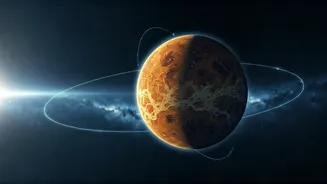
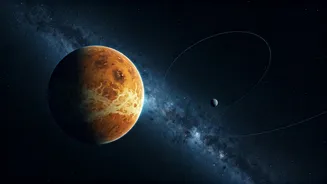
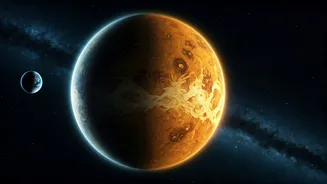
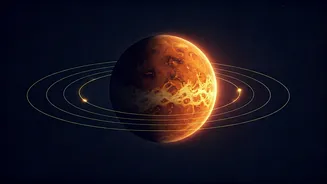
First, let's establish what a year is. For any planet, a year is simply the time it takes to complete one full orbit around the Sun. Earth takes about 365 days to make this journey. Venus, being closer to the Sun, moves faster and has a shorter path.
It zips around our star in just 225 Earth days. So, if you were living on Venus, you'd celebrate your birthday every 225 days. That part is straightforward enough. The confusion begins when we try to define a 'day'.
The Day That Never Ends
On Earth, a day is the time it takes for the planet to spin once on its axis, roughly 24 hours. This is known as a sidereal day. Using this same measurement, Venus is astonishingly slow. It takes a staggering 243 Earth days for Venus to complete just one rotation. So, right there is the answer to the riddle: its rotation period (a 243-day 'day') is longer than its orbital period (a 225-day 'year'). Imagine a workday that lasts for months on end; that’s the reality on Venus. A single Venusian sidereal day is 18 Earth days longer than its entire year.
But What About Sunrise?
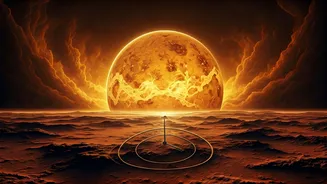
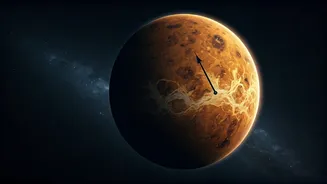
To make things even stranger, Venus spins backwards. All the major planets in our solar system orbit the Sun and rotate on their axis in the same direction—counter-clockwise—as if they were all spun from the same cosmic disc. But Venus rotates clockwise, a phenomenon known as retrograde rotation. This backward spin creates another bizarre effect. Because the planet is slowly rotating one way while orbiting the other, the time from one sunrise to the next (a 'solar day') is different. On Venus, a solar day is about 117 Earth days long. So you’d have about 58 days of sunlight followed by 58 days of darkness. This means there are roughly two sunrises and two sunsets within one Venusian year, even though the planet itself has only rotated about 1.9 times.
Why the Bizarre Spin?
Scientists don't have a definitive answer for why Venus is the solar system's oddball, but there are two leading theories. The first is the 'giant impact' hypothesis. Early in its history, billions of years ago, a massive planet-sized object may have slammed into Venus, not just slowing its rotation but reversing it entirely. A similar impact is thought to have created Earth’s Moon and tilted Uranus on its side.
The second theory points to its incredibly thick atmosphere. Venus's atmosphere is 92 times denser than Earth's and creates a runaway greenhouse effect. Some scientists believe that powerful atmospheric tides, created by the Sun's heat, have acted like a brake on the planet's surface over billions of years, gradually slowing its spin and eventually causing it to reverse.
Earth's Hellish Twin
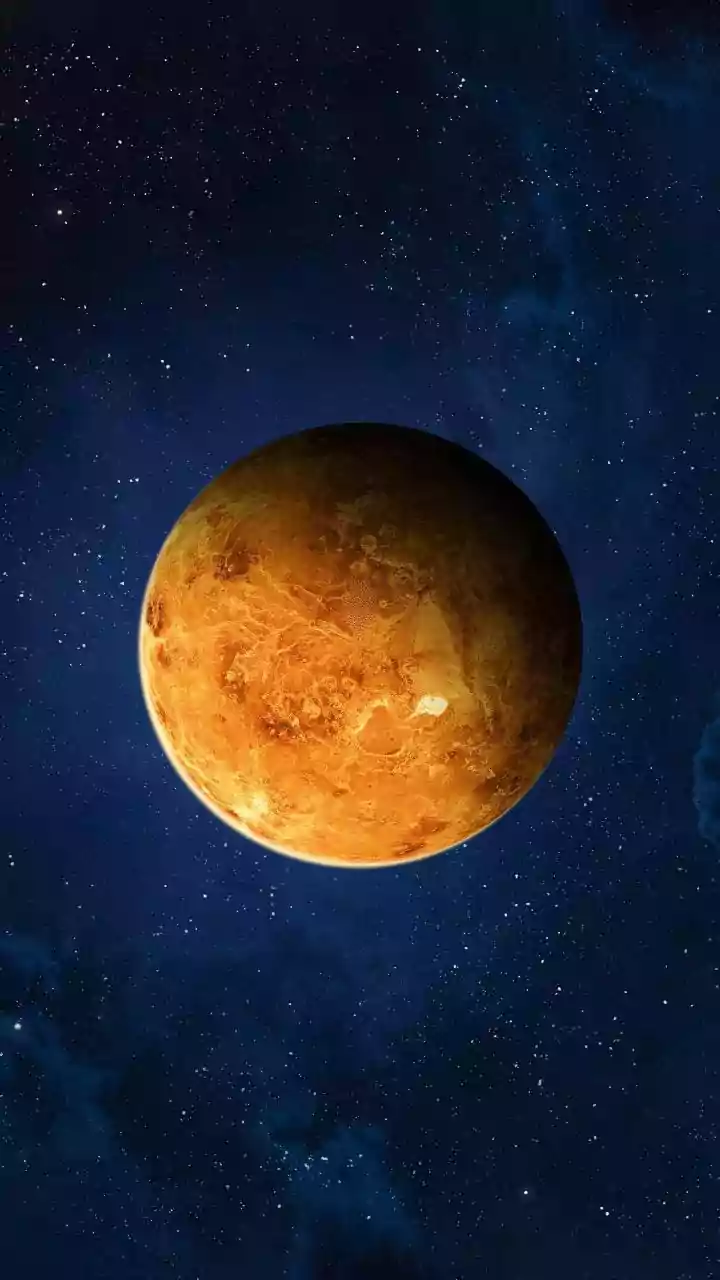
This strange timing is just one feature that makes Venus a fascinating but terrifying place. Often called 'Earth's twin' because of its similar size and mass, it couldn't be more different in reality. The surface temperature is a blistering 465°C, hot enough to melt lead. The atmospheric pressure at the surface is equivalent to being 900 metres underwater on Earth—a pressure that would instantly crush a human. The sky is filled with clouds not of water, but of corrosive sulfuric acid. Far from being a sister planet, Venus serves as a stark reminder of how planetary evolution can go down a very different, very hostile path.