






After a period of relentless growth, the AI stock market has hit a significant speed bump. A sharp, global sell-off has wiped trillions from market valuations, forcing investors to shift their focus from limitless potential to a more sober question.
A Sudden Market Correction
The
first week of November 2026 saw a brutal rout in technology shares worldwide. The tech-heavy Nasdaq index plunged, with AI-related stocks leading the decline. Nvidia, a bellwether for the AI boom, suffered its worst trading day since January 2025. The sell-off wasn't contained to the US; markets in Asia and Europe saw steep falls, with South Korea's Kospi and Japan's Nikkei 225 both closing down sharply. This sudden downturn was a stark reminder that markets, which had been 'pricing in perfection' for the AI sector, were now confronting a wave of uncertainty. According to UBS CEO Sergio Ermotti, the correction was a reaction to excessively high investor hopes.
The Trillion-Dollar Buildout
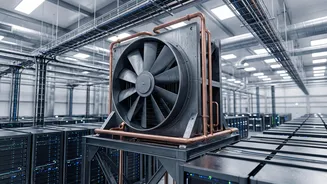
At the heart of investor anxiety are the staggering and ever-increasing costs of building the infrastructure required for artificial intelligence. The spending is astronomical. The top five US hyperscale companies—Amazon, Microsoft, Alphabet, Meta, and Oracle—are projected to spend a combined total of nearly $800 billion on data centers in 2026 alone. This capital expenditure, or capex, is largely dedicated to AI, funding everything from specialized GPU servers to the physical construction of massive data center campuses. Some estimates project that total global investment in AI infrastructure will reach $31.6 trillion by 2050, turning it into one of the largest industrial buildouts in history, potentially surpassing the 19th-century railroad boom in economic scale.
Power: The Ultimate Bottleneck
Beyond the direct cost of chips and construction, the single biggest concern now facing the industry is energy. AI is incredibly power-hungry. The International Energy Agency (IEA) projects that global data center electricity consumption will roughly double between 2025 and 2030. In the US alone, data centers could account for a significant portion of all electricity demand growth this decade. This insatiable appetite for power is creating a critical bottleneck. Utility grids are struggling to keep up, leading to project delays and cancellations. Nearly half of the US data center capacity scheduled to open in 2026 is reportedly at risk due to issues with grid connections, transformers, and switchgear. This has shifted the primary constraint on AI's growth from the availability of silicon chips to the availability of electricity.
A Political and Social Reckoning
The strain on energy grids has also fueled a growing public and political backlash. The recent US midterm elections saw a wave of Democratic candidates win on platforms pledging to clamp down on data center development. Communities are increasingly raising concerns about the impact of these massive facilities on local electricity prices and water resources. This has introduced a new layer of regulatory risk that investors are now forced to price in. Analysts note that new state_level restrictions could slow the pace of construction, even if a full federal moratorium seems unlikely given the economic incentives tied to AI leadership.
A Correction, Not a Collapse
Despite the sharp selloff, most market analysts do not believe this is the end of the AI boom. Instead, they view it as a necessary market correction—a 'positioning washout' after the trade had become incredibly crowded. The thinking is that the fundamental demand for AI and the computing power it requires remains intact. However, the investment cycle is entering a new, more mature phase. The focus is shifting from pure growth to efficiency and profitability. Investors are now distinguishing between companies with clear earnings visibility and those whose futures rely on 'uninterrupted AI infrastructure spending'. The selloff is seen by some as a speed bump that could lead to a smoother, more durable earnings cycle by preventing the industry from growing too fast and crashing.