

The Gear You Probably Already Own
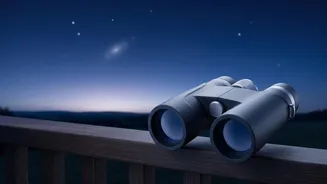
When we say 'basic binoculars', we’re talking about the pair you might have tucked away for bird watching or sporting events. Something in the range of 7x50 or 10x50 is perfect. The first number (7x or 10x) refers to magnification, while the second (50)
is the diameter of the main lenses in millimetres, which determines how much light they gather. More light means a brighter, clearer image, which is crucial for stargazing. Many people assume astronomy requires a costly, complicated telescope, but that’s a common misconception. Binoculars are often a better starting point because they are portable, easy to use, and offer a wide field of view, making it much simpler to find what you're looking for. Before you invest in advanced equipment, you can witness genuine cosmic wonders with a simple pair.
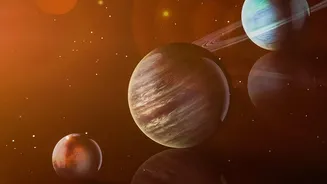
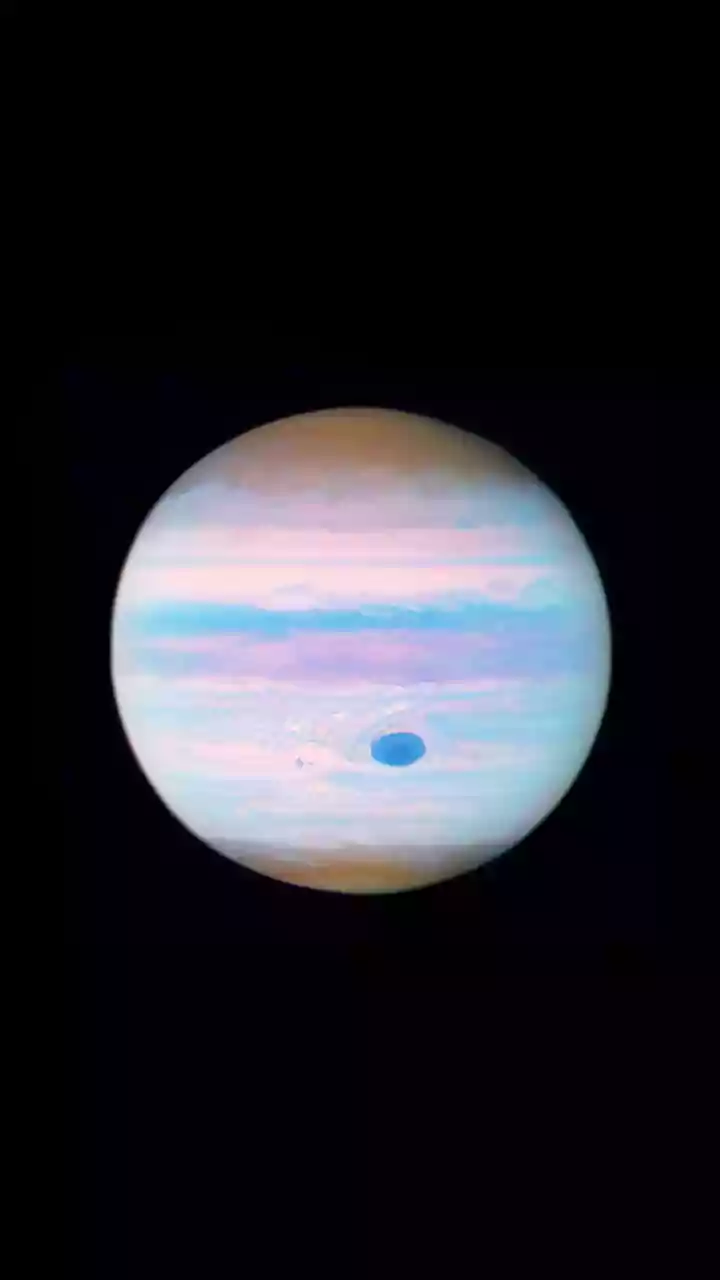
Finding the King of the Solar System
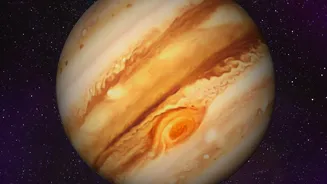
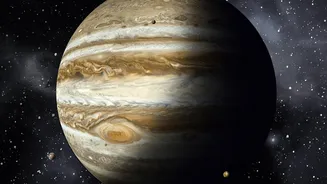
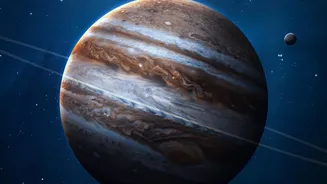
Jupiter will be a prominent and brilliant object in the autumn sky. In early autumn 2026, you can find the giant planet rising in the east in the pre-dawn hours. You won’t mistake it for a star; Jupiter shines with a steady, commanding light and will be one of the brightest objects in that part of the sky. As autumn progresses, it will become more accessible in the evening. Several smartphone apps and websites can show you exactly where to look from your location on any given night. On the morning of October 1, 2026, early risers can even see the crescent moon pair up with Jupiter, making it exceptionally easy to locate.
Spotting the Four Galilean Moons
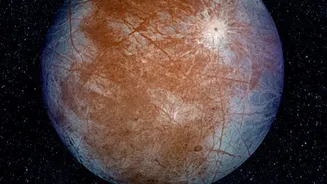
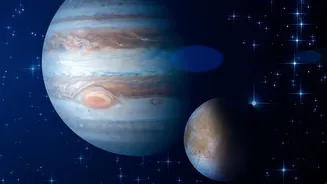
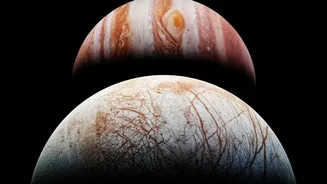
This is the moment that amazed Galileo in 1610 and it can amaze you, too. Once you have Jupiter in your binoculars, hold them as steady as possible. You’re looking for up to four tiny pinpricks of light in a straight line on either side of the planet. These are Io, Europa, Ganymede, and Callisto—the Galilean moons. They will look like faint stars, but their perfect alignment with Jupiter is the giveaway. Don't be discouraged if you don't see all four; sometimes a moon is hidden behind or in front of the planet. Their positions change from night to night as they orbit, so what you see today will be a different configuration tomorrow. For the best results, try bracing your elbows on a stable surface like a car roof, or better yet, use a simple tripod with a binocular adapter. This stability makes all the difference in resolving these tiny, distant worlds.
A Glimpse of Another Galaxy
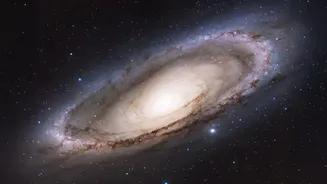
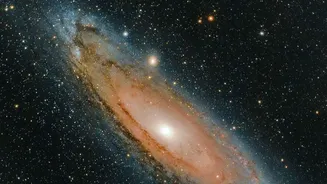
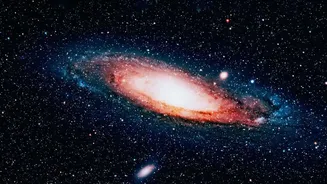
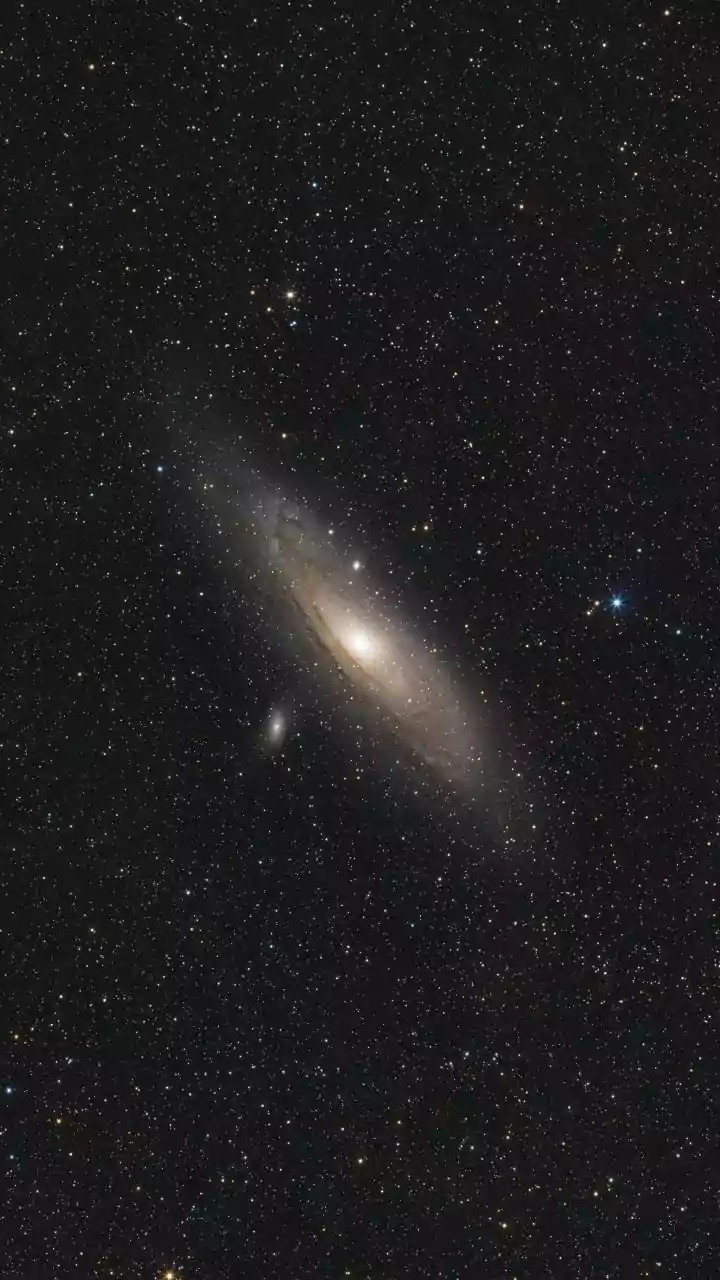
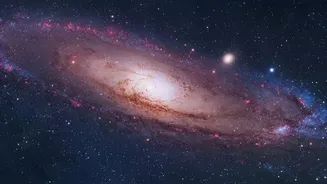
Seeing the Andromeda galaxy (M31) is looking 2.5 million years into the past. It’s the most distant object you can see with the naked eye under dark skies, and binoculars make it an obvious target. Autumn evenings, particularly in October and November, are the best time to look for it. To find it, first locate the W-shaped constellation of Cassiopeia high in the northeastern sky. The right side of the 'W' acts as an arrow, pointing roughly towards Andromeda. Alternatively, you can use the Great Square of Pegasus and star-hop from the star Alpheratz. Through your binoculars, Andromeda won’t look like a pin-sharp spiral. Instead, you’ll see a faint, fuzzy, oval-shaped smudge of light. That smudge is a galaxy containing a trillion stars. Let that sink in. Seeing it for yourself is an unforgettable experience.
Tips for the Best Viewing Experience
To maximize your chances of success, a few simple preparations go a long way. First, get away from city lights. Light pollution washes out faint objects, so a dark rural or suburban location is best. Second, give your eyes time to adapt to the darkness, which usually takes about 20 minutes. Avoid looking at your phone screen, as its bright light will ruin your night vision. If you need a light, use a red flashlight. Finally, check the phase of the Moon. A bright full moon acts like a giant source of light pollution, so the best nights for stargazing are during the new moon or when the Moon is not in the sky. With a little patience and a clear night, you’re ready to explore the cosmos.