

Start with a Story, Not Just a Style
The most compelling vintage gallery walls feel collected over time, even if you assemble them more quickly. Before you start, think about the mood or story you want to tell. Are you aiming for a warm, nostalgic feel with sepia-toned family photos and
soft landscapes? Or an eclectic, bohemian vibe with bold prints, quirky portraits, and antique mirrors? This core idea will act as your guide, helping you select pieces that feel connected. You can find treasures at flea markets, antique shops, and online marketplaces. Look for pieces that resonate with you personally—a landscape that reminds you of a trip, a portrait with an interesting expression, or a botanical print in your favourite colours. Don't worry about everything matching perfectly; the goal is to create a collection that reflects your personality.
Find a Unifying Visual Thread
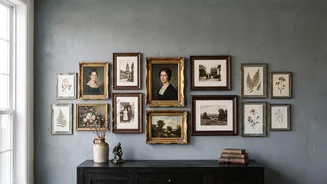
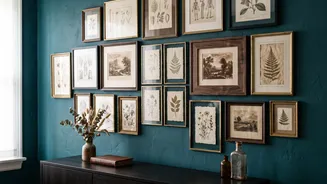
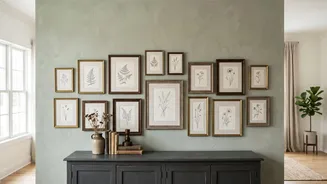
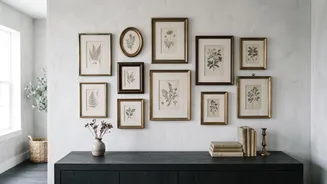
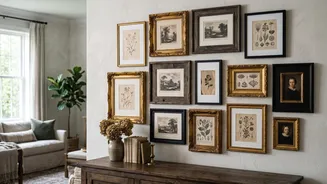
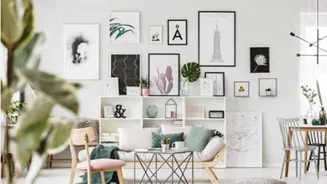
To prevent your wall from looking chaotic, establish a unifying element that ties the different pieces together. This doesn't mean everything should be the same, but there should be a common thread. It could be a consistent colour palette, like warm earth tones or muted blues and creams, that appears in most of the pieces. Alternatively, you could focus on a shared subject matter, such as nature scenes, architectural studies, or portraits. Another effective strategy is to unify the collection through framing. While an eclectic mix of frames is part of the vintage charm, repeating one or two finishes—like antique gold, warm walnut, or simple black—can bring a sense of order to the arrangement.
Mixing Media: The Art of Combination
Combining photographs, paintings, and prints adds wonderful depth and texture. A successful mix is all about balance. For example, the rich texture of an oil painting can be a beautiful counterpoint to the smoothness of a photograph. A delicate line drawing can offer a moment of quiet next to a busier print. Don't be afraid to mix different styles, such as a modern black-and-white photograph next to a classic oil portrait. You can also incorporate other objects like small, decorative mirrors, antique plates, or framed textiles to break up the flatness and add three-dimensional interest. When mixing personal photos with art, remember that emotional importance doesn't have to equal size; a small, cherished photo can be given prominence with a wide mat.
Plan Your Layout Before You Hang
Before putting any nails in the wall, it’s crucial to plan your layout. The easiest way to do this is to trace each frame onto craft paper, cut out the templates, and tape them to the wall with painter's tape. This allows you to move things around and perfect the arrangement without making unnecessary holes. Start by placing your 'anchor' piece, which is usually the largest or most visually commanding work. Build outwards from there, arranging the other pieces around it. Aim for balance, not perfect symmetry; a large frame can be visually balanced by two or three smaller ones. Maintain a relatively consistent spacing of about 2 to 3 inches between frames to give each piece breathing room while ensuring the collection feels like a single, cohesive unit.
Framing for a Collected Feel
Frames are not just for protection; they are a key part of the vintage aesthetic. Mixing frame styles is essential for an authentic, collected-over-time look. Combine ornate, detailed frames with simpler, cleaner ones. Mix materials like wood and metal, and don't shy away from different finishes, such as gilded gold, distressed wood, and black lacquer. To keep the look cohesive, try to repeat a finish or colour at least once or twice. If you find a great piece of art in a frame that doesn't fit your theme, consider reframing it. A new frame can completely transform a piece and help it integrate better into your collection. Thrifting is a fantastic and affordable way to find unique, character-filled frames.