



The Quest for Another Earth
For decades, astronomers have been scanning the cosmos for rocky planets similar in size to our own, especially those orbiting within their star's 'habitable zone.' This is the not-too-hot, not-too-cold region where conditions could be just right for liquid
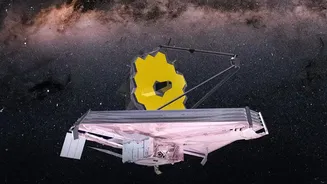
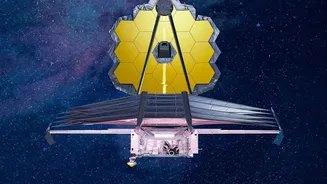
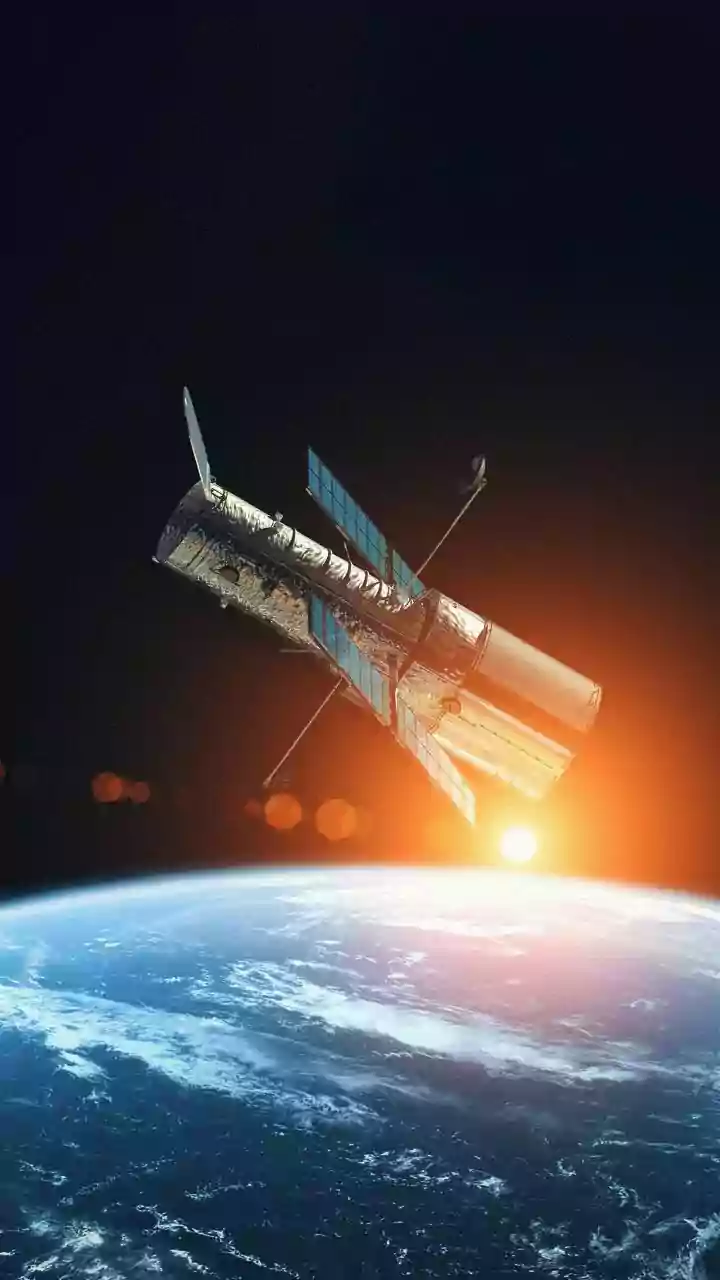
water to exist on a planet's surface. Finding such a world is one thing, but proving it has the ingredients for life, like water, is the crucial next step. This is where the James Webb Space Telescope comes in. With its unparalleled sensitivity, JWST can analyze the light from a distant star as one of its planets passes in front of it. This technique, called transmission spectroscopy, allows scientists to detect the chemical fingerprints of gases in the planet's atmosphere, revealing its composition from light-years away.
An Intriguing Signal
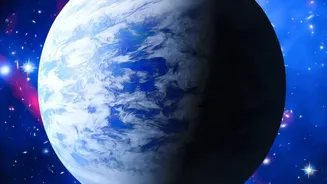
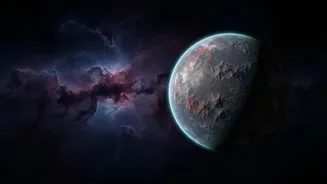
Recently, excitement rippled through the scientific community when JWST studied a 'super-Earth' named GJ 486 b, a rocky world about 30% larger than our planet, orbiting a red dwarf star 26 light-years away. During the planet's transit, the telescope detected a signal that was almost certainly water vapor. A discovery of water in the atmosphere of a hot, rocky planet would be a monumental breakthrough. Even though GJ 486 b is too hot for liquid water, with surface temperatures around 430°C, proving it could sustain an atmosphere at all would be a huge step forward. It would suggest that rocky worlds, the most common type of planet around the most common type of star, can hold onto their atmospheres despite the harsh radiation from their parent stars. However, as scientists analyzed the data, a complication emerged.
A Case of Mistaken Identity?
The major caveat is that the water signal might not be coming from the planet at all. Instead, it could be originating from the star itself. The host star, a cool red dwarf, can have 'starspots' which are similar to sunspots on our own Sun. These spots are cooler than the surrounding stellar surface, cool enough for water vapor to concentrate within them. This stellar water could create a signal that perfectly mimics a planetary atmosphere, leading to a potential misinterpretation of the data. Scientists carefully checked the data and found no evidence that the planet crossed a starspot during its transit, but that doesn't rule out the presence of spots elsewhere on the star that could contaminate the signal. This ambiguity has left researchers at a critical juncture: is it a water-rich atmosphere or a case of stellar contamination?
Science in Action: Solving the Puzzle
This uncertainty isn't a failure; it's the scientific process at its most rigorous. Rather than jumping to conclusions, researchers are now working on ways to tell the two scenarios apart. The team behind the GJ 486 b observations noted that looking at the system in different wavelengths of light could help solve the puzzle. Models predict that the signal from a planetary atmosphere versus a starspot would look different at shorter, bluer wavelengths. Future observations with other JWST instruments are planned to get a definitive answer. In another line of inquiry, Webb has also detected water vapor in the inner, rocky-planet-forming zone of a young star system called PDS 70. This shows that the raw ingredients for watery planets are present during their formation, providing a different but equally important piece of the puzzle.
What This Means for the Search for Life
While the jury is still out on GJ 486 b, the findings represent a huge leap forward. Just a few years ago, it wasn't possible to even detect these faint signals from rocky exoplanets. The challenge of stellar contamination is a lesson learned, one that will refine how astronomers approach future targets, such as the famous TRAPPIST-1 system, which has several Earth-sized planets in its habitable zone. Initial looks at some TRAPPIST-1 planets have not yet revealed thick, Earth-like atmospheres, but the search continues. The ability to detect a potential water signal and then have the precision to question its origin demonstrates a new level of capability in exoplanet science. Every observation, whether it confirms an atmosphere or reveals a new challenge, brings us closer to understanding our place in the universe and answering that ultimate question: are we alone?