




Catch the End of the Grand Planet Parade
A rare celestial gathering is still underway, but you have to be quick to see it. A six-planet alignment, or 'planet parade,' will be visible in the pre-dawn sky until around August 18. This event sees Jupiter, Mercury, Mars, Saturn, Uranus, and Neptune
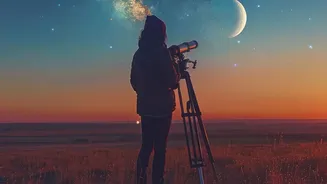
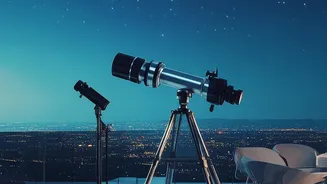
spread out in a line across the sky. While all six are technically aligned, not all are easy to spot. Mars and Saturn are bright enough to be seen with the naked eye. The Red Planet, Mars, will be noticeable with its distinct reddish glow higher in the eastern sky. Saturn will appear as a steady, yellowish point of light towards the south. Mercury and Jupiter will be very low on the eastern horizon, making them a challenge to view against the approaching dawn light. For the faint, distant worlds of Uranus and Neptune, you will need a good pair of binoculars or a telescope and a dark sky.
Saturn: The Jewel of the Night
While its grand opposition is not until October, Saturn is already putting on a magnificent show. The ringed planet is one of the brightest objects in the night sky right now and will be visible for most of the night, rising in the east around sunset. Its steady, golden glow makes it easy to distinguish from the twinkling stars around it. For those with even a small telescope, now is an excellent time to try and spot its famous rings. After being nearly edge-on and invisible last year, the rings are tilting back towards us, becoming a spectacular sight once again. Finding Saturn is straightforward; look for a bright, non-twinkling 'star' in the constellation Pisces. Its brilliance and placid light make it a rewarding target for beginners and seasoned astronomers alike.
A Glimpse of the Summer Triangle
High overhead in the evening sky is one of the most famous star patterns of the season: the Summer Triangle. This is not an official constellation but an asterism, a simple shape formed by three of the brightest stars in the sky. Look straight up after dark to find the brilliant trio of Vega, Deneb, and Altair. Vega, the brightest of the three, is part of the constellation Lyra, the Harp. Deneb marks the tail of Cygnus, the Swan, which looks like a large cross of stars flying through the Milky Way. Altair, the final star in the triangle, belongs to Aquila, the Eagle. These three stars are so bright that they can be seen even from light-polluted city suburbs, making them a perfect starting point for navigating the late summer sky.
Chasing the Faint Glow of the Milky Way
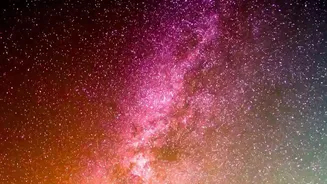
If you can find a truly dark location away from city lights, late August offers a chance to see the heart of our own galaxy. The dense, star-filled core of the Milky Way is located in the direction of the constellations Scorpius and Sagittarius. Look towards the southern sky for the distinctive J-shape of Scorpius, with the bright reddish star Antares marking the scorpion's heart. To its left is the constellation Sagittarius, which contains an asterism known as the Teapot. On a clear, moonless night, the Milky Way appears as a faint, hazy band of light stretching up from the horizon, with the steam from the Teapot's 'spout' pointing directly at the galactic centre. Monsoon cloud cover can make this a challenge, but any break in the weather provides a breathtaking viewing opportunity.
Look for Lingering Shooting Stars
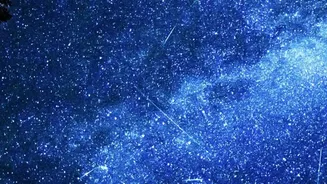
The famous Perseid meteor shower had its spectacular peak around August 12 and 13, lighting up the sky with dozens of shooting stars per hour. While the main event is now behind us, the shower remains active until the beginning of September. This means you can still catch a few stray Perseid meteors streaking across the sky in the late hours of the night. These 'stragglers' are fewer in number, but can often be just as bright. The best time to look is after midnight, from a location with as little light pollution as possible. The meteors are caused by debris left behind by Comet Swift-Tuttle, and they burn up in our atmosphere to create the fleeting streaks of light we call shooting stars.