
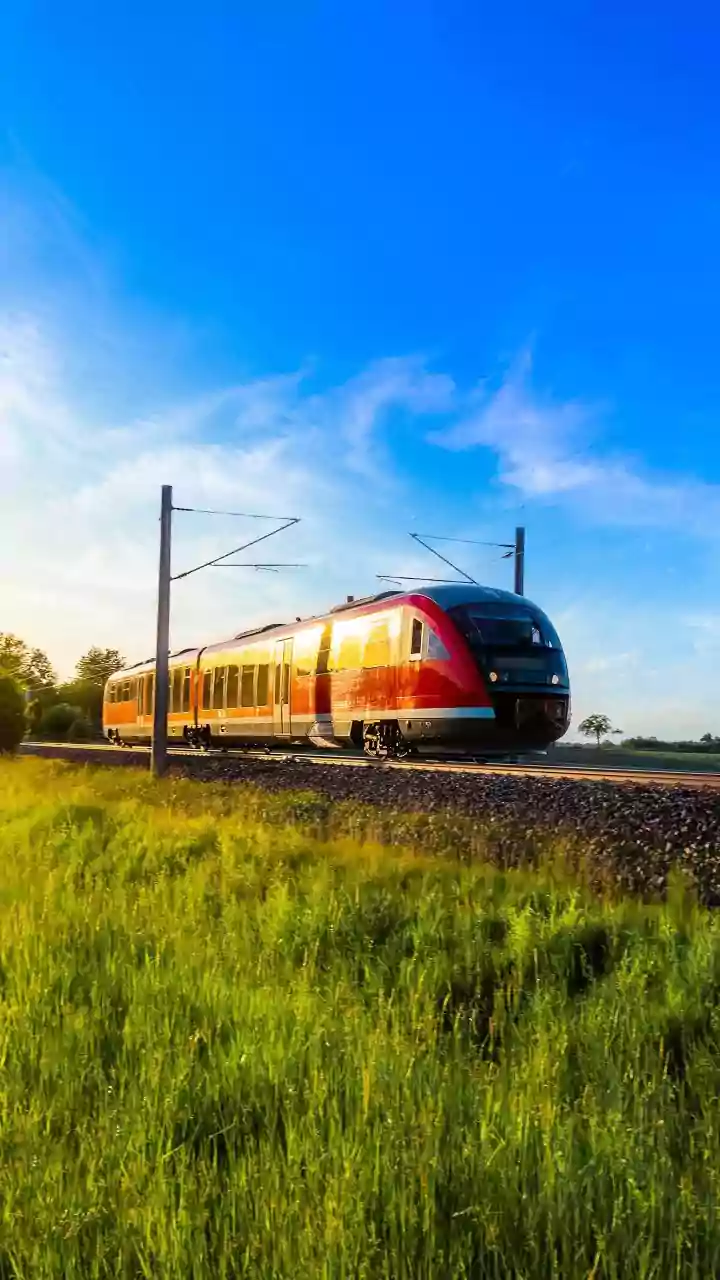




The New Kid on the Block: Amrit Bharat Express
Launched in late 2023, the Amrit Bharat Express is designed for the common person, targeting long-distance, budget-conscious travellers and migrant workers. Its main identity is being a non-AC service with sleeper and unreserved general coaches. The key
innovation is its 'push-pull' technology, featuring a locomotive at both ends. This allows for faster acceleration and deceleration, cutting down journey times compared to conventional trains, even with a top speed of 130 km/h. Inside, passengers will find upgraded amenities like cushioned berths, mobile charging sockets for every passenger, foldable snack tables, and modern bio-vacuum toilets—a significant improvement over older trains. Fares are kept low, with no dynamic pricing, making it a predictable and affordable option for the masses.
Amrit Bharat vs. Vande Bharat: Affordability vs. Speed
This is the most talked-about comparison. The Vande Bharat is a premium, fully air-conditioned, all-seater train designed for medium-distance daytime journeys (under 10 hours). It’s about speed and premium comfort. In contrast, the Amrit Bharat is a non-AC sleeper service built for affordable long-distance, often overnight, travel. While Vande Bharat can reach speeds of 160 km/h, Amrit Bharat is capped at 130 km/h. The target audience is entirely different: Vande Bharat serves business travellers and those willing to pay for a faster, premium experience, while Amrit Bharat caters to the masses who prioritise cost over luxury. Recent announcements suggest future Amrit Bharat 3.0 versions will include AC coaches, blurring the lines slightly but maintaining a focus on affordability.
Amrit Bharat vs. Rajdhani/Duronto Express: The Long-Haul Battle
Rajdhani and Duronto trains are the traditional kings of long-distance premium travel in India. They are fully air-conditioned sleeper trains connecting major cities and state capitals with high priority on the network. The primary difference is service level and cost. Rajdhanis offer an all-inclusive service with meals provided, while Amrit Bharat is a no-frills, budget-friendly alternative. While Amrit Bharat's push-pull technology offers better speed than many older mail/express trains, it generally does not get the same top priority as a Rajdhani on dense routes. The choice here is simple: if your priority is a comfortable, all-inclusive AC journey and you have the budget, Rajdhani is the pick. If you need to travel a long distance affordably, Amrit Bharat is the new, improved choice.
Amrit Bharat vs. Shatabdi/Tejas Express: Day Travel Differences
Shatabdi and Tejas Express are premium, all-seater, air-conditioned day trains, much like Vande Bharat, connecting major cities over shorter distances. Shatabdis have been the backbone of intercity business travel for decades, with meals included in the fare. Tejas is a more modern version with enhanced comforts like infotainment screens. The Amrit Bharat doesn't directly compete with them, as it is primarily a long-distance sleeper service. However, on some overlapping routes, it presents a much slower but vastly cheaper alternative for passengers who are not in a hurry and do not require air-conditioning. The Amrit Bharat is not designed for the quick intercity dash that Shatabdi and Tejas passengers expect.
Amrit Bharat vs. Regular Mail/Express Trains: A Clear Upgrade
This is where the Amrit Bharat truly shines. Compared to the conventional mail and express trains using older ICF or even standard LHB coaches, Amrit Bharat is a significant leap forward. The push-pull configuration makes it faster than a regular train pulled by a single locomotive. The passenger experience is vastly improved, with jerk-free semi-permanent couplers, modern interiors, better toilets, CCTV cameras for security, and dedicated charging points for all. While fares are slightly higher than the most basic mail/express trains, the added speed and comfort provide a much better value proposition, essentially creating a new middle-ground for non-AC travel.