




Go Vertical: The Floor-to-Ceiling Advantage
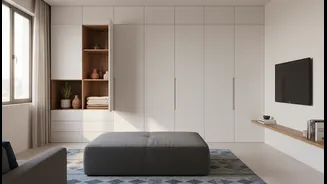
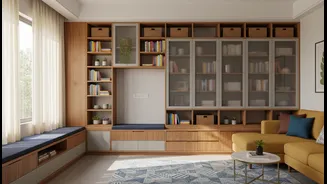
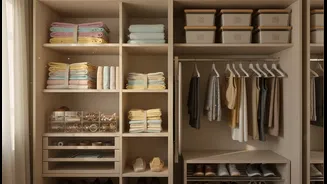
One of the most common mistakes in wardrobe design is ignoring the vertical space above the standard six-foot height. A floor-to-ceiling wardrobe immediately captures this underutilised real estate. This design adds significant storage capacity, often
20-30% more, without taking up any extra floor space. The uppermost shelves, or lofts, are perfect for storing items that aren't needed daily but are essential in an Indian household: seasonal quilts, festive wear like heavy sarees and lehengas, and travel luggage. This approach keeps your main wardrobe sections free for daily wear, creating a clutter-free and streamlined look.
Sliding Doors: The Ultimate Space-Saver
In a typical small bedroom, traditional hinged wardrobe doors need clearance to swing open, which can be a major constraint when a bed or side table is placed nearby. Sliding door wardrobes are a game-changer for these tight layouts. Because they glide along a track instead of opening outwards, they require zero swing space, allowing for more flexible furniture placement. For an added touch of genius, mirrored sliding doors can make a room feel significantly larger and brighter by reflecting light and creating an illusion of depth.
Modular Magic: Customised for Indian Attire
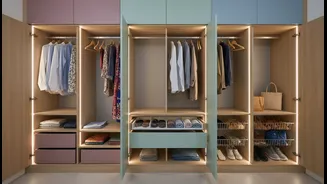
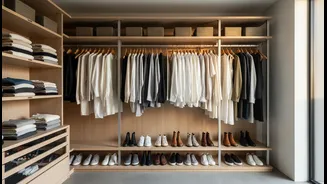
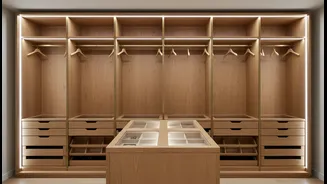
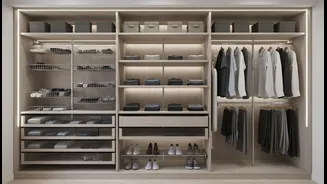
A truly 'smart' wardrobe is one that adapts to your specific needs. Modular systems offer this flexibility, with adjustable shelves and customisable compartments. This is particularly useful for the diverse Indian wardrobe. You can design sections with double-height for petticoats or long kurtas, dedicated pull-out racks for trousers to keep them crease-free, and specialised drawers for accessories. Many people use drawer dividers and storage bins to neatly stack blouses, dupattas, and innerwear. Modular design also means you can plan specific zones for sarees—some for hanging delicate silks and others with shelves for neatly folded cottons.
Corner Solutions: Making Every Inch Count
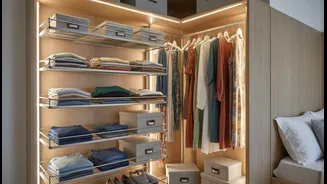
Corners are often the most awkward and underused spaces in a bedroom. An L-shaped wardrobe is an elegant solution that transforms these dead zones into prime storage real estate. This design wraps around the corner, providing a continuous, deep storage area that can hold a surprising amount without overwhelming the room. Many L-shaped systems come with clever 'magic corner' mechanisms that rotate or pull out, ensuring that no item gets lost in the depths of the cupboard. This is an efficient way to gain 30-40% more capacity compared to a standard linear unit.
Beyond Storage: The Multi-Functional Wardrobe
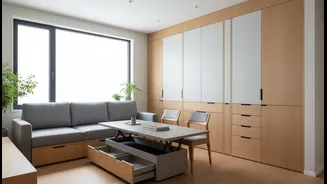
Modern wardrobes can do more than just store clothes. Integrating other functions into the wardrobe unit is a hallmark of smart design for small homes. For instance, a wardrobe can incorporate a fold-down study desk, creating a compact home office that disappears when not in use. Another popular option is integrating a dressing table or vanity unit, complete with a mirror and drawers for cosmetics, into the wardrobe's structure. This eliminates the need for a separate, bulky dressing table, saving precious floor space while keeping everything you need to get ready in one organised spot.
Accessorise Intelligently: The Power of Inserts
The true efficiency of a wardrobe lies in its interior organisation. Smart accessories can dramatically improve how much you can store and how easily you can access it. Consider pull-out racks not just for trousers, but also for shoes, keeping them visible and off the floor. Shallow, velvet-lined drawers are perfect for organising jewellery and accessories, while internal LED lighting that switches on automatically when you open the door can add a touch of luxury and make it easy to find what you're looking for, even in the highest sections. Saree organisers and stackable bins are also simple yet effective tools for keeping traditional wear neat and crease-free.