




Choosing between cycling and skating for your workout? Both are excellent, low-impact ways to boost fitness, but they don't build strength in the same way. The best choice for you depends entirely on what you want to achieve with your exercise.
The Lower Body Battle
When it
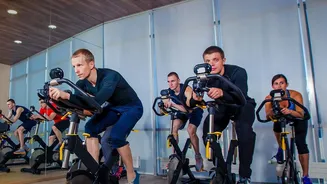
comes to building leg strength, both cycling and skating are powerhouses, but they focus on different areas. Cycling is renowned for its ability to build formidable quadriceps, the large muscles at the front of your thighs. Every downward push on the pedal engages the quads, while the upward pull (especially with clipless pedals) works the hamstrings. Cycling also strengthens your calves and glutes, providing a comprehensive lower-body workout that builds endurance and power, particularly when you tackle hills or increase resistance. Skating, on the other hand, provides a more balanced muscle development across the lower body and hips. The side-to-side pushing motion is fantastic for targeting the gluteus medius (side glutes) and the adductor and abductor muscles of the inner and outer thighs—areas that cycling doesn't emphasize as much. While skating also works the quads and hamstrings, it excels at developing stability and strength around the hips.
Core and Upper Body Engagement
This is where one of the most significant differences emerges. Skating is a full-body workout that heavily relies on core strength for balance and stability. To stay upright and propel yourself forward on skates, you must constantly engage your abdominal muscles, obliques, and lower back. The dynamic, fluid motion of skating means your core is always working to keep you stable. Furthermore, swinging your arms for rhythm and momentum adds an upper-body element to the workout, engaging your shoulders and arms. Cycling, by contrast, is primarily a lower-body activity. While your core is engaged to maintain posture on the bike, it's a more static form of stabilisation compared to the dynamic demands of skating. Unless you are standing up on the pedals to climb a steep hill, the upper body involvement is relatively minimal, mostly focused on steering and support.
Cardio and Calorie Burn
Both activities are excellent for cardiovascular health, improving heart function and boosting stamina. However, skating often has a slight edge in calorie expenditure due to its full-body engagement. Studies have shown that inline skating can be a better aerobic workout than cycling because it's harder to coast on skates; you are almost always working to maintain momentum. On average, a person skating at a steady pace can burn slightly more calories than someone cycling at a moderate pace over the same period. For example, a 30-minute session of steady inline skating can burn over 285 calories, while interval skating can exceed 450 calories. For comparison, cycling burns around 360 calories in the same timeframe at a similar heart rate. Of course, the intensity of your workout is the biggest factor; cycling up steep hills can easily outpace a leisurely skate in the park.
Impact, Skill, and Accessibility
For those with joint concerns, both activities are fantastic low-impact alternatives to running. Cycling is virtually zero-impact, making it an ideal choice for many. Skating is also considered low-impact, as the gliding motion reduces the jarring force on knees and ankles by about 50% compared to running. In terms of skill, cycling is often easier for beginners to pick up, as many people learn it in childhood. Skating requires a greater sense of balance and coordination, which can present a steeper learning curve. However, mastering this balance is part of what makes skating such an effective core workout. Accessibility also differs. Cycling can be used for commuting over longer distances, while skating is often better for shorter trips or workouts in parks and on dedicated trails.