




Your Pre-Travel Digital Checklist
Before you even think about stepping out, your smartphone is your best friend. Start with official government sources for the most reliable information. The India Meteorological Department's (IMD) 'Mausam' app provides district-level weather warnings,
using colour-coded alerts (yellow, orange, red) to indicate the expected severity of rainfall. This gives you a high-level view of the day. Next, turn to real-time navigation apps. Google Maps and Mappls are indispensable tools for urban commuters in India. They don't just show traffic congestion with red and orange lines; they increasingly incorporate user reports and official alerts to flag waterlogged areas and road closures. Many city traffic police departments, like in Delhi, now actively share real-time disruption data with these platforms to keep maps updated. Finally, check social media. The official X (formerly Twitter) handles of your local traffic police are often the fastest source for minute-by-minute updates on specific chokepoints and diversions.
Driving Through Water? Know the Risks
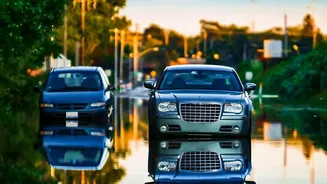
If you must drive, the first rule is to respect the water. It takes surprisingly little to cause significant problems. Just six inches of water can be enough to reach the bottom of most passenger cars, potentially causing a loss of control or stalling the engine. Two feet of moving water can sweep away most vehicles, including SUVs. If you approach a flooded section and cannot see the road markings beneath the water, the safest decision is to turn back. The water could be hiding deep potholes or washed-out sections of road. If you decide it's safe to proceed, drive slowly and steadily in a low gear, keeping the engine revs high to prevent water from entering the exhaust pipe. Avoid speeding, as it can cause your vehicle to hydroplane, where the tyres lose contact with the road surface. Remember to gently tap your brakes after clearing a waterlogged patch to dry them out.
What to Do If Your Car Stalls
Getting stuck in a waterlogged street can be a frightening experience. The most critical rule is to not try and restart the engine. Attempting to do so can force water into the engine's internal components, leading to a condition called hydrostatic lock, which can cause catastrophic and expensive damage. The moment your car stalls, your priority shifts from your vehicle to your safety. Turn on your hazard lights, unlock the doors, and assess the situation. If the water is rising rapidly or flowing fast, it is safer to abandon the vehicle and move to higher ground. Trying to save the car in a dangerous flood is not worth the risk. Once you are safe, call your roadside assistance service and your insurance company. Many comprehensive car insurance policies in India require a special 'engine protect' add-on to cover damage from waterlogging.
Navigating Public Transport
Using public transport during heavy rain requires its own set of precautions. First and foremost, allow for significant extra time. Delays and rerouting are common as buses and trains navigate flooded areas. Before you leave, check for service alerts from your local transit authority. When waiting at a bus stop or train platform, stand back from the curb or tracks to avoid being splashed by passing vehicles. Be extremely cautious on wet platforms and when boarding, as floors can be slippery. Once onboard, keep aisles clear by placing wet umbrellas or bags under your seat. This helps prevent others from slipping and allows for quicker movement. If possible, plan a route with the least amount of walking to minimise your time in the rain. Having a charged power bank and a waterproof bag for your electronics can also make an unpredictable journey much more manageable.