





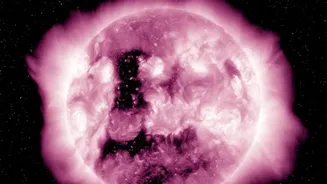
The Sun’s Volatile Nature
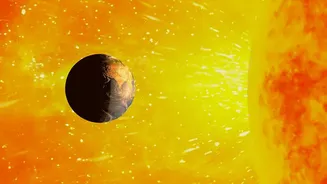
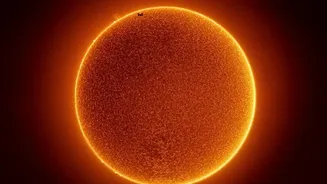
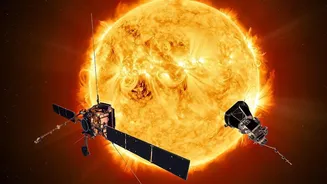
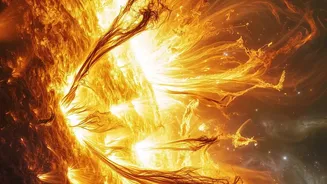
Our sun is not the uniformly calm star it might appear to be. It's a dynamic and sometimes violent ball of plasma, prone to powerful eruptions. The two main types of solar events that concern satellite operators are solar flares and coronal mass ejections
(CMEs). A solar flare is an intense burst of radiation that reaches Earth in about eight minutes. A CME is a much larger eruption, sending a massive cloud of charged particles and magnetic fields hurtling through space. While slower, taking one to three days to arrive, a CME directed at Earth can trigger a geomagnetic storm, posing a significant threat to our technology-dependent world.
Why Satellites Are So Vulnerable
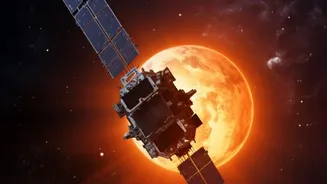
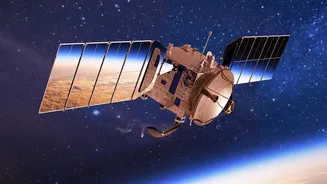
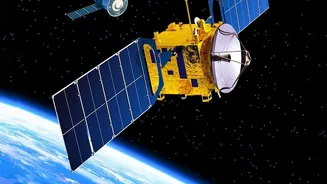
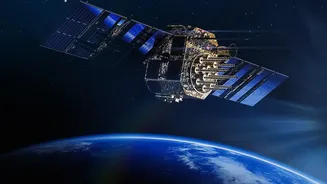
Satellites operate outside the protection of Earth's magnetic field and atmosphere, making them highly susceptible to space weather. The high-energy particles from a solar storm can wreak havoc in several ways. They can damage electronics and degrade solar panels, shortening a satellite's operational lifespan. This radiation can also cause 'phantom commands' by creating system errors, potentially telling a satellite to point its antenna away from Earth. Furthermore, geomagnetic storms heat and expand Earth's upper atmosphere. This increases atmospheric drag on satellites in Low Earth Orbit (LEO), causing them to lose altitude faster. In a stark 2022 example, a minor geomagnetic storm increased atmospheric drag enough to cause the loss of 40 newly launched Starlink satellites.
Our Eyes on the Sun
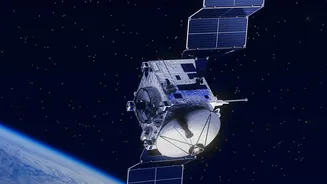
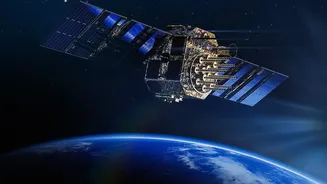
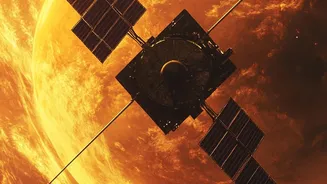
To counter this threat, a global network of space and ground-based observatories constantly monitors the sun. Key players include NOAA’s Space Weather Prediction Center (SWPC) and NASA in the United States, which work in tandem with international partners like the European Space Agency (ESA). Satellites like the Geostationary Operational Environmental Satellites (GOES) provide real-time imagery of solar flares and CMEs. Meanwhile, observatories positioned at a specific point between the Earth and sun, called Lagrange Point 1 (L1), act as crucial early-warning buoys. Spacecraft like the Deep Space Climate Observatory (DSCOVR) are stationed here, monitoring the solar wind and giving forecasters a critical heads-up—anywhere from 15 to 60 minutes—before a geomagnetic storm hits Earth.
From Data to Actionable Alerts
Raw data from these observatories is fed to centers like the SWPC, which interprets the information to issue forecasts. The system uses a tiered scale of Watches, Warnings, and Alerts, similar to terrestrial weather forecasting. A 'Watch' is issued when the risk of a hazardous event increases, often days in advance. A 'Warning' indicates an event is imminent, with lead times of minutes to hours. An 'Alert' signifies that a storm has begun and conditions have crossed a specific threshold. These notifications are sent to satellite operators, power grid managers, airlines, and other stakeholders who need to prepare for potential impacts. The alerts use specific scales—G for Geomagnetic Storms, S for Solar Radiation Storms, and R for Radio Blackouts—to communicate the severity and expected effects.
Taking Protective Action in Orbit
That crucial lead time allows satellite operators to take protective measures. When a significant solar radiation storm is forecast, operators can put their spacecraft into a 'safe mode'. This often involves powering down sensitive, non-essential electronics to prevent them from being fried by charged particles. Operators might also reorient the satellite to place its most shielded parts in the direction of the incoming radiation storm. In some cases, onboard propulsion can be used to counteract increased atmospheric drag and prevent the satellite from falling out of its intended orbit. For crewed missions like Artemis, astronauts have plans to create a 'storm shelter' within their spacecraft, using equipment and supplies to add extra shielding mass between them and the radiation.