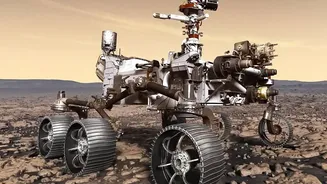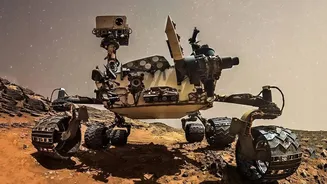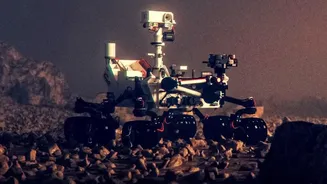







NASA has a daring plan to bring pieces of Mars to Earth for the first time. After a critical review of its ambitious but costly mission, the agency has unveiled a revamped strategy to retrieve the precious samples collected by the Perseverance rover.
A Mission Facing Headwinds
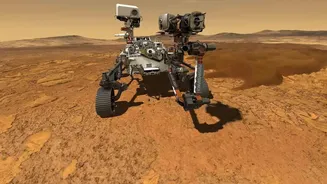
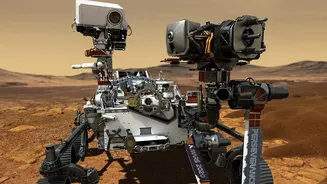
The long-held goal of bringing Martian rocks to Earth, a joint effort with the European Space Agency (ESA), is seen as the holy grail for planetary science. Since landing in Jezero Crater in February 2021, the Perseverance rover has been diligently drilling and caching scientifically valuable samples of Martian rock and soil. However, the original Mars Sample Return (MSR) plan faced significant challenges. Independent reviews highlighted a ballooning price tag, estimated at up to $11 billion, with a return date pushed as far back as 2040. NASA leadership deemed this timeline and cost unacceptable, prompting the need for a major rethink.
Introducing the PSRA Initiative
In response, NASA has kick-started a new initiative called the Perseverance Sample Retrieval Architecture, or PSRA. Announced on November 9, 2026, by NASA's Mars Exploration Program director, Tiffany Morgan, the PSRA is not a finalized mission plan but a strategic reassessment. Its core purpose is to develop impartial recommendations for a more feasible and timely retrieval of the samples Perseverance has collected. The process will involve reviewing prior lessons learned and evaluating current technologies and acquisition options to forge a more streamlined path forward.
What The New Plan Will Involve
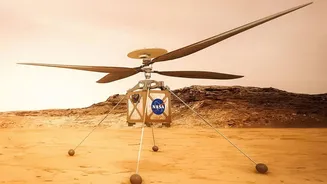
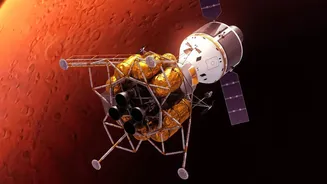
A PSRA strategy team is set to begin its work in January 2027, with a final report expected by the winter of 2027-2028. While the specifics are what this team will determine, the new architecture will build upon the existing framework. This includes the Sample Retrieval Lander, which will carry a Mars Ascent Vehicle (MAV) to launch the samples from the Martian surface. It will also rely on ESA's Earth Return Orbiter to capture the sample container in Mars orbit and ferry it back to Earth. A key component under review is how to best collect the sample tubes Perseverance has left on the surface, with one existing proposal involving two small helicopters inspired by the successful Ingenuity drone.
A New Space Race?
Adding a sense of urgency to NASA's reassessment is the progress of other nations. China is moving forward with its own ambitious Mars sample return mission, Tianwen-3. Chinese space authorities are reportedly aiming to launch their multi-part mission around 2028 and return samples to Earth as early as 2031. This has been described by some as a 'Sputnik moment', creating competitive pressure for NASA to solidify and execute its own plan efficiently. The PSRA is therefore not just about managing budgets, but also about maintaining leadership in a new era of deep space exploration.
The Ultimate Prize: Unlocking Mars' Secrets
Despite the logistical and financial hurdles, the scientific payoff remains immense. Bringing pristine samples of the Martian environment to Earth would be revolutionary. For the first time, scientists could use stateofofart laboratories to analyze the geology and chemistry of another planet in unprecedented detail. These samples from Jezero Crater, the site of an ancient lakebed, could hold clues to Mars' past climate, its geological evolution, and the ultimate question of whether the Red Planet ever hosted life. The findings would not only rewrite textbooks but also help pave the way for future human exploration.