


The Power of the Pickle
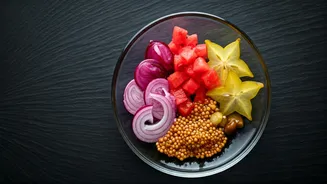
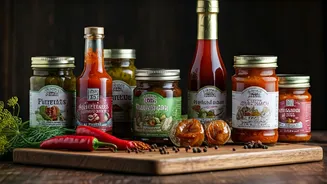
Let’s be clear: when we talk about pickled accents, we aren’t just talking about the jar of mango achaar that’s a meal in itself. Think smaller. Think brighter. A pickled accent is a condiment used in moderation as a finishing touch. It’s the sprinkle
of finely chopped pickled onions on your tacos, the scattering of pickled mustard seeds over a curry, or the slivers of pickled ginger next to your sushi. These are not the main event; they are the vibrant, acidic, and often crunchy supporting actors that make the star of the plate shine. Their job is to cut through richness, add a textural surprise, and wake up your palate with a pop of flavour. In a country where the art of the pickle is ancient and revered, this is simply a modern, faster, and more versatile way to think about it.
The Delicious Science of Zing
Why do these little additions have such a profound effect on a dish? It’s all down to basic food science. Our tongues are wired to respond to a balance of tastes: sweet, sour, salty, bitter, and umami. When a dish is heavy on fat, starch, or rich, savoury notes—think a creamy dal makhani, a cheesy pizza, or a hearty biryani—it can start to feel ‘flat’ or one-dimensional after a few bites. This is where acid comes in. A sharp, tangy element, like the vinegar in a quick pickle, slices through that richness. It cleanses the palate, making each subsequent bite taste as exciting as the first. The salt in the brine enhances the inherent flavours of the main ingredients, while the pickling process itself often preserves the vegetable’s natural crunch, adding a much-needed textural contrast to softer foods. It’s not magic; it’s just chemistry at its most delicious.
Your Gateway: The 10-Minute Pickled Onion
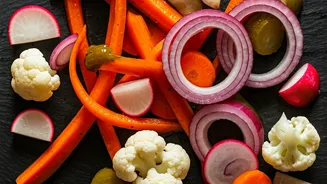
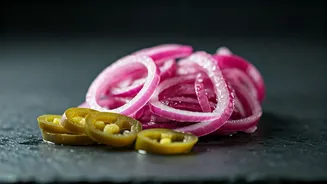
The easiest entry point into this world is the beloved pickled red onion. It’s a staple in cuisines from Mexico to the Middle East for a reason: it’s incredibly easy to make and improves almost everything. Forget waiting weeks for fermentation. You can have a batch ready in the time it takes to prep the rest of your meal.
Here’s the simplest method: Finely slice one red onion and place it in a heatproof jar. In a small saucepan, gently heat half a cup of vinegar (apple cider or white vinegar work well), half a cup of water, one tablespoon of sugar, and one-and-a-half teaspoons of salt. Stir until the sugar and salt dissolve completely. You don’t even need to bring it to a boil. Pour the hot liquid over the onions, ensuring they are fully submerged. Let it sit on the counter for at least 10-15 minutes. That's it. They will turn a brilliant pink and become crisp-tender. They’ll keep in the fridge for a couple of weeks, but they’re so good you’ll likely finish them much faster.
Beyond the Onion: What Else to Pickle?
Once you’ve mastered the onion, a whole world of possibilities opens up. The same basic brine ratio (equal parts vinegar and water, with a little salt and sugar) can be used for a variety of vegetables. Try these for your next experiment:
- **Carrot and Daikon Radish:** Julienne them for a crunchy, sweet-and-sour topping for noodle bowls, sandwiches, or salads.
- **Chillies:** Sliced green or red chillies become a perfect spicy-sour condiment to spoon over dals, pizzas, or eggs.
- **Cucumber:** Thinly sliced, they become crisp, refreshing additions to wraps and burgers.
- **Cauliflower:** Break into tiny florets, add a pinch of turmeric to the brine, and you’ll have crunchy, yellow jewels to liven up a grain bowl or roasted vegetables.
- **Mustard Seeds:** A slightly more advanced but incredible accent. Soaking them in a pickling liquid makes them pop in your mouth, releasing a tangy, mustardy burst. They are phenomenal with potatoes or rich, meaty curries.
How to Use Them Everywhere
The beauty of pickled accents is their versatility. They are the ultimate utility player in the kitchen. Keep a jar of something pickled in your fridge, and you’ll find yourself reaching for it constantly.
Sprinkle them over your morning eggs. Tuck them into your lunchtime sandwich or wrap for a burst of flavour and crunch. Liven up a simple bowl of dal and rice. Scatter them over roasted sabzi or grilled paneer to add a bright counterpoint. Use them to build a better salad, a more interesting grain bowl, or to cut the richness of a kebab. They are the finishing touch that shows you’ve thought about the details, turning a simple home-cooked meal into something truly special.