





The call of the great outdoors is strong, but for many, the thought of aching knees and sore hips can be a major deterrent. While high-incline hiking is a classic workout, paddleboarding is emerging as a powerful, joint-friendly alternative.
The Impact on Your Joints
The fundamental
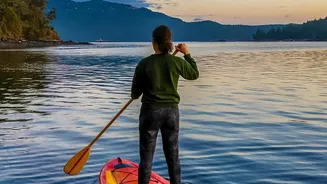
difference between these two activities lies in impact. High-incline trail hiking, especially on the descent, places significant stress on the joints. Walking downhill can generate forces up to three times your body weight across the knee joint. Each step on hard, uneven ground sends a shockwave through your ankles, knees, and hips. In contrast, stand-up paddleboarding (SUP) is a low-impact exercise. The water absorbs the shock that pavement or trails would send into your joints, making it a gentle yet effective workout. This makes SUP an ideal choice for those with existing joint pain, people recovering from certain injuries, or anyone looking to preserve their joint health over the long term.
Cardiovascular Conditioning
Both activities offer excellent cardiovascular benefits. Hiking, especially on steep terrain, will undoubtedly get your heart pumping, building endurance and stamina. However, paddleboarding is also a formidable cardio workout. The continuous motion of paddling elevates your heart rate, and by varying your pace—alternating between steady cruising and faster-paced intervals—you can create a challenging session that boosts your cardiovascular fitness. A steady hour of paddling can be equivalent to a brisk hike in terms of effort, making it a fantastic way to build stamina without the pounding stress on your body.
A Tale of Two Workouts
While both are full-body activities, they emphasize different muscle groups. Hiking is predominantly a lower-body workout, heavily engaging your glutes, quadriceps, hamstrings, and calves. While your core is engaged for stability, the primary work is done by your legs. Paddleboarding, on the other hand, is renowned for its core-strengthening benefits. To stay balanced on the board, your abdominal muscles, obliques, and lower back are constantly working. The paddling motion itself provides a great upper-body workout, engaging your back, shoulders, and arms. Your legs and feet are also active, making constant micro-adjustments to maintain balance, strengthening often-neglected stabilizer muscles.
Balance, Stability, and Beyond
One of the unique benefits of paddleboarding is its significant improvement of balance and proprioception—your body's awareness of its position in space. Standing on an unstable surface forces your body to make constant, subtle corrections, which strengthens the small stabilizing muscles around your joints, particularly in the ankles and hips. This can improve overall coordination and may even help prevent falls and injuries in other activities. While hiking on uneven trails also challenges your balance, the continuous and dynamic stability required on a paddleboard provides a unique form of training that land-based exercises often miss.
Which Outdoor Workout is Right for You?
Choosing between paddleboarding and hiking depends on your personal fitness goals and physical condition. If your main objective is a highintensity,
weightbearing exercise to strengthen bones and you don't have joint concerns,
highincline hiking is an excellent choice.
It’s accessible and requires minimal specialized gear to start.
However,
if you are looking for a comprehensive,
fullbody workout that delivers a solid cardio session while being gentle on your joints,
paddleboarding is an outstanding option.
It’s particularly beneficial for those who find highimpact activities like running or aggressive hiking painful.
It offers a unique blend of strength,
balance,
and endurance training all in one.