





The Science of Shade
Plants convert sunlight into energy through photosynthesis. When upper leaves grow thick and full, they create a shadow canopy, effectively starving the leaves underneath them. In response to this lack of light, plants begin a process called etiolation.
This is a survival mechanism where the plant stretches its stems, trying to reach a light source. At the same time, the plant may sacrifice its older, lower leaves, which turn yellow—a condition known as chlorosis—and eventually drop off. This is the plant's way of conserving energy, redirecting limited resources to new growth that has a better chance of finding light. While this is a natural process, it can leave the base of your plants looking sparse and unhealthy.
Reading the Unhappy Leaves
Your plants will give you clear signals when they are not getting enough light. One of the most obvious signs is 'legginess'—long, thin stems with wide gaps between the leaves. This is a direct result of etiolation, as the plant physically stretches toward the nearest window or patch of sky. You may also notice that new leaves are smaller than older ones, or that the entire plant seems to be growing slowly, if at all, during the growing season. For flowering plants, a lack of light means a lack of blooms. Yellowing leaves, especially at the bottom of the plant, are a classic symptom of light deprivation. While overwatering can also cause yellowing, light-related chlorosis often starts with the oldest leaves first as the plant makes a strategic retreat.
The Art of Strategic Pruning
Pruning is one of the most effective ways to manage dense foliage and improve light penetration. Don't be afraid to thin out your plants; it encourages healthier, bushier growth. The goal is to open up the plant's structure, allowing light and air to reach the inner and lower sections. Use a clean, sharp pair of scissors or pruning shears to make thinning cuts, removing entire stems at their base. Focus on any branches that are crossing or rubbing against each other, as well as any weak or yellowing growth. Regularly removing spent flowers, a process called deadheading, also redirects the plant's energy from seed production to creating more leaves and blooms.
Arranging Your Plants for Success
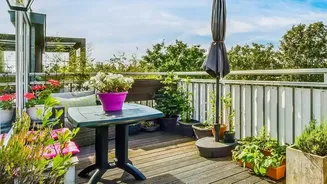
Beyond pruning, the way you arrange your plants can make a huge difference. Think of your balcony as a multi-layered stage. Place taller, sun-loving plants at the back or perimeter, where they can soak up the rays without shading their shorter neighbors. Use tiered plant stands or shelves to create vertical levels, which is both space-efficient and ensures plants at different heights get their share of the sun. Consider using hanging baskets for trailing plants to free up floor space and create a cascade of foliage. You can even use light-colored walls or reflective surfaces to bounce more sunlight onto shaded areas of your balcony. Grouping plants with similar light requirements together makes management easier and more effective.
Rotation and Consistent Care
Balcony gardens are not a 'set it and forget it' affair. Because the light source is often directional, it is crucial to rotate your pots regularly—about a quarter turn every week. This encourages even growth and prevents plants from developing a permanent lean in one direction. As your plants grow throughout the season, their light needs and the shadows they cast will change. Stay observant. If you notice the signs of light deprivation returning, it might be time for another light pruning session or a rearrangement of your pots. Consistent care and observation are the keys to maintaining a healthy and vibrant ecosystem on your balcony, ensuring that every leaf, from top to bottom, has a chance to thrive.