








A Divine Blueprint
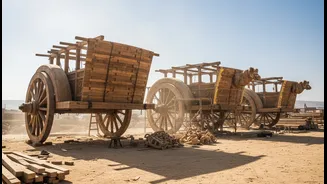
The construction of the three iconic chariots is no ordinary building project; it is a sacred ritual that begins on the auspicious day of Akshaya Tritiya. This is when, following prayers and a formal grant of permission from the deities, the first pieces
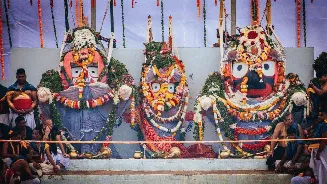
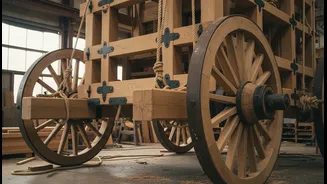
of wood are consecrated. Each chariot is a unique entity, built to precise, time-honoured specifications for its divine occupant. Lord Jagannath rides Nandighosha, the largest chariot at 45 feet high with 16 wheels. His brother Lord Balabhadra’s chariot, Taladhwaja, stands at 44 feet with 14 wheels, while their sister Devi Subhadra’s chariot, Darpadalana, is 43 feet high with 12 wheels. These are not just vehicles but moving temples, built anew each year in a tradition stretching back centuries.
The Sacred Timber
The very soul of the chariots is the wood, selected with utmost care. Over 865 logs of specific trees like Phasi, Dhausa, and Asan are required for the three structures. These logs are traditionally sourced from the forests of the former princely state of Dasapalla and floated down the Mahanadi river to Puri. The selection is stringent; the trees must be of a certain age and dimension, pencil-straight, and free of defects. For instance, the Phasi wood used for the massive wheels must come from trees that are often over 70 years old. This reliance on specific, mature timber has raised concerns about sustainability, leading to the Jagannath Forest Project, an initiative to cultivate these special trees for future festivals.
Generations of Builders
The construction is entrusted to a dedicated team of about 100 craftsmen from hereditary families, known as 'sevayats' or servitors. These families have passed down their skills for generations, working without written blueprints or modern tools like measuring tapes. Instead, they rely on traditional units of measurement like the 'haat' (hand length) and 'anguli' (finger width). The main groups of craftsmen include the Maharana sevayats (carpenters), Kamara sevayats (blacksmiths who forge clamps and fixtures), and Bhoi sevayats, who are responsible for the heavy lifting, transport of logs, and fitting the wheels. Each group has a specific, sanctified role, working in a symphony of coordinated effort for 58 days to bring the divine vehicles to life.
Mechanics Without Machines
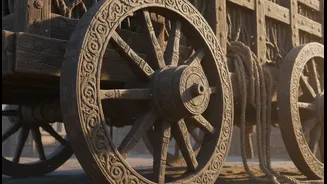
Perhaps the most fascinating aspect is the 'hidden mechanics' of moving and controlling these wooden giants. The chariots have no engines or modern steering. They are pulled by thousands of devotees using thick coconut fibre ropes. Steering is a matter of coordinated pulling by the crowds, guided by the chants of the 'Dahuka' who traditionally sings to encourage the chariot to move. The braking system is equally ingenious and traditional. It consists of a large wooden beam, or log, suspended at the front of each chariot. When the chariot needs to stop or slow down for a turn, Bhoi servitors lower this beam onto the road in front of the wheels, creating immense friction that brings the multi-tonne structure to a halt. In recent years, this system has been augmented with rubber coatings to improve grip, an innovation born from devotion to ensure the safety of the pilgrims.
A Symphony of Art and Faith
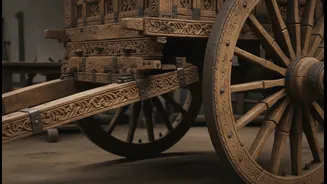
Once the structures are complete, they are transformed into works of art. Each chariot is draped in massive canopies of cloth, with a unique colour scheme: red and yellow for Nandighosha, red and green for Taladhwaja, and red and black for Darpadalana. These canopies, often featuring the iconic appliqué work from the nearby village of Pipli, require thousands of meters of fabric. Chitrakar sevayats (painters) adorn the chariots with traditional motifs and paint the guardian deities, charioteers, and the four wooden horses attached to each chariot. The entire process, from the first cut of wood to the final decorative flourish, is a testament to how faith can power incredible feats of community, artistry, and engineering.