

Foundation: Sparking Curiosity at Home
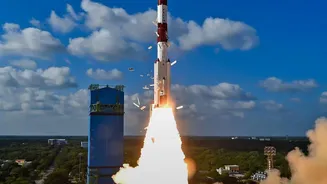
The first step in any learning plan is nurturing the initial spark of interest. For younger students, this begins at home. Encourage reading books on astronomy and space exploration. There are countless online resources, including documentaries on missions
like Chandrayaan and the Mars Orbiter Mission, that can provide a visual and engaging introduction to the subject. Websites from space agencies and educational platforms offer interactive modules, virtual museum tours, and simple experiments that can be done at home. This phase is not about rigorous study, but about building a foundational knowledge base and keeping the sense of wonder alive. Organizations like SPACE India offer school programs and online courses that can provide a structured yet fun entry point.
Middle School: Connecting with Official Programmes
As a student's interest solidifies, it's time to engage with more formal programmes. The Indian Space Research Organisation (ISRO) actively encourages student participation through various outreach initiatives. The flagship programme is YUVIKA (YUva VIgyani KAryakram), or the Young Scientist Programme. This two-week residential programme is designed to give school students a comprehensive introduction to space science and technology. Participants interact with senior scientists, engage in hands-on activities like model rocketry and DIY kit assembly, and visit ISRO facilities. Selection for YUVIKA is competitive and often considers academic performance, with a preference for students from rural areas, making it a highly aspirational goal for a middle school student.
High School: Choosing the Right Academic Trajectory
This is a critical phase where academic choices directly impact future career options. To pursue a career in space science or engineering in India, choosing the Physics, Chemistry, and Mathematics (PCM) stream in Classes 11 and 12 is essential. Strong fundamentals in these subjects are the bedrock for higher education in this field. Alongside the core curriculum, students should focus on developing complementary skills. Proficiency in computer programming and participation in science fairs, Olympiads, and robotics clubs can significantly strengthen a student's profile. These activities demonstrate initiative and practical application of knowledge, which are highly valued in competitive university admissions.
Higher Education: The Gateway to a Space Career
After Class 12, students must choose an undergraduate course that aligns with their specific interests. A Bachelor of Technology (B.Tech) in fields like Aerospace Engineering, Mechanical Engineering, or Electronics & Communication is the most common path for those wanting to design and build spacecraft. For students more inclined towards research, a Bachelor of Science (B.Sc.) in Physics or Astrophysics provides a strong foundation. The premier institution in India for space science education is the Indian Institute of Space Science and Technology (IIST) in Thiruvananthapuram, which offers undergraduate and postgraduate courses and has close ties with ISRO. Admission to IIST and other top engineering colleges like the IITs is typically through highly competitive entrance exams.
Beyond Academics: Building a Holistic Profile
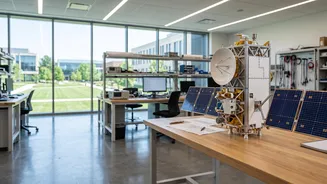
While academics are crucial, a successful career in space science also requires practical skills and continuous learning. Students should actively seek out workshops on satellite building, robotics, and coding. Several private organizations and NGOs, some recognized by ISRO and NASA, offer these programmes across India, providing hands-on experience that complements theoretical knowledge. Participating in student satellite programmes, where universities collaborate with ISRO to design and build small satellites, offers invaluable real-world experience. Building a portfolio of projects, research papers, and competition participation is essential for standing out, whether applying for a job at ISRO, a private aerospace company, or a research position at a university.