







A Major Policy Overhaul
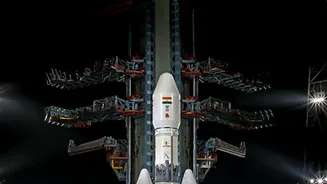
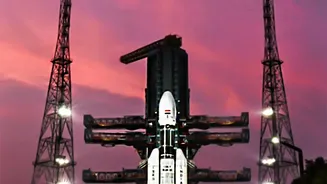
In a landmark decision, the Indian government has significantly liberalised its Foreign Direct Investment (FDI) policy for the space sector, aiming to attract global investors and accelerate growth. Previously, FDI in the establishment and operation of
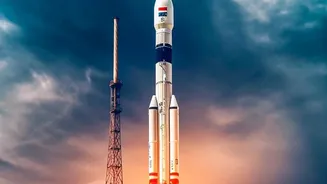
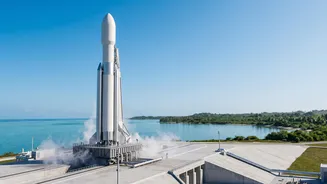
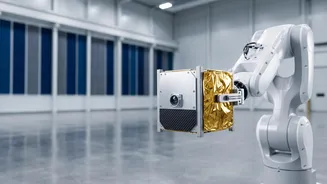
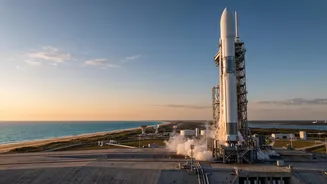
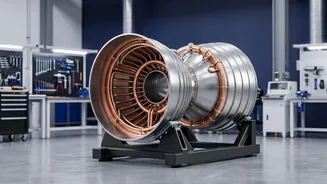
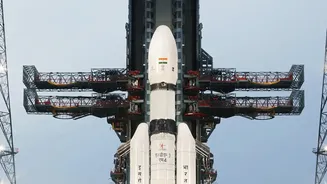
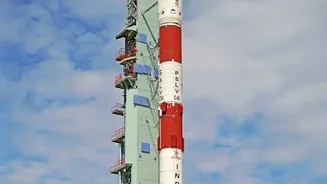
satellites was permitted only through the government approval route. The new, tiered policy creates distinct pathways for investment. It now allows up to 100% FDI under the automatic route for manufacturing components and systems for satellites and ground segments. For satellite manufacturing and operations, the automatic route is open for up to 74% FDI, with government approval required beyond that. The most sensitive area, launch vehicles and spaceports, allows for up to 49% FDI automatically, with higher stakes needing government clearance. This structured liberalisation provides much-needed clarity and is designed to attract substantial foreign capital and technology into Indian space companies.
Why Now? The Race for a $45 Billion Prize
The timing of this policy change is driven by a clear economic ambition. India's space economy, currently valued at around $9 billion, is projected to surge to between $40 billion and $45 billion within the next decade. To achieve this ambitious five-fold growth, significant capital infusion is essential. The government recognises that relying solely on domestic and public funding is insufficient to compete in a global space market dominated by well-funded private players. This reform is a core component of the Indian Space Policy 2023, which aims to transition the sector from a government-led model to a commercially driven ecosystem. The number of space startups has already skyrocketed from a single digit in 2014 to around 440 by August 2026, showcasing a vibrant domestic base ready for growth. By opening the doors to foreign investment, India hopes to empower these startups and established companies, fostering innovation and enhancing their capacity to compete globally.
The Crucial Role of IN-SPACe
At the heart of this new, privatised ecosystem is the Indian National Space Promotion and Authorisation Centre (IN-SPACe). Established in 2020, IN-SPACe acts as a single-window agency to promote, authorise, and supervise all space activities by non-governmental entities. Its role is to bridge the gap between the Indian Space Research Organisation (ISRO) and the private sector. With the new FDI policy, IN-SPACe's function becomes even more critical. It will be the primary body facilitating these foreign investments, ensuring regulatory compliance, and guiding companies through the authorization process. By mid-2026, IN-SPACe had already granted 113 authorisations to 52 private entities for activities ranging from satellite operations to launch services, demonstrating its active role in building out the commercial space sector. The agency is also tasked with demand generation, infrastructure support, and enabling technology transfers from ISRO to private players, making it the central pillar of India's commercial space ambitions.
Reshaping India's Space Ecosystem
This influx of foreign capital is set to fundamentally reshape India's space landscape. For decades, ISRO has been the primary and often sole actor. The new policy allows ISRO to transition its focus towards advanced research and development, deep-space missions like Gaganyaan (human spaceflight), and national security projects. Meanwhile, the private sector, supercharged by foreign investment, can take over routine operations like satellite manufacturing and launch services. This symbiotic relationship is expected to create a more robust and diversified industry. Indian startups will gain access not only to capital but also to cutting-edge technology and global supply chains. In turn, international investors get access to India's cost-competitive manufacturing capabilities and its large pool of skilled engineering talent. The ultimate goal is to create an end-to-end space solutions hub in India, capable of building everything from satellite components to entire launch vehicles for a global clientele.