








A New Player Reaches for Orbit
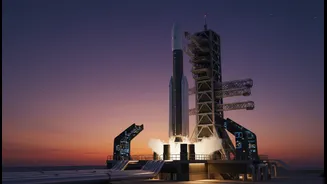
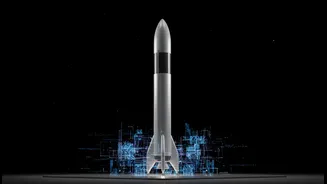
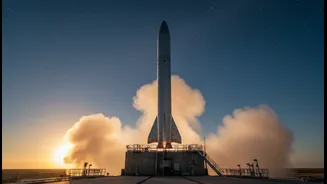
Hyderabad-based startup Skyroot Aerospace is behind the historic 'Aagaman' mission, which means 'arrival'. The Vikram-1 is a four-stage rocket designed to carry small satellites, weighing up to around 350 kg, into Low Earth Orbit. Named after Dr. Vikram Sarabhai,
the father of India's space program, the vehicle is the culmination of years of private innovation, featuring advanced technologies like an all-carbon composite body and 3D-printed engines. Unlike the suborbital Vikram-S demonstrator launched in 2022, Vikram-1 is a full-fledged orbital-class vehicle. Its success would prove that a private Indian company can design, build, and launch a sophisticated rocket, a feat once exclusively the domain of the government's venerable space agency, ISRO.
From Government Monopoly to Private Boom
For decades, a career in India's space sector meant one thing: working for ISRO. The landscape began to change dramatically in 2020 when the government opened the sector to private participation, creating bodies like IN-SPACe to facilitate this transition. The goal was to transform the industry from a state-led program into a commercially driven ecosystem. This policy shift has unleashed a wave of entrepreneurship, with over 400 space-tech startups now operating in India. Projections show India's space economy, valued at around $8.4 billion, could grow to $44 billion by 2033. This expansion is not just about building rockets; it's about creating a new economic engine.
The Jobs Being Created
The rise of companies like Skyroot Aerospace, Agnikul Cosmos, and Dhruva Space is creating a diverse range of high-skilled jobs that never existed in the private sector before. A look at Skyroot's hiring reveals needs for lead structural and thermal engineers, CNC programmers, and hardware quality engineers. The demand extends far beyond traditional aerospace engineering. Job listings across the sector show openings for software reliability engineers, PCB layout designers, procurement specialists for composites, and even legal counsel and chartered accountants. This signifies the development of a complete industrial ecosystem. This new workforce is a blend of young talent and experienced professionals, many of them former ISRO scientists, creating a dynamic environment that combines deep institutional knowledge with startup agility.
A Ripple Effect Across Industries
The impact on employment extends beyond the companies launching rockets. For every job created directly in the space sector, a multiplier effect is felt across the economy. The manufacturing of precision components, development of specialised software, and the analysis of satellite data create opportunities in adjacent fields like advanced materials, data analytics, and telecommunications. Studies show India's space sector already supports about 96,000 direct jobs, with millions more supported indirectly. This convergence allows the space industry to draw talent and proven capabilities from automotive, electronics, and IT, creating new career paths and boosting workforce mobility. A successful Vikram-1 launch will only accelerate this trend, building investor confidence and encouraging more talent to join the burgeoning field.