



Understanding the Gentle Flow
Cat-Cow, or Marjaryasana-Bitilasana, isn't two separate poses but one continuous, flowing movement. It links an inhale with Cow Pose (Bitilasana), where the belly drops and the chest opens, and an exhale with Cat Pose (Marjaryasana), where the spine rounds
toward the ceiling. This simple sequence is celebrated for its ability to improve spinal flexibility, warm up the body, relieve stress, and gently massage the digestive organs. It's a foundational movement used in yoga classes, physical therapy, and daily wellness routines to counter the effects of prolonged sitting.
Building Your Foundation: The Tabletop
A safe Cat-Cow begins before any movement. Start on all fours in a 'tabletop' position. Your hands should be directly under your shoulders, and your knees should be directly under your hips. Spread your fingers wide to distribute your weight evenly across your palms, which helps protect your wrists. Your spine should be in a neutral, straight line—imagine a straight line from the crown of your head to your tailbone. Gently engage your core to support your lower back and prevent it from sagging.
The Movement: Inhale Cow, Exhale Cat
To move into Cow pose, inhale as you drop your belly, lift your tailbone, and lift your chest, drawing your shoulder blades toward each other. Your gaze should lift forward, but be careful not to crunch or strain your neck. As you exhale, reverse the movement into Cat pose. Press the floor away with your hands, round your spine up toward the ceiling, tuck your tailbone, and let your head release gently toward the floor. The key is to initiate the movement from your tailbone and let it ripple up your spine, rather than leading with your head. The flow should be slow and deliberate, matching your breath.
Modification for Wrist Pain
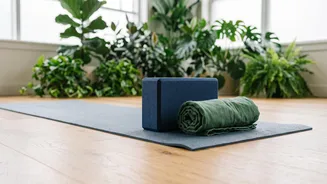
The hands-and-knees position can be challenging for those with sensitive or injured wrists. Instead of placing your palms flat, you can make fists and rest on your knuckles to keep the wrists straight. Another option is to come down onto your forearms, with your elbows directly under your shoulders. You can also place yoga blocks under your hands or forearms to reduce the angle and pressure on the wrists.
Modification for Knee Discomfort
If kneeling is uncomfortable, the simplest solution is to add cushioning. Place a folded blanket, towel, or pillow under your knees for extra support. This small adjustment can make a significant difference, allowing you to focus on the movement of your spine without being distracted by knee pain. If kneeling remains too difficult, the entire Cat-Cow sequence can be performed while seated.
Seated and Standing Alternatives
You don't need to be on the floor to benefit from this stretch. For a seated version, sit on the edge of a sturdy chair with your feet flat on the floor and hands on your knees. Inhale to arch your back and lift your chest, and exhale to round your spine. This is an excellent alternative for an office setting or for those with limited mobility. A standing version can be done by placing your hands on a wall or on your slightly bent thighs and following the same spinal movements.
Listen to Your Body
The primary rule of any yoga practice is to listen to your body. Cat-Cow should feel like a gentle stretch, not a strain. If you feel any sharp or pinching pain, you have moved past your useful range. In this case, make the movements smaller or stop entirely. The goal is not to achieve the most dramatic arch but to create a mindful, gentle mobilisation of the spine that feels nourishing and safe for your unique body.