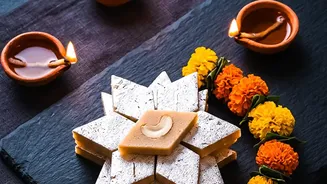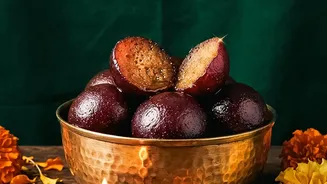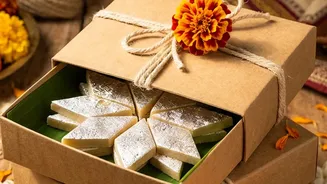



The aroma of ghee, sugar, and cardamom signals Diwali's arrival. This year, embrace the festive spirit without the guilt. Discover how to create traditional sweets with a wholesome twist, making your 2026 celebrations both joyous and healthy.
Rethinking Sweetness: Beyond Refined Sugar
The foundation
of any mithai is its sweetness, but refined white sugar isn't your only option. Natural sweeteners can provide the desired taste along with added nutritional benefits. Jaggery (gur) is a fantastic substitute, rich in iron and minerals, and it imparts a smoky, complex flavour that enhances sweets like ladoos and halwas. Date syrup or finely chopped dates are another excellent choice, providing natural sweetness, fibre, and a sticky texture perfect for binding dry fruit ladoos or anjeer barfis. While jaggery still impacts blood sugar, it is digested more slowly than refined sugar because it is less processed and retains more nutrients. For those seeking low-calorie options, plant-based sweeteners like stevia or monk fruit can be used, though it's best to start with small amounts to get the taste right.
Choosing Your Fats Wisely: Ghee Over Oils
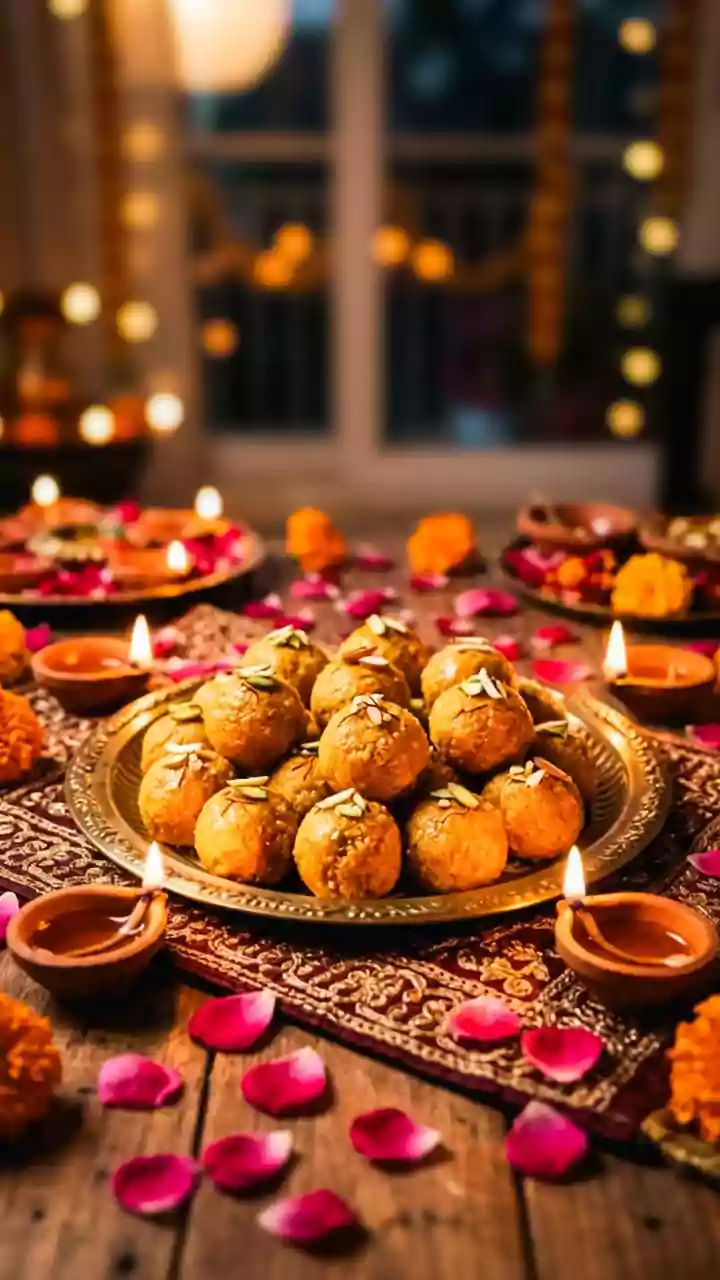
Fat is essential for the rich texture and flavour of Diwali sweets. While it's tempting to cut it out completely, the key is to choose the right kind. Pure ghee, or clarified butter, is a traditional choice for a reason. It has a high smoke point, is rich in healthy fats, and aids in digestion. Using ghee in moderation is far better than opting for refined vegetable oils or vanaspati, which often contain unhealthy trans fats. For sweets like Besan Ladoo or Mohanthal, the nutty aroma of roasted gram flour is only truly achieved with good quality ghee. It not only adds flavour but also helps in the absorption of nutrients. Remember, a little goes a long way in lending that authentic, melt-in-the-mouth texture.
The Flour Factor: Whole Grains & Nuts
Many traditional sweets and snacks rely on refined all-purpose flour (maida). An easy and effective health upgrade is to swap maida for more nutritious alternatives. Whole wheat flour (atta) can be used for the outer covering of gujiyas or in baked mathris and shakarparas. Nut flours, such as almond or coconut flour, are excellent low-carb, high-protein options for making barfis and ladoos. You can also incorporate other grains like oats or ragi. For instance, oats can be used to make a healthier kheer or chivda, while ragi flour can be used to make nutritious ladoos. These swaps not only reduce empty calories but also add valuable fibre and nutrients.
Smart Cooking Methods: Bake, Don't Fry
The cooking method can dramatically alter the health profile of a treat. Deep-frying, common for snacks like gujiyas, chaklis, and mathris, adds a significant amount of oil and calories. This Diwali, consider baking or air-frying these favourites instead. An air fryer can produce crispy chaklis and gujiyas with a fraction of the oil. Similarly, mathris and shakarparas can be baked in an oven until golden and crisp. While the texture might be slightly different from the deep fried versions, modern techniques ensure a satisfying crunch without the greasy heaviness, making them much lighter on the stomach.
Healthy Twists on Classic Favourites
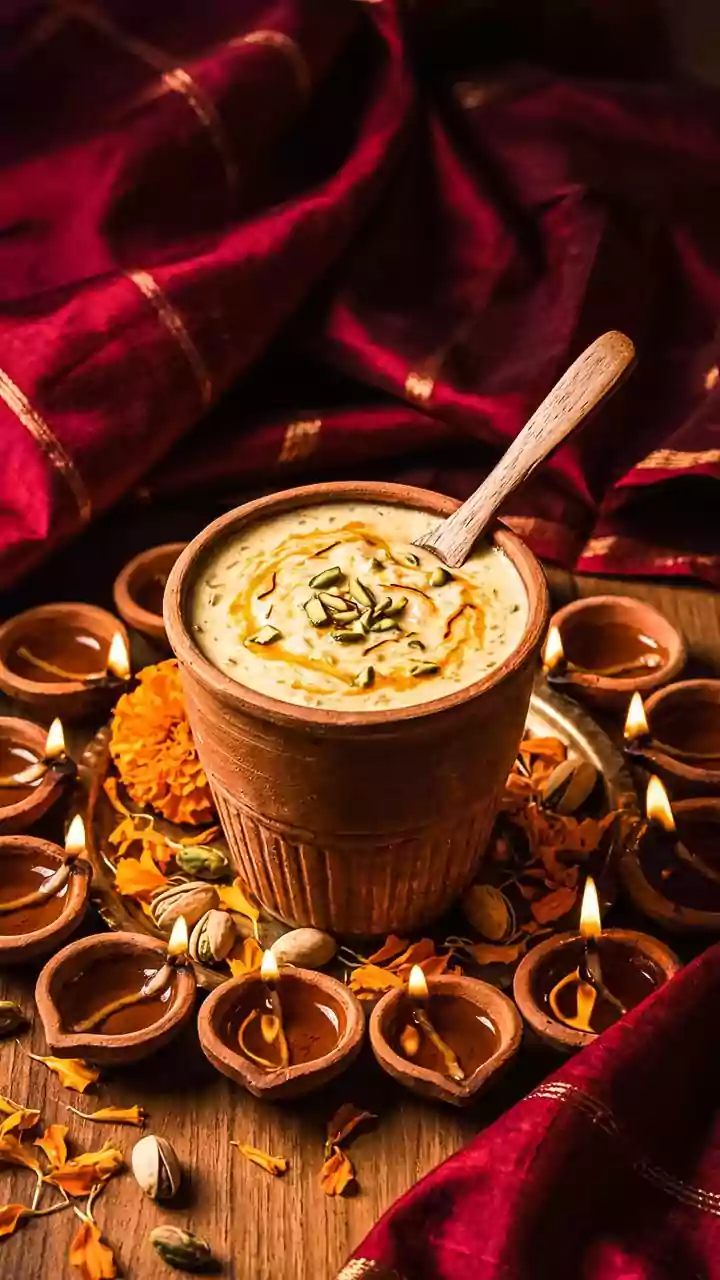
Applying these principles can transform your favourite sweets. For Dry Fruit Ladoo, simply combine dates, figs, almonds, walnuts, and pistachios, and roll them into balls without any added sugar. To make a healthier Gajar ka Halwa, replace sugar with jaggery or a small amount of date syrup and use a moderate amount of ghee. Kheer can be made with brown rice or millets and sweetened with jaggery. Even classics like Coconut Ladoo can be prepared with desiccated coconut, a bit of milk, and a natural sweetener like monk fruit or stevia instead of condensed milk. These small changes allow you to enjoy the traditional tastes you love in a more mindful way.