



A Cosmic Chemical Surprise
Scientists have long searched for the building blocks of life—complex, carbon-based molecules—in the vastness of space. The prevailing theory was that these molecules needed a lot of time to form in the chaotic aftermath of a star's birth. However, a series
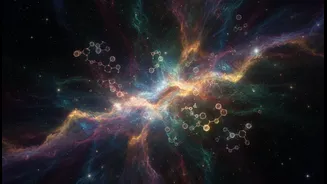
of stunning observations, many using the powerful James Webb Space Telescope (JWST), are turning this idea on its head. Astronomers are now finding a rich variety of these organic molecules in the swirling disks of gas and dust around very young stars, some only a few hundred thousand years old. These discoveries suggest that the raw materials for life don't need a long, slow cooking process; they appear to be readily available almost as soon as a new star system begins to form.
The Cradle of Creation
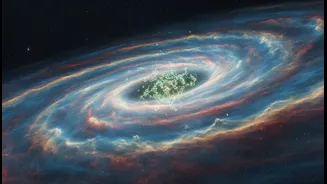
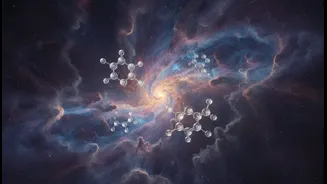
These discoveries are being made in what are known as protoplanetary disks. Think of them as stellar nurseries—vast, spinning clouds of gas and dust that surround a newborn star. It is from this material that planets, moons, and asteroids are eventually born. Previously, it was thought that the intense radiation from a young star would destroy any complex molecules forming close by, in the very region where rocky, Earth-like planets are expected to coalesce. But new research shows that molecules like methanol, ethanol, and even precursors to amino acids and sugars are present in these zones. They seem to be inherited from the even colder, darker molecular clouds that existed before the star even ignited, challenging the idea that star formation causes a complete chemical 'reset'.
Rewriting the Cosmic Cookbook
The phrase 'earlier than expected' is key. The old recipe for life suggested that a planetary system would need to mature for a long time before the right ingredients could be cooked up. This new evidence implies that the chemical starter pack for life is delivered on day one. Molecules that are precursors to proteins and even the components of RNA have been detected. For example, astronomers have found glycolonitrile, a direct precursor to the amino acid glycine, and various sugars and alcohols frozen in the ice on dust grains within these young disks. These grains act like tiny chemical factories, protecting the molecules and allowing them to grow in complexity before they are eventually incorporated into new planets.
What Does This Mean for Alien Life?
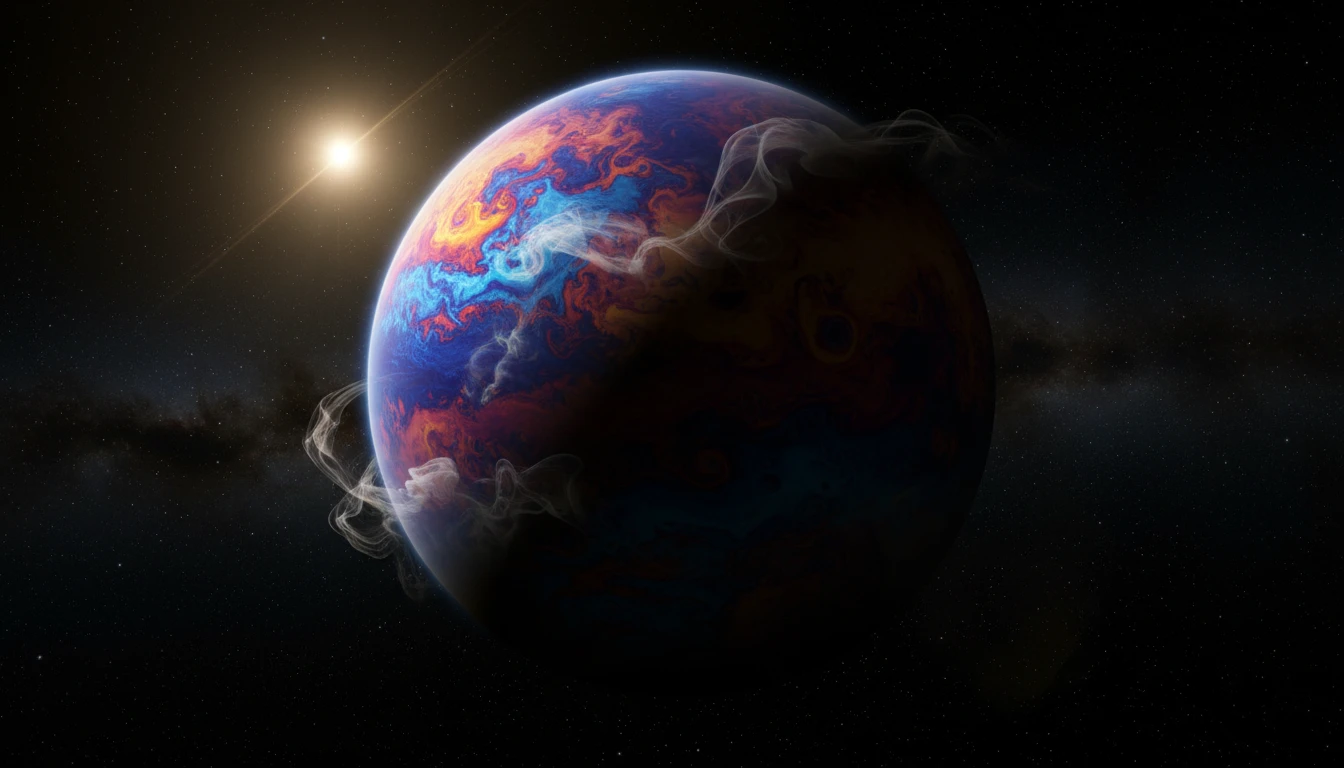
This doesn't mean we've found aliens. What it does mean, however, is that the conditions necessary for life to begin might be far more common throughout the universe than we imagined. If the building blocks are not a rare, late-stage development but a standard feature of star formation, then countless nascent planets across our galaxy and beyond could be getting a chemical head start. This significantly widens the window of opportunity for life to emerge elsewhere. Instead of needing a planet to be in a perfectly stable, mature system, it's possible that the journey toward life begins the moment a planet starts to form, seeded with materials delivered by comets and asteroids that are rich in these primordial organic compounds.