







A Milestone Mission
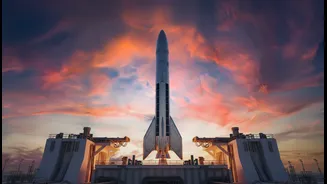
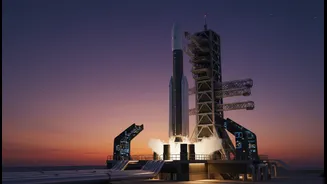
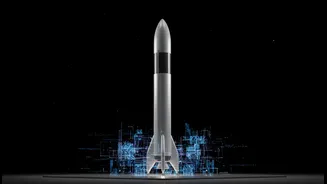
On July 18, 2026, Hyderabad-based startup Skyroot Aerospace is set to make history with the launch of its Vikram-1 rocket. Named 'Aagaman', meaning 'arrival', this will be India's first-ever attempt to place a payload into orbit using a launch vehicle
developed entirely by a private company. The seven-storey-tall rocket is designed to carry small satellites, weighing up to 350 kg, into Low Earth Orbit. While Skyroot successfully tested a suborbital rocket named Vikram-S in 2022, this orbital flight is a far more complex and significant undertaking. A successful launch would not only validate Skyroot's technology, which includes an all-carbon composite structure and 3D-printed engines, but also signal India's arrival as a serious player in the global commercial launch market.
The Engine of Growth: Policy and Private Players
This moment has been years in the making, fueled by a monumental shift in India's space policy. For decades, the Indian space program was the exclusive domain of the Indian Space Research Organisation (ISRO). However, landmark reforms introduced in 2020, and the establishment of the Indian National Space Promotion and Authorisation Centre (IN-SPACe), opened the floodgates for private enterprise. IN-SPACe acts as a facilitator, allowing private companies to use ISRO's world-class infrastructure, from launchpads to testing facilities, and providing a regulatory framework for their missions. This policy shift has democratized space, transforming private firms from mere component suppliers for ISRO into independent entities capable of end-to-end missions. The result is a vibrant ecosystem of over 400 space-tech startups, attracting significant investment and ready to compete globally.
A Gold Rush for Talent
The rapid expansion of India's private space sector has ignited a hiring boom. Companies like Skyroot, Agnikul Cosmos, Dhruva Space, and Pixxel are aggressively scaling up, creating thousands of high-skilled jobs. Skyroot alone has more than tripled its headcount in the past year to over 1,000 employees. The demand spans a wide array of specializations, including aerospace engineering, avionics, propulsion systems, materials science, robotics, and software development. Beyond core engineering, there is a growing need for professionals in data analytics, AI and machine learning, business development, and regulatory affairs. This career surge is not just for fresh graduates; startups are actively recruiting senior talent and experienced professionals, including former ISRO scientists, to lead teams and drive innovation. Entry-level salaries for aerospace engineers can range from ₹4 to ₹8 lakh per year, with experienced professionals commanding significantly higher packages.
Building a Multi-Billion Dollar Industry
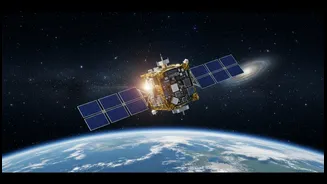
The goal is ambitious: to grow India's share of the global space economy from the current 2% to 8% by 2033, creating an industry potentially worth over $40 billion. The government is backing this vision with substantial financial support, including a dedicated venture capital fund for the space sector. This new era is not just about building rockets. The applications of space technology are vast and vital for India's development. Private companies are developing satellite constellations for better communication, Earth observation satellites for agriculture and climate monitoring, and space-based data analytics for everything from financial services to disaster management. This commercial focus is expected to drive down costs, increase innovation, and make space-based services more accessible across the economy.